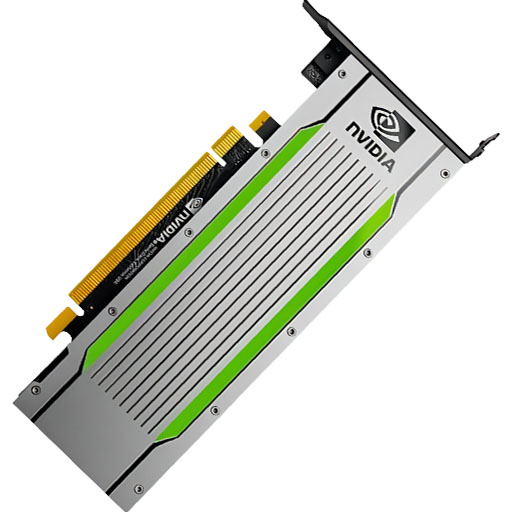
Products Mentioned in This Article


The NVIDIA DGX Spark put a Grace Blackwell superchip and 128 GB of unified memory on a desk for the first time. A year after launch, the market around it looks very different: the price has moved several times, every major PC maker sells its own GB10 box, and buyers now compare it not only with those OEM versions but with Apple’s Mac Studio and AMD’s Strix Halo mini PCs. This guide puts the options side by side as of October 2026 — what is actually different between them, where each one wins, and how to decide which to buy.
What the DGX Spark is (and what it is not)
DGX Spark is built around the NVIDIA GB10 Grace Blackwell Superchip: a 20-core Arm Grace CPU and a Blackwell GPU sharing 128 GB of LPDDR5X unified memory with about 273 GB/s of bandwidth. NVIDIA rates it at up to 1 petaFLOP of FP4 AI compute. It runs NVIDIA DGX OS with the same CUDA, TensorRT and NIM software stack used on DGX and HGX data-center systems, and it has a ConnectX-7 network port so two units can be linked into a small cluster.
That combination defines its role. Spark is a development and prototyping machine for AI engineers: big enough to load models that no consumer GPU can hold, and compatible with the software the same team will later deploy on data-center hardware. It is not the fastest token-per-dollar inference box on the market, and buyers who expect it to beat a multi-GPU workstation on raw speed are usually disappointed. Buyers who need 128 GB of CUDA memory on a desk are usually very happy with it.
Related reading: How much memory you need to fine-tune a 70B LLM
DGX Spark price in 2026: how we got here
Pricing has been the most confusing part of the Spark story, so it is worth laying out the timeline:
- October 2025: launch at $3,999 for the 128 GB Founders Edition. It sold out on NVIDIA’s store almost immediately.
- 23 February 2026: NVIDIA raised the Founders Edition to $4,699 worldwide, citing memory supply constraints.
- Early October 2026: trade press reported the 128 GB model at $6,950, alongside a new 64 GB GB10 tier at $4,999, sold only through partners (Acer, ASUS, Dell, Gigabyte, HP, MSI). The 64 GB version keeps the same 273 GB/s bandwidth.
The driver behind all three moves is DRAM supply. LPDDR5X is the same memory class that data-center AI hardware is consuming in huge volumes, and memory makers have signalled that supply stays tight for some time. In practice, street prices in the US and Europe rose roughly 50% between spring and autumn 2026, and many retailers simply ran out of stock.

The GB10 family: Spark vs ASUS, Dell, HP, Lenovo, MSI and Gigabyte
Every GB10 system uses the same superchip, the same 128 GB unified memory option and essentially the same software. Performance between them is close to identical. What actually differs is storage, chassis and cooling, warranty and support, and above all price and availability.
| System | Superchip / memory | Storage options | Reported price (Sept–Oct 2026) |
|---|---|---|---|
| NVIDIA DGX Spark (Founders Edition) | GB10 · 128 GB | 4 TB | $6,950 list (reported) |
| ASUS Ascent GX10 | GB10 · 128 GB | 1 / 2 / 4 TB | ≈ $6,000 / $7,000 / $8,000 on ASUS US store |
| HP ZGX Nano G1n | GB10 · 128 GB | 2 / 4 TB | $6,499 / $7,399 direct from HP |
| Dell Pro Max with GB10 | GB10 · 128 GB | various | not confirmed |
| Lenovo ThinkStation PGX | GB10 · 128 GB | various | frequently out of stock |
| MSI EdgeXpert / Gigabyte AI TOP ATOM | GB10 · 128 GB | 1 / 4 TB | older listings ≈ $3,200–$4,200; current pricing unverified |
| 64 GB GB10 tier (partners only) | GB10 · 64 GB | varies | from $4,999 |
Two practical takeaways come out of that table. First, the cheapest way to get a GB10 has been to drop storage — OEMs charge roughly $1,000 per storage step. Second, a 4 TB GB10 now costs around $7,000–$8,000 almost everywhere it is actually in stock, whether it carries an NVIDIA, ASUS or HP badge. Choose between them on storage, support and delivery time rather than on performance.
128 GB or the new 64 GB tier?
The 64 GB GB10 is not a “Spark lite” in compute — it has the same chip and bandwidth — but halving memory halves the size of model you can load. 128 GB comfortably holds quantised models in the 70–120B parameter range with room for context; 64 GB is better suited to models up to roughly 30–70B at lower precision. If your team works with large open-weight models, the 128 GB version is the one to buy. NVIDIA also points out that two 64 GB units clustered over ConnectX-7 can reach up to about 1.7× the performance of one node, but two 64 GB units cost more than one 128 GB unit, so clustering only makes sense if you need the extra throughput.
DGX Spark vs Mac Studio
Mac Studio is the comparison buyers raise most often, because Apple’s M-series chips also use large pools of unified memory. The honest answer is that each wins at different things.
| DGX Spark (GB10) | Mac Studio M4 Max | Mac Studio M3 Ultra | |
|---|---|---|---|
| Memory bandwidth | ≈ 273 GB/s | ≈ 546 GB/s | ≈ 819 GB/s |
| Software ecosystem | CUDA, TensorRT, NIM, DGX OS | Metal / MLX | Metal / MLX |
| Fine-tuning and training | Native PyTorch/CUDA workflows | Limited | Limited |
| Token generation speed | Lower | Higher | Highest |
| Path to data-center deployment | Same stack as DGX/HGX | Requires porting | Requires porting |
For pure local chat inference on a single large model, Mac Studio’s higher memory bandwidth produces faster token generation. For anything that touches the NVIDIA production stack — fine-tuning with PyTorch and CUDA, TensorRT-LLM optimisation, testing NIM microservices, or building something your team will later deploy on H100, H200 or B200 servers — Spark is the right tool, because code and containers move to the data center unchanged. Spark is also much faster at prompt processing (prefill), which matters for long-context and retrieval-augmented workloads.
DGX Spark vs AMD Strix Halo mini PCs
AMD’s Ryzen AI Max+ 395 (“Strix Halo”) mini PCs offer up to 128 GB of unified memory at roughly half the price of a Spark, so they are the main value challenger. On a 120B-parameter model, independent testing found both machines decoding at a similar 34–38 tokens per second, because their memory bandwidth is similar (Strix Halo is rated at 256 GB/s, about 215 GB/s measured). The difference shows up in prefill: roughly 1,700 tokens per second on Spark against about 340 on Strix Halo in the same test — a five-fold gap that matters for long prompts, RAG pipelines and batch processing.
The other difference is software. Strix Halo relies on ROCm, which has improved but is still far less mature than CUDA. If your goal is the cheapest possible box for running a local chatbot, Strix Halo is attractive. If your goal is to develop and validate real AI products on the NVIDIA stack, Spark’s ecosystem is worth the premium.
DGX Spark vs an RTX 5090 or RTX PRO workstation
A desktop with an RTX 5090 is faster than Spark on anything that fits in its 32 GB of VRAM. The problem is everything that does not: 70B-class models at useful precision, long contexts, or several models loaded side by side. Spark trades raw speed for capacity — 128 GB of memory that the GPU can address directly. For teams that need both speed and capacity, the step up is a workstation with the 96 GB RTX PRO 6000 Blackwell, or for the largest models a GB300-class station such as the Supermicro ARS-511GD with 748 GB of coherent memory.
Who should buy a DGX Spark
- AI engineers and research teams who need to prototype and fine-tune large open-weight models locally before moving to cloud or data-center GPUs.
- Companies with data that cannot leave the building — legal, healthcare, finance, government — who want private inference and RAG on a sensitive document base.
- Teams already on NVIDIA infrastructure who want developer machines that run the same containers and software as their production servers.
- Universities and labs that need affordable hands-on access to the Blackwell architecture and the NVIDIA AI stack for teaching and research.
Who should probably look elsewhere: buyers who only want the fastest local chatbot for the money (Mac Studio or Strix Halo), and teams training models from scratch or serving many users at once (a multi-GPU server — see our AI server buying guide).
Availability and buying a DGX Spark in the UAE
Supply has been the real constraint in 2026. Through September, several large US retailers were sold out of GB10 systems, European buyers reported repeated delays, and UAE prices tracked the global increases. When comparing offers, check four things before price: whether the unit is physically in stock or a pre-order, which storage and memory configuration you are getting, how the warranty is handled in your country, and whether you receive an official invoice.
ITCT Shop holds NVIDIA DGX Spark units in stock in Dubai, sold new with a one-year NVIDIA warranty and an official invoice, with in-person purchase in Dubai and worldwide shipping. For larger AI projects, see our DGX comparison guide and AI workstation vs GPU server guide.
How to choose: a quick decision checklist
- What is the largest model you need to load? Up to ~30B parameters: an RTX-class GPU is faster and cheaper. 70–120B: a 128 GB GB10 system. Several hundred billion parameters or full fine-tuning of large models: a GB300 station or a multi-GPU server.
- Will the work end up on NVIDIA data-center hardware? If yes, staying on CUDA from day one saves porting time later — that favours Spark or another GB10 box over Mac or Strix Halo.
- Is your bottleneck generation speed or prompt length? Long prompts, RAG and batch jobs benefit from Spark’s fast prefill; short chat-style generation benefits more from memory bandwidth.
- How much storage do you need? Model files, datasets and checkpoints fill 1 TB quickly. For a team machine, 4 TB is the practical minimum.
- Can you actually get it? In a constrained market, a unit in stock today is often worth more than a cheaper unit with an open-ended delivery date.
What to expect after you unbox it
A DGX Spark arrives with NVIDIA DGX OS — an Ubuntu-based system with the NVIDIA driver, CUDA toolkit and container runtime already configured. NVIDIA publishes ready-made playbooks for common tasks such as running local LLMs, fine-tuning, setting up JupyterLab and connecting two units, so most teams are running their first model within the first day rather than spending a week on drivers. The machine can be used directly with a monitor and keyboard, or headless as a small AI server on the office network that developers reach from their laptops. Because it draws a fraction of the power of a GPU server and runs quietly, it fits in a normal office without dedicated cooling or electrical work — one of the reasons it has become a popular first step before a larger infrastructure investment.
Frequently asked questions
How much does the NVIDIA DGX Spark cost in 2026?
The 128 GB DGX Spark launched at $3,999 in October 2025, rose to $4,699 in February 2026 and was reported at $6,950 in October 2026. OEM GB10 systems with 4 TB of storage sell for roughly $7,000–$8,000, and a 64 GB partner-only tier starts at $4,999.
Is the ASUS Ascent GX10 the same as the DGX Spark?
It uses the same GB10 Grace Blackwell superchip, the same 128 GB unified memory and the same NVIDIA software stack, so performance is essentially identical. The differences are chassis, storage options, warranty and price.
Is DGX Spark faster than a Mac Studio?
Not for token generation — Mac Studio has two to three times more memory bandwidth. Spark is faster at prompt processing and runs the CUDA/TensorRT stack natively, which makes it the better choice for fine-tuning and for developing software that will run on NVIDIA data-center GPUs.
How large a model can a DGX Spark run?
With 128 GB of unified memory, a single Spark comfortably runs quantised models in the 70–120B parameter range. Two Sparks linked over ConnectX-7 can handle models up to roughly 200B parameters.
Should I buy the 64 GB or the 128 GB GB10?
Buy 128 GB if you work with large open-weight models or long contexts. The 64 GB version has the same compute and bandwidth but holds roughly half the model size, so it suits smaller models and tighter budgets.
Can two DGX Sparks be connected?
Yes. Each unit has a ConnectX-7 port, and two units can be linked to share work across 256 GB of combined memory for larger models.
Last update at December 2025
5 thoughts on “NVIDIA DGX Spark vs ASUS GX10, Dell & HP GB10 and Mac Studio: 2026 Comparison”