
Products Mentioned in This Article


NVIDIA DGX Spark brings a Grace Blackwell superchip to the desktop: a compact machine built around the GB10, with 128 GB of unified memory and the full NVIDIA AI software stack. It promises to let developers prototype, fine-tune and run large models locally, without renting cloud GPUs or waiting for a shared cluster. But it is not a small DGX server, and it is not the right choice for every team. This guide explains what DGX Spark is good at, where it falls short, and how it compares with RTX workstations and GPU servers so you can decide whether it belongs on your desk.
What DGX Spark is
| Feature | DGX Spark (GB10) |
|---|---|
| Chip | NVIDIA GB10 Grace Blackwell superchip (Arm CPU + Blackwell GPU) |
| Memory | 128 GB unified LPDDR5x shared by CPU and GPU |
| AI performance | Up to around 1 petaFLOP of sparse FP4 compute |
| Storage | Up to 4 TB NVMe |
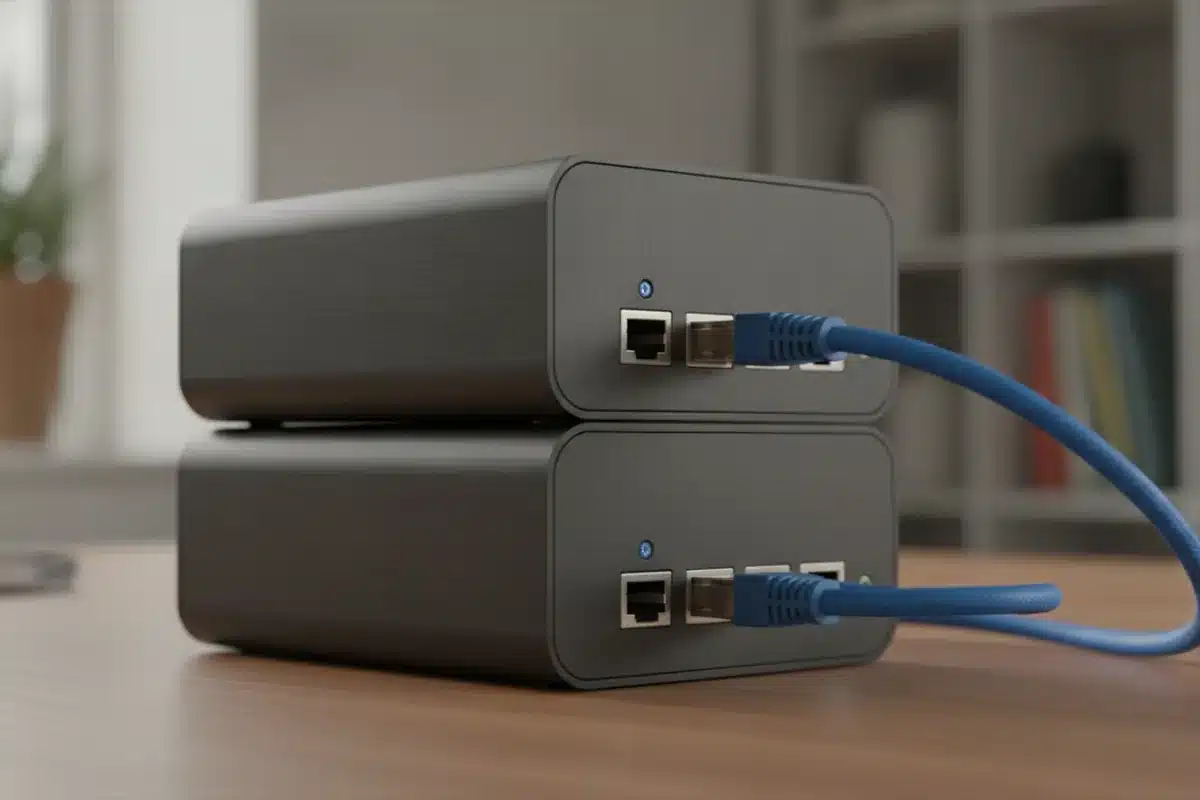
| Networking | ConnectX-7, allowing two units to be linked |
| Software | NVIDIA DGX OS with the NVIDIA AI stack |
| Form factor | Small desktop unit, standard office power |
Check NVIDIA’s current datasheet for exact figures; partner versions from other vendors use the same GB10 platform.

Related reading: How much memory you need to fine-tune a 70B LLM
Who should buy it
- AI developers and researchers who need to run and fine-tune models in the 30B–200B parameter range locally, which do not fit in a 24–32 GB consumer GPU.
- Teams building on the NVIDIA stack (NIM, TensorRT-LLM, CUDA) who want a desk-side environment that matches their data center deployment.
- Organisations with data that cannot leave the building, such as healthcare, legal or government teams experimenting with private LLMs.
- Agent and RAG prototyping where large context and several models need to sit in memory at once.
Who should not buy it
- Production serving for many users: unified LPDDR5x memory has much lower bandwidth than HBM, so token throughput is far below an H100 or H200 server. See best GPU for LLM inference.
- Full-scale training: large training runs still need multi-GPU servers.
- Graphics, CAD and gaming workloads: an RTX workstation is a better fit.
- Teams that rely on x86-only software: the Grace CPU is Arm-based; most AI frameworks run well, but check niche tools.
DGX Spark vs alternatives
| Option | Strength | Weakness |
|---|---|---|
| DGX Spark | 128 GB unified memory on a desk, NVIDIA stack, low power | Lower memory bandwidth, limited throughput |
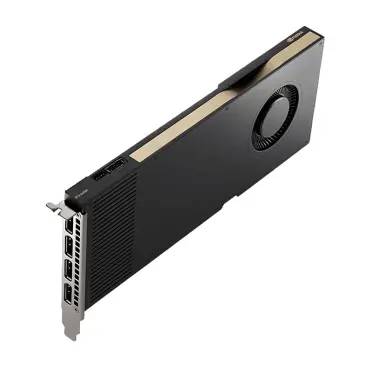
| RTX PRO 6000 Blackwell workstation | 96 GB GDDR7 per card, high bandwidth, graphics too | Larger, more power, higher cost with two cards |
| Consumer RTX 5090 PC | Cheap and fast for smaller models | 32 GB limits model size |
| H100/H200 server | Production throughput, many users | Expensive, needs a server room |
| Cloud GPUs | No upfront cost, scale on demand | Ongoing cost, data leaves your premises |
For a detailed workstation guide, read RTX PRO 6000 Blackwell buyer’s guide; to size memory for your models, see LLM GPU memory requirements.
Practical tips
- Use 4-bit or FP8 quantised models to get the most out of the 128 GB memory.
- Link two units with ConnectX-7 for larger models, accepting the throughput limits.
- Plan the path from prototype to production: the same containers can later move to a DGX or HGX server.
- Budget for software and support; enterprise licences may be separate from the hardware.
ITCT supplies DGX Spark and GB10-based systems in Dubai and can help you choose between Spark, RTX workstations and GPU servers for your workload.
Frequently asked questions
What is NVIDIA DGX Spark used for?
Local development, prototyping, fine-tuning and testing of large AI models on a desk, with 128 GB of unified memory and the NVIDIA AI software stack.
Can DGX Spark run a 70B model?
Yes, typically in 4-bit or FP8 quantisation, which fits comfortably in 128 GB. Throughput is suited to a single developer or small team rather than many users.
Is DGX Spark faster than an RTX 5090?
For models that fit in 32 GB, an RTX 5090 can be faster thanks to higher memory bandwidth. DGX Spark wins when models need far more memory than a consumer GPU provides.
Can I use DGX Spark for production?
Only for low-volume internal use. For serving many users, a GPU server with HBM memory is the better choice.
Does DGX Spark run Windows software?
It runs NVIDIA DGX OS, a Linux distribution on an Arm-based CPU. Most AI frameworks are supported, but check any specialised x86 or Windows tools.
Last update at December 2025