
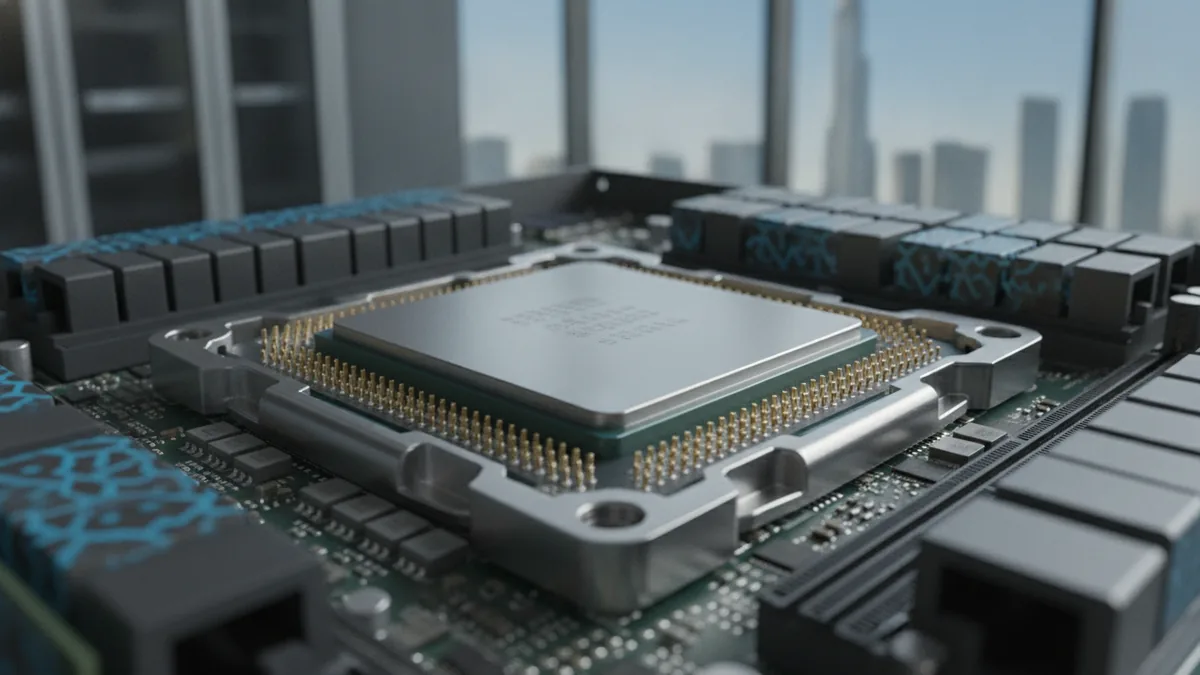
Intel’s Xeon 6 family is the first Xeon generation split into two different core types: Performance-cores (P-cores, Granite Rapids) and Efficient-cores (E-cores, Sierra Forest). Both run on the same platform, but they are designed for very different jobs. Picking the wrong one means paying for cores that sit idle, or for a 144-core chip that runs your AI and database workloads slower than a 64-core part. This guide explains the difference between Xeon 6 P-core and E-core processors and which one fits each server workload.
Xeon 6 P-core vs E-core at a glance
| Feature | P-core (6900P / 6700P / 6500P) | E-core (6700E) |
|---|---|---|
| Code name | Granite Rapids | Sierra Forest |
| Max cores per socket | Up to 128 (6900P), up to 86 (6700P) | Up to 144 |
| Hyper-Threading | Yes | No (one thread per core) |
| AVX-512 and AMX (AI acceleration) | Yes | No |
| Memory | 12 channels DDR5-6400 or MRDIMM-8800 (6900P); 8 channels (6700P) | 8 channels DDR5-6400 |
| Per-core performance | High | Lower, optimised for throughput per watt |
| Best for | AI, HPC, databases, GPU hosts, mixed enterprise workloads | Web, microservices, containers, CDN, scale-out cloud |
What P-cores do better
- AI inference and training on CPU: AMX accelerates matrix maths in PyTorch and TensorFlow; E-cores have no AMX.
- Single-thread speed: independent tests show P-cores are more than 50% faster per core, which matters for databases, licensing-per-core software and latency-sensitive applications.
- Memory bandwidth: the 6900P’s 12 channels and MRDIMM support help HPC, simulation and in-memory analytics.
- GPU servers: a fast host CPU keeps GPUs fed with data. For GPU builds, also see our multi-GPU training server configuration guide.
What E-cores do better
- Core density: up to 144 cores in one socket lets you consolidate many older servers into fewer.
- Performance per watt: lower power per core cuts electricity and cooling costs in dense racks.
- Cloud-native workloads: web servers, API gateways, Kubernetes pods and CDN nodes scale with core count rather than per-core speed.
- Predictable throughput: one thread per core avoids noisy-neighbour effects from Hyper-Threading in multi-tenant hosting.

Which Xeon 6 for which workload
| Workload | Recommended |
|---|---|
| GPU server host for AI training or inference | P-core (6700P or 6900P) |
| CPU-only AI inference, small models | P-core (AMX) |
| SQL Server, Oracle, SAP HANA | P-core (fewer, faster cores reduce licence costs) |
| Virtualisation with mixed VMs | P-core |
| Web hosting, microservices, containers | E-core |
| CDN, caching, media streaming | E-core |
| Rendering farm (throughput focused) | Either; E-core for density, P-core for mixed tasks |
Things to check before buying
- Does your software use AVX-512 or AMX? If yes, choose P-core.
- Is your software licensed per core? High core counts on E-core chips can multiply licence costs.
- How many memory channels do you need? Only 6900P platforms offer 12 channels.
- Check the server model supports the processor line; 6900P uses a larger socket and platform than 6700P/6700E.
- Compare against AMD EPYC alternatives for the same budget and rack power.
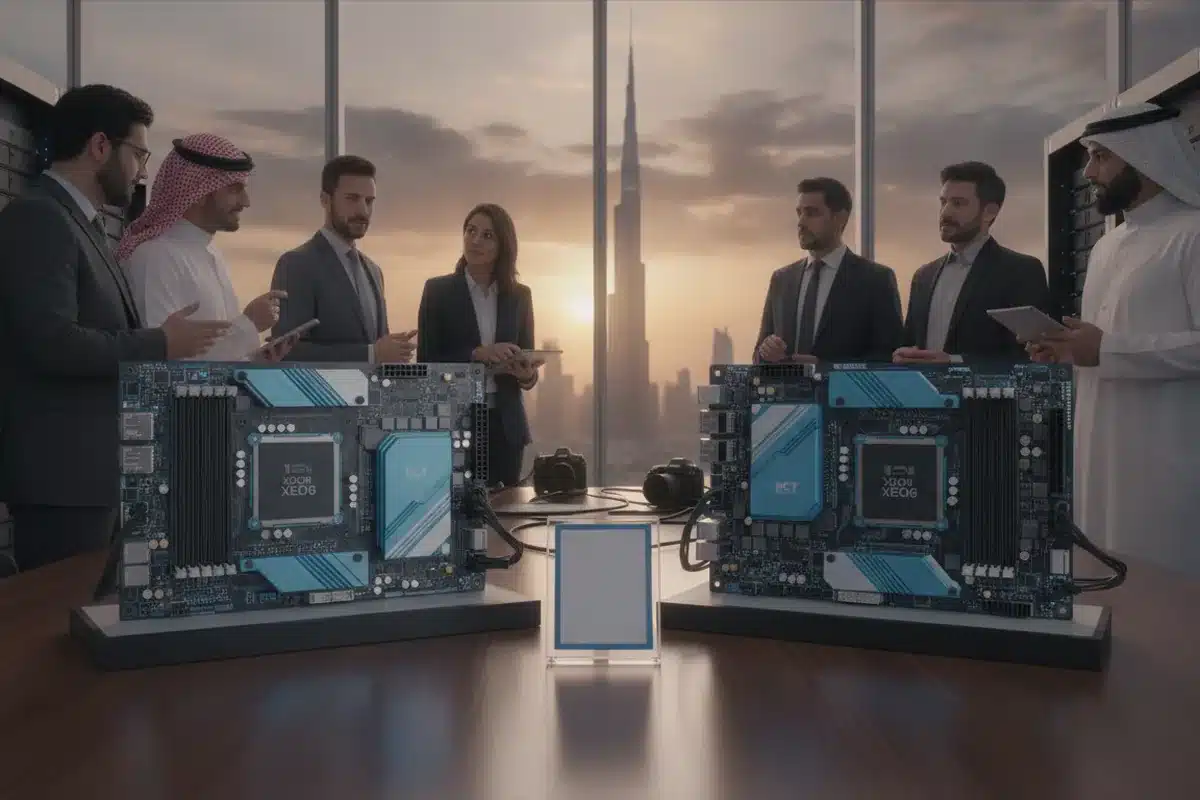
ITCT supplies Xeon 6 servers from Dell, HPE, Supermicro and Lenovo in Dubai and can help you match the processor to your workload. For larger AI deployments, read our GPU cluster design guide or compare AI workstation vs GPU server.
Frequently asked questions
What is the difference between Xeon 6 P-core and E-core?
P-cores are high-performance cores with Hyper-Threading, AVX-512 and AMX for AI. E-cores are smaller, power-efficient cores that fit up to 144 per socket for scale-out workloads.
Is the E-core Xeon 6 good for AI?
Not for CPU-based AI. E-core chips lack AMX and AVX-512, so P-core processors are much faster for AI inference and as GPU server hosts.
Do P-core and E-core Xeon 6 use the same server?
6700P and 6700E share the same platform family, while 6900P uses a larger platform with 12 memory channels. Always check the server’s supported CPU list.
Which is better for virtualisation?
P-core suits mixed enterprise VMs; E-core suits dense hosting of many small, similar VMs or containers.
Do E-cores support Hyper-Threading?
No. Each E-core runs one thread, which gives predictable performance per core.
Last update at December 2025