
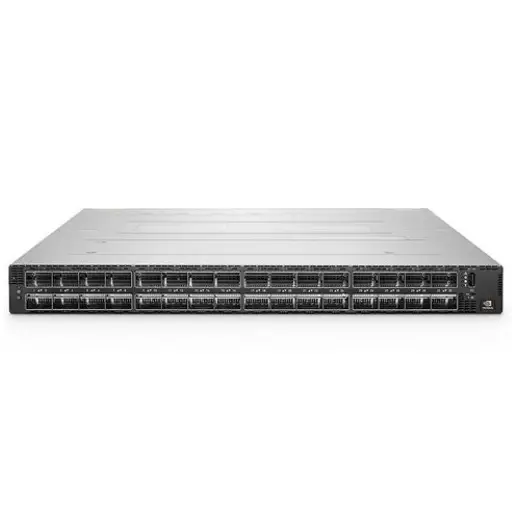
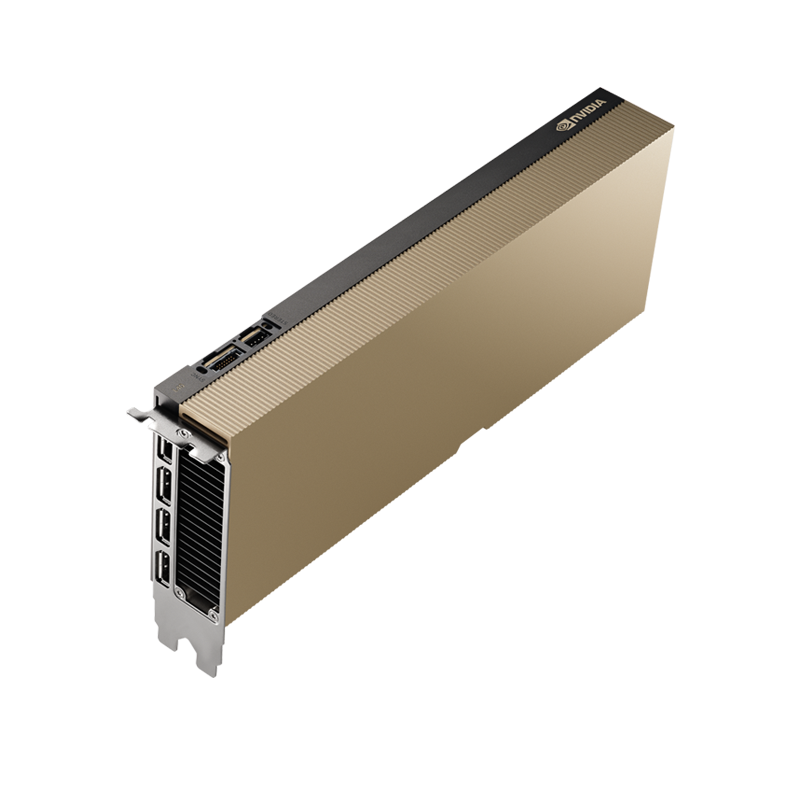
Products Mentioned in This Article
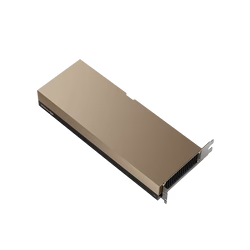
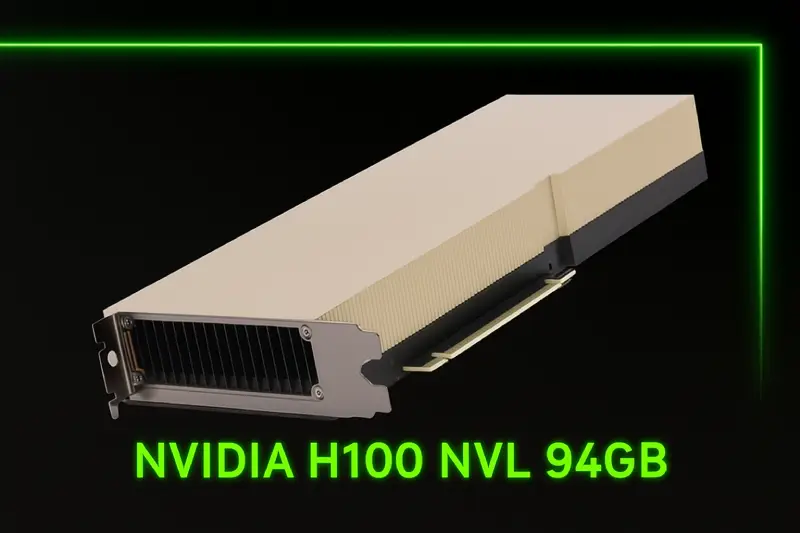
 NVIDIA H100 NVL GPU Original price was: USD52,800.USD48,800Current price is: USD48,800.
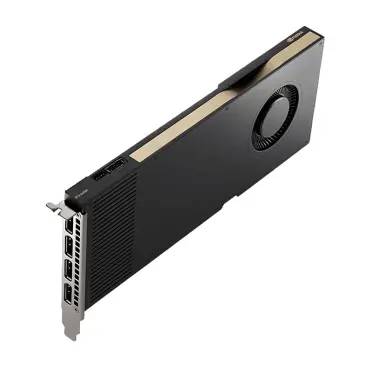
 NVIDIA L40S Original price was: USD18,400.USD16,800Current price is: USD16,800.
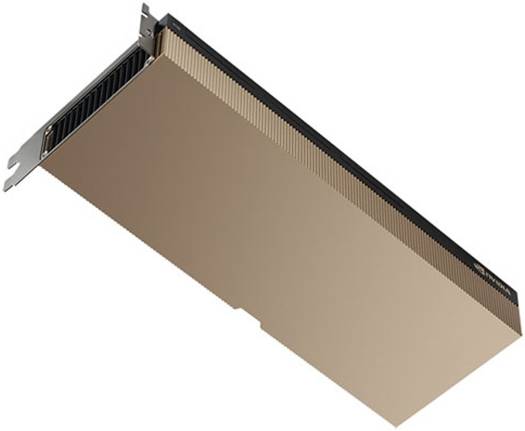
 NVIDIA HGX B200 (8-GPU) PlatformUSD624,000
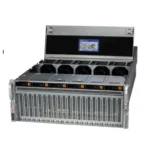 HGX H100 Optimized X13 8U 8GPU Server: The Ultimate AI and HPC Powerhouse for Exascale ComputingUSD480,000
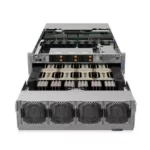 HGX H200 Optimized X13 8U 8GPU ServerUSD528,000

“How much does an H100 cost?” sounds like a simple question, but the answer depends on which H100 you mean. NVIDIA sells the same GPU generation in several very different forms: PCIe cards you can put in a standard server, NVL variants with more memory, and SXM modules that only exist inside 8-GPU HGX and DGX systems. Prices across these forms are not comparable one-to-one, and many price lists online mix them up.
This guide breaks down NVIDIA H100, H200 and B200 prices in 2026 by form factor, explains what you actually get for the money, and shows where each one makes sense. All prices are ITCT list prices in US dollars as of October 2026, excluding VAT and shipping; final quotes depend on quantity and availability.

Quick answer: 2026 price table
| Product | Memory | How it is sold | ITCT price (USD) |
|---|---|---|---|
| NVIDIA H100 80GB PCIe | 80 GB HBM2e | Individual PCIe card | $49,600 |
| NVIDIA H100 NVL | 94 GB HBM3 | Individual PCIe card | $48,800 |
| NVIDIA H200 (PCIe) | 141 GB HBM3e | Individual PCIe card | $55,200 |
| HGX H100 8-GPU server | 8 × 80 GB HBM3 (640 GB) | Complete 8U server with SXM GPUs | $480,000 |
| HGX H200 8-GPU server | 8 × 141 GB HBM3e (1,128 GB) | Complete 8U server with SXM GPUs | $528,000 |
| NVIDIA HGX B200 (8-GPU) | 8 × 180+ GB HBM3e | 8-GPU baseboard platform | $624,000 |
| NVIDIA DGX H100 | 640 GB total | Turnkey NVIDIA system | $832,000 |
| NVIDIA DGX H200 | 1,128 GB total | Turnkey NVIDIA system | $880,000 |
| NVIDIA DGX B200 | 1,440 GB total | Turnkey NVIDIA system | $960,000 |
Note what is missing: there is no standalone B200 card price. B200 is an SXM module and is sold as part of HGX B200 boards and DGX B200 systems, not as an individual GPU you can drop into an existing server. If a seller offers “single B200 GPUs”, ask exactly what they are selling.
Why the same GPU has different prices
PCIe vs SXM
PCIe cards plug into standard servers and are limited to the power and cooling of a PCIe slot. SXM modules sit on an NVIDIA HGX baseboard, run at higher power and are connected to each other through NVLink and NVSwitch, giving every GPU in the server high-bandwidth access to every other GPU. For multi-GPU training, that interconnect is often worth more than the raw compute difference.
Memory size and type
The H100 PCIe uses 80 GB of HBM2e. The H100 NVL raises this to 94 GB of faster HBM3. The H200 jumps to 141 GB of HBM3e with much higher memory bandwidth. For large language models, memory capacity decides how many GPUs you need to fit a model, which often matters more than the price per card.
Card vs system pricing
An 8-GPU server price includes the chassis, two server CPUs, system memory, NVMe storage, networking cards, power supplies and the HGX baseboard with NVLink switching. Dividing an HGX H100 server price by eight ($60,000 per GPU) and comparing it with a PCIe card ($49,600) is therefore not a fair comparison: you are buying the platform, not just the GPUs.
H100 price: PCIe vs NVL
At current ITCT pricing, the H100 NVL ($48,800) is slightly cheaper than the H100 80GB PCIe ($49,600) while offering 94 GB of HBM3 instead of 80 GB of HBM2e. For most new inference and fine-tuning deployments, that makes the NVL the better-value H100 card. The 80 GB PCIe version still makes sense when matching existing fleets or specific server certifications.
What you can realistically run per card:
- 7B–13B models in full precision with room for long contexts;
- 30B–34B models comfortably in FP16 on two cards, or one card with 8-bit quantization;
- 70B models across two NVL cards in FP16, or on a single card with 4-bit quantization at reduced quality and throughput.
For a deeper comparison of the two generations, see our H100 vs H200 guide.

H200 price: is the premium worth it?
The H200 PCIe at $55,200 costs about 13% more than an H100 NVL but brings 141 GB of HBM3e, roughly 50% more memory and substantially higher memory bandwidth. For inference workloads, where performance is often limited by memory bandwidth rather than compute, the H200 regularly delivers more tokens per second per dollar than the H100, especially on 70B-class models and long-context workloads.
A practical example: serving a 70B model in FP16 needs roughly 140 GB for weights plus KV cache. That means two H100 NVL cards ($97,600) with tight memory, or two H200 cards ($110,400) with generous headroom for larger batches and longer contexts. For production inference, the extra headroom usually translates directly into more concurrent users per server.
At system level, the HGX H200 8-GPU server ($528,000) costs 10% more than the HGX H100 server ($480,000) while offering 76% more total GPU memory (1,128 GB vs 640 GB). For buyers choosing between the two today, the H200 is usually the better long-term investment unless budget is fixed at the H100 price.
B200 price: what Blackwell costs at system level
Blackwell B200 is sold only in 8-GPU platforms. At ITCT list prices, the HGX B200 platform is $624,000 and the turnkey DGX B200 is $960,000. Compared with the H200 generation, B200 offers higher memory capacity per GPU, faster NVLink, support for FP4 and FP6 precision for inference, and substantially higher training throughput. It also draws more power: a DGX B200 is rated around 14 kW, so check rack power and cooling before choosing it. Our B200 vs H200 migration guide covers the performance trade-offs in detail.
DGX vs HGX: why DGX costs more
A DGX H100 ($832,000) costs about $352,000 more than an HGX H100 server ($480,000) with the same eight GPUs. The difference covers NVIDIA’s reference design and validation, the DGX software stack, NVIDIA enterprise support, and a system designed to scale into NVIDIA’s DGX SuperPOD architecture. Organizations that want one vendor accountable for the whole platform often choose DGX; those with in-house infrastructure teams often choose HGX servers for better price and flexibility. We explain the full cost picture in our 8-GPU H100 server cost breakdown.
What else affects the price you will pay
- New vs refurbished: refurbished and pulled cards are cheaper but may not carry manufacturer warranty. Always get the condition in writing.
- Quantity and timing: larger orders and flexible delivery dates can improve pricing; urgent single-unit orders cost more.
- Export controls: advanced data-center GPUs are subject to US export controls, and some destinations or end users require licenses. Compliance adds documentation and sometimes time, not just cost.
- Support and software: NVIDIA AI Enterprise licensing and extended support are often priced separately.
- Taxes and shipping: VAT, duties and insured shipping differ by destination; ask for a landed-cost quote.
Cloud rental prices: what an H100, H200 or B200 costs per hour
Many buyers compare purchase prices with cloud rental. Public GPU cloud listings in 2026 vary widely by provider, contract length and availability, but typical on-demand and short-term reserved rates fall roughly in these bands: H100 at around two to four dollars per GPU-hour, H200 at around three to six dollars, and B200 at around six to eight dollars or more, with spot and long-term commitments cheaper and premium providers higher. Rates change frequently, so treat these as orientation, not quotes.
A simple break-even check helps decide between renting and buying:
- Take the full cost of owning: hardware price, plus power, cooling, hosting, support and staff time over the period you plan to use it.
- Divide by the GPU-hours you will actually use. A GPU used 24/7 for three years gives about 26,000 hours; at 50% utilization, about 13,000.
- Compare that cost per GPU-hour with the rental rate for the same GPU and contract length.
For steady, high-utilization workloads over two to three years, ownership usually wins. For short projects, bursty demand or when you are still choosing a GPU generation, renting is often cheaper and less risky. Many organizations combine both: owned capacity for the base load and cloud for peaks. Our guide to 8-GPU H100 server cost and TCO works through a full example.
Why quotes differ from prices you see online
Prices quoted in articles and forums range from bare GPUs on the secondary market to fully supported systems from authorised channels, and the gap between them can be large. A lower number may reflect a used or refurbished card, a different variant (for example an export-restricted model), no warranty, no support, delayed delivery, or a price that excludes VAT, shipping and duties. A higher number may include a warranty, integration, testing, local stock and support. When comparing, normalise quotes to the same variant, condition, warranty, delivery time and taxes before deciding which is cheaper.
How to avoid overpaying or getting the wrong GPU
- Ask for the exact NVIDIA part number and memory type on every line of the quote.
- Confirm the form factor: PCIe, NVL or SXM inside HGX/DGX.
- Confirm new or refurbished, and who provides the warranty.
- Check that the server you plan to use is certified for the card’s power and cooling.
- Compare cost per GB of GPU memory, not just cost per card, for LLM workloads.
What can you buy with $100k, $250k or $500k?
Buyers rarely start from a GPU model; they start from a budget. Here is what common budgets buy at current ITCT list prices, hardware only:
| Budget | Realistic option | Total GPU memory | Good for |
|---|---|---|---|
| ~$100,000 | PCIe server chassis ($56,000) + 1× H200 PCIe ($55,200), or + 2× RTX PRO 6000 Blackwell ($47,360) | 141 GB or 192 GB | Single-model inference, fine-tuning up to ~34B in FP16, quantized 70B |
| ~$250,000 | Enterprise PCIe server ($80,000) + 3× H200 PCIe ($165,600) | 423 GB | 70B-class models in FP16 with headroom, multiple concurrent models |
| ~$500,000 | HGX H100 8-GPU server ($480,000), or add a little for HGX H200 ($528,000) | 640 GB / 1,128 GB | Training and large-scale inference with full NVLink connectivity |
| ~$1,000,000 | DGX B200 ($960,000) | 1,440 GB | Frontier-scale training and FP4/FP6 inference |
Alternatives worth considering before buying H100 or H200
Not every AI workload needs Hopper or Blackwell data-center GPUs. These alternatives are often the smarter purchase:
- NVIDIA L40S ($16,800, 48 GB): strong for inference of small and mid-size models, vision workloads and mixed AI plus graphics. Much lower power than H100 and easier to deploy in standard servers. Our L40 vs L40S comparison explains when it fits.
- NVIDIA RTX PRO 6000 Blackwell Server Edition ($23,680, 96 GB): the lowest cost per GB of GPU memory among current data-center cards, very attractive for serving quantized large models.
- NVIDIA A100 80GB ($24,000): still a capable training and inference card at less than half the price of an H100, with mature software support. See the A100 buying guide.
- NVIDIA DGX Spark ($6,400, 128 GB unified memory): for developers prototyping and fine-tuning locally before committing to data-center hardware.
A useful rule: if your workload is inference on models that fit in 48–96 GB per GPU and you do not need NVLink between many GPUs, start by pricing L40S or RTX PRO 6000 configurations before H100 or H200.
Cost per GB of GPU memory
| GPU | Price (USD) | Memory | Price per GB |
|---|---|---|---|
| H100 80GB PCIe | $49,600 | 80 GB | ~$620 / GB |
| H100 NVL | $48,800 | 94 GB | ~$519 / GB |
| H200 (PCIe) | $55,200 | 141 GB | ~$391 / GB |
| RTX PRO 6000 Blackwell Server Edition | $23,680 | 96 GB | ~$247 / GB |
The RTX PRO 6000 Blackwell is included for context: for inference that does not need HBM bandwidth or NVLink, it is often the lowest cost per GB of GPU memory in a data-center card today. For training and bandwidth-bound inference, the H200 offers the best cost per GB among Hopper-generation cards.
How to read a GPU quote line by line
When two quotes for “H100” differ by tens of thousands of dollars, the explanation is almost always in the details. Check each line for:
- Part number and variant: H100 80GB PCIe, H100 NVL 94GB or H100 SXM5 are different products.
- Condition: new in original packaging, refurbished, or pulled from another system.
- Warranty: length, start date and whether it is backed by the manufacturer or only by the seller.
- Included items: power cables, NVLink bridges for PCIe pairs, and any software licenses.
- Delivery terms: Incoterms, insurance, duties and an estimated delivery date.
- Validity: GPU quotes are often valid for a short period because supply and pricing move quickly.
Frequently asked questions
How much does an NVIDIA H100 cost in 2026?
At ITCT list prices, the H100 80GB PCIe is $49,600 and the H100 NVL (94 GB) is $48,800. An 8-GPU HGX H100 server is $480,000 and a DGX H100 is $832,000.
How much does an NVIDIA H200 cost?
The H200 PCIe card with 141 GB of HBM3e is $55,200. An 8-GPU HGX H200 server is $528,000 and a DGX H200 is $880,000.
Can I buy a single B200 GPU?
B200 is an SXM module and is sold within HGX B200 platforms ($624,000) and DGX B200 systems ($960,000), not as a standalone card.
Is the H200 worth it over the H100?
For LLM inference and large models, usually yes: about 13% more per card for roughly 50% more memory and much higher bandwidth. For workloads that fit comfortably in 80–94 GB, the H100 NVL remains strong value.
Why are GPU prices so different between sellers?
Different form factors, new vs refurbished stock, warranty terms, included support, export compliance and shipping terms. Compare quotes line by line with exact part numbers.
Conclusion
H100, H200 and B200 prices only make sense when you compare the same form factor and look at memory, not just the card price. For inference, the H200 and H100 NVL lead on value among Hopper cards; for large-scale training, HGX or DGX systems are the only real option, and B200 is the new top tier. Browse current availability in our AI computing catalog or ask ITCT for a quote with your exact configuration.
Last update at December 2025
2 thoughts on “NVIDIA H100, H200 & B200 Price in 2026: PCIe, NVL and SXM Compared”