
-
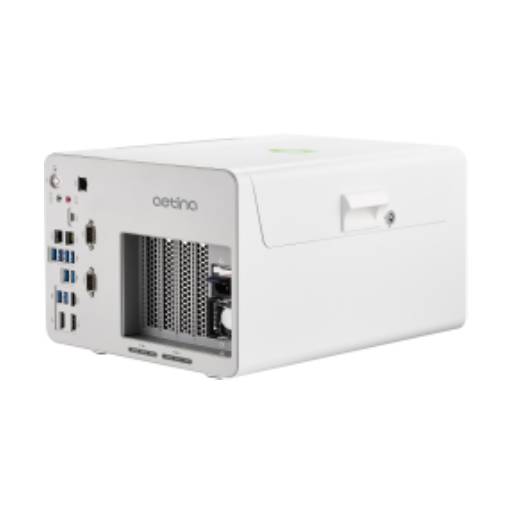
 Aetina MegaEdge AIP-FR68 (PCIe AI Training Workstation)
USD15,000
Aetina MegaEdge AIP-FR68 (PCIe AI Training Workstation)
USD15,000
-
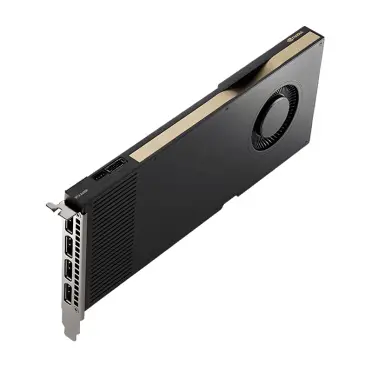 NVIDIA RTX A5500 Professional Workstation Graphics Card: Ultimate Performance for Creative Professionals
USD3,100
NVIDIA RTX A5500 Professional Workstation Graphics Card: Ultimate Performance for Creative Professionals
USD3,100
-
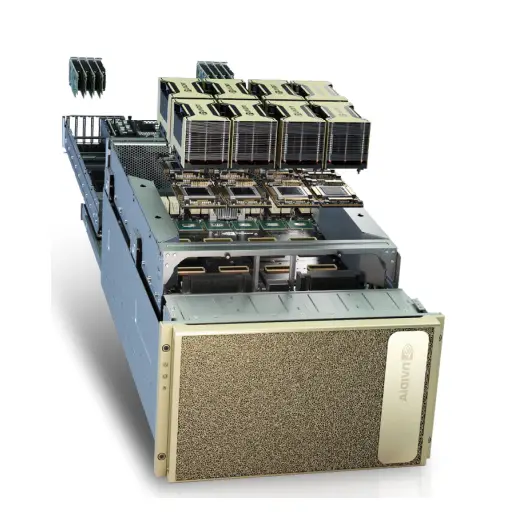
NVIDIA DGX H100 ( 8×H100 SXM5 AI Supercomputing Platform )
USD520,000
-
NVIDIA DGX H200 (AI Supercomputer – 8× H200 SXM5 GPUs, 2× Intel Xeon 64C, 2TB DDR5, 30TB NVMe)
USD550,000
-
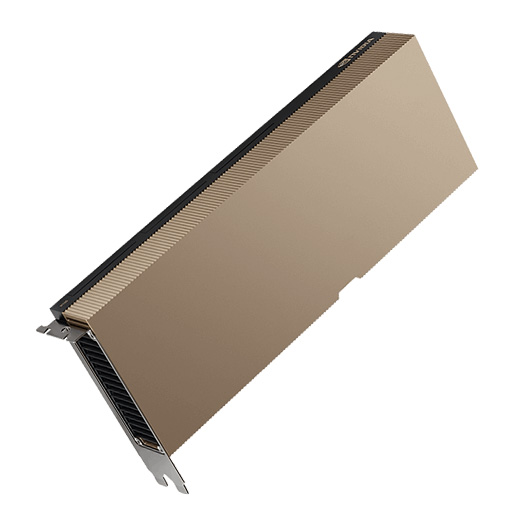
NVIDIA A30 Tensor Core GPU: Versatile AI Inference and Mainstream Enterprise Computing
Rated 4.67 out of 5USD6,530
-
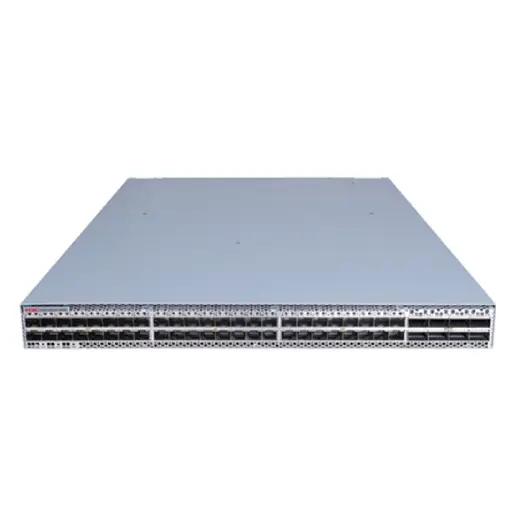
H3C S9855 Series High-Density RoCEv2 Ethernet Switch
USD16,000
Products Mentioned in This Article
 NVIDIA H100 NVL GPU
USD33,000Original price was: USD33,000.USD30,500Current price is: USD30,500.- NVIDIA RTX 6000 Ada Generation Graphics CardUSD9,000
- NVIDIA L40S
USD11,500Original price was: USD11,500.USD10,500Current price is: USD10,500. - HGX H100 Optimized X13 8U 8GPU Server: The Ultimate AI and HPC Powerhouse for Exascale ComputingUSD300,000


Training vs. Inference: Scaling Your Infrastructure for Production AI
Author: ITCT AI Infrastructure Team
Reviewed By: Senior Solutions Architect (HPC Division)
Last Updated: January 10, 2026
Reading Time: 12 Minutes
References:
- NVIDIA Technical Whitepapers (Ada Lovelace & Hopper Architecture)
- vLLM & TensorRT-LLM Performance Benchmarks (2025)
- Meta AI Llama 3 Inference Guides
- ITCTShop Internal Hardware Performance Testing Data
Quick Answer
Optimizing AI Inference Hardware: A Strategic Overview AI Inference—the process of putting trained models to work—requires a different hardware strategy than training. While training prioritizes massive raw compute and interconnectivity, inference is primarily memory-bandwidth bound. For optimal Large Language Model (LLM) deployment, the speed at which data moves from memory to the compute units (memory bandwidth) often dictates performance more than the speed of the compute units themselves. Consequently, GPUs with high bandwidth memory (HBM3) or efficient memory architectures (GDDR6 with large caches) are essential for reducing latency and increasing token generation speed.
Key Decision Factors
- For Massive Models (70B+ params): The NVIDIA H100 is the optimal choice due to its massive 3.35 TB/s bandwidth, preventing bottlenecks in production environments.
- For Mid-Range Models (7B-30B params): The NVIDIA L40S offers the best price-to-performance ratio, utilizing FP8 capabilities to maximize throughput without the high cost of HBM3.
- Cost Optimization: Implementing Quantization (INT8/FP4) can reduce VRAM usage by up to 75%, allowing larger models to run on more affordable or fewer GPUs, significantly lowering the Total Cost of Ownership (TCO).
Best LLM Inference Hardware
As 2026 unfolds, the artificial intelligence landscape is witnessing a seismic shift in infrastructure spending. For the past three years, the narrative was dominated by training—the massive computational undertaking required to build foundation models. However, as organizations move from experimentation to production, the focus has pivoted sharply toward inference.
Deploying Large Language Models (LLMs) like GPT-4, Llama 3, or Mixtral in a production environment presents a distinct set of challenges compared to training. It is no longer just about raw FLOPS; it is an intricate balancing act between latency (Time to First Token), throughput (Tokens Per Second), memory bandwidth, and total cost of ownership (TCO).
This guide provides a technical deep dive into optimizing AI inference, analyzing the hardware landscape, and helping enterprise architects select the right GPU configurations for their specific workloads.
The computational patterns of training and inference are fundamentally different, necessitating different hardware optimization strategies.
Training is throughput-oriented. It involves processing massive datasets in parallel to update model weights. It requires high-bandwidth interconnects (like NVLink) to synchronize gradients across hundreds or thousands of GPUs. The goal is to maximize utilization over days or weeks.
Inference, conversely, is latency-sensitive. It is the process of generating predictions from a trained model.
- Prefill Phase: The model processes the input prompt. This is compute-bound.
- Decoding Phase: The model generates tokens one by one. This is memory-bandwidth bound.
Because the decoding phase is autoregressive (each new token depends on previous tokens), the GPU must reload the entire model capability and the KV cache (Key-Value cache) from memory for every single generated token. This makes Memory Bandwidth the single most critical metric for LLM inference, often more so than raw compute power.
When scaling infrastructure for inference, you are not building a supercomputer to run one job; you are building a fleet to handle thousands of concurrent, asynchronous requests. This often means that massive NVLink domains are less critical than they are in training, provided the model fits within a single node or can be efficiently sharded.
The Inference Cost Equation
To optimize deployment, infrastructure engineers must solve for:
Increasing throughput (batch size) reduces cost but increases latency. The hardware challenge is finding the GPU that offers the highest memory bandwidth per dollar, while maintaining enough VRAM to hold the model weights and the KV cache for large batch sizes.
Why L40S and H100 NVL are Dominating the Inference Market
While the NVIDIA A100 80GB remains a workhorse, two newer contenders have emerged as the champions of the 2025-2026 inference market: the NVIDIA L40S and the NVIDIA H100 (specifically the NVL and SXM variants).
NVIDIA L40S: The Mid-Range Inference Champion
The L40S is built on the Ada Lovelace architecture. Unlike the Hopper architecture (H100), the L40S does not feature HBM3 memory; instead, it uses GDDR6. While HBM3 is faster, GDDR6 is significantly cheaper and more readily available.
- Pros: The L40S excels at inference for small-to-medium models (7B to 30B parameters). Its Transformer Engine supports FP8, which doubles throughput compared to FP16. It is a dual-slot, passive card that fits into standard Enterprise GPU Servers without requiring complex liquid cooling or custom racks.
- Cons: It lacks NVLink in most standard configurations and has lower memory bandwidth (864 GB/s) compared to H-series GPUs.
NVIDIA H100: The Heavyweight for Massive Models
For models exceeding 70B parameters (like Llama-3-70B or Falcon-180B), the NVIDIA H100 Tensor Core GPU is unrivaled.
- Memory Bandwidth: With over 3.35 TB/s of bandwidth, the H100 minimizes the bottleneck during the decoding phase.
- FP8 Tensor Cores: The H100’s fourth-gen Tensor Cores are specifically optimized to accelerate transformer workloads.
- H100 NVL: This PCIe dual-card variant connects two H100s via NVLink bridges, creating a unified 188GB memory pool. This is perfect for deploying 175B parameter models without needing a full HGX baseboard.
Comparison: L40S vs. H100 for Inference
| Feature | NVIDIA L40S | NVIDIA H100 SXM5 |
|---|---|---|
| Architecture | Ada Lovelace | Hopper |
| Memory | 48GB GDDR6 | 80GB HBM3 |
| Bandwidth | 864 GB/s | 3,350 GB/s |
| Best Use Case | Fine-tuning, Inference (7B-30B models), Graphics | Training, Inference (70B+ models), RAG Pipelines |
| Form Factor | PCIe (Universal) | SXM (Requires HGX Server) |
For organizations running mixed workloads—such as AI inference during the day and rendering or Omniverse workloads at night—the NVIDIA RTX 6000 Ada Generation is also a viable alternative to the L40S, offering similar specs with active cooling options for workstations.
Throughput vs. Latency: Balancing User Experience and Hardware Costs
Optimizing inference is a trade-off between Latency and Throughput.
- Latency (Time to First Token – TTFT): How long does the user wait before seeing the first word? This is critical for chatbots and interactive apps. It is heavily dependent on compute power (FLOPS).
- Throughput (Inter-token Latency): How fast does the text generate after it starts? This is dependent on memory bandwidth.
The Role of Batching
To maximize GPU utilization, inference servers (like vLLM or TRT-LLM) use Continuous Batching. Instead of processing one user request at a time, the GPU processes multiple requests simultaneously.
- Small Batch Size: Low latency, but wastes GPU cycles (memory bandwidth allows for more data than is being processed). High cost per token.
- Large Batch Size: High throughput and low cost per token, but increases latency for individual users.
Optimization Strategy: For real-time applications, target a batch size that fully saturates the GPU memory bandwidth without exceeding the latency Service Level Agreement (SLA). For offline batch processing (e.g., summarizing documents overnight), maximize the batch size until the VRAM is full.
Quantization Techniques and Their Impact on GPU Memory Requirements
The most effective way to lower hardware costs and increase speed is Quantization. This involves reducing the precision of model weights from 16-bit (FP16) to 8-bit (INT8) or even 4-bit (FP4/NF4).
Why Quantization Matters
- Memory Reduction: A 70B parameter model in FP16 requires ~140GB of VRAM. This requires two NVIDIA A100 80GB GPUs. In 4-bit quantization, the same model requires only ~40GB, fitting onto a single L40S or A6000.
- Bandwidth Efficiency: Moving 4-bit data is 4x faster than moving 16-bit data, directly improving generation speed.
Common Techniques:
- AWQ (Activation-aware Weight Quantization): Protects the “important” weights while compressing the rest, maintaining high accuracy.
- GPTQ: A classic post-training quantization method for high efficiency.
- FP8: Supported natively by H100 and L40S, offering a sweet spot between performance and precision without complex calibration.
Using quantization allows enterprises to deploy sophisticated models on more affordable hardware, such as Supermicro GPU Servers equipped with L40S cards, rather than expensive HGX H100 clusters.
Conclusion: Best LLM Inference Hardware
The transition from AI training to inference represents a maturation of the market. While raw compute still matters, memory bandwidth and capacity have become the defining metrics for hardware selection.
For massive, trillion-parameter foundation models, the NVIDIA HGX H100 Platform remains the gold standard. However, for the vast majority of enterprise use cases involving models like Llama-3-8B or Mistral, the L40S or quantized deployments on RTX 6000 Ada provide a far superior ROI.
Success in 2026 requires a holistic view: choosing the right hardware, applying advanced quantization, and utilizing optimized software stacks like TensorRT-LLM.
* Sourcing Your Infrastructure in the Middle East* For enterprises based in the MENA region, securing high-demand AI hardware can be challenging due to global allocation constraints. Located in the heart of Dubai, ITCTShop.com specializes in the rapid supply and integration of high-performance computing infrastructure. Whether you require a single workstation for R&D or a full-scale H100 cluster for production deployment, our local expertise ensures seamless logistics and technical support for your AI initiatives.
“In 2026, memory bandwidth is the new currency of AI. We are seeing clients shift budget from HGX clusters to high-density L40S configurations for inference, as they realize they can serve 90% of their use cases at half the cost.” — Lead Data Center Architect
“Latency is the silent killer of user adoption in GenAI applications. It is usually better to over-provision GPU memory bandwidth to ensure a ‘Time to First Token’ under 200ms, rather than trying to maximize 100% compute utilization.” — Principal AI Engineer
“Don’t underestimate quantization. Moving from FP16 to INT8 on modern hardware like the RTX 6000 Ada is effectively a free performance upgrade. In most enterprise RAG scenarios, the accuracy loss is negligible compared to the speed gains.” — Head of ML Operations
Last update at December 2025