What Are AI Workstations?
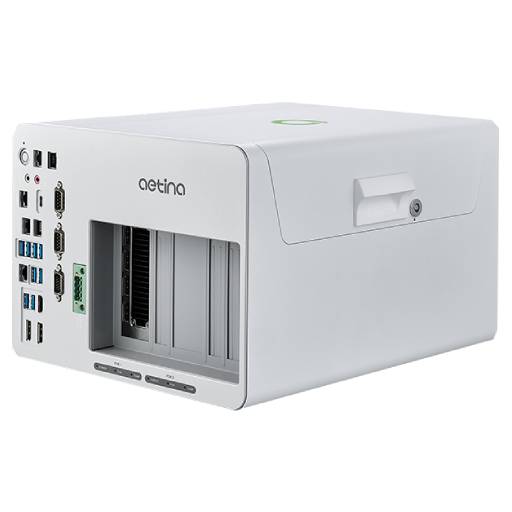
AI Workstations are high-performance computing systems designed specifically for artificial intelligence workloads such as machine learning, deep learning, data science, and advanced simulation. Unlike standard workstations or office PCs, these systems are built to handle massive parallel processing, large datasets, and continuous heavy workloads without performance drops.
At the core of an AI workstation are powerful GPUs (or AI accelerators), high-core-count CPUs, large amounts of RAM, and fast storage like NVMe SSDs. This combination allows data to be processed quickly, models to be trained efficiently, and experiments to be run locally without relying entirely on cloud resources.
In practical terms, AI workstations are used by developers, researchers, engineers, and data scientists who need full control over their environment, predictable performance, and the ability to work with sensitive data on-premise. They bridge the gap between personal computers and large-scale AI servers, offering enterprise-level power in a more compact and flexible form.
Applications of AI Workstations
AI workstations are used in scenarios where high computational power, speed, and reliability are essential, but full-scale servers are not always practical. They are especially valuable for teams and professionals who need local, hands-on access to AI processing.
AI workstations are commonly used for training and testing machine learning and deep learning models, where repeated experiments and fast iteration matter. Data scientists rely on them for data preprocessing, feature engineering, and running complex analytics on large datasets without long waiting times.
In computer vision and image processing projects, AI workstations handle tasks like object detection, facial recognition, and medical image analysis with high accuracy and efficiency. They are also widely used in natural language processing for tasks such as training language models, speech recognition, and text analysis.
Beyond pure AI development, these systems play an important role in simulation, digital twins, and research environments, as well as in industries like healthcare, finance, automotive, robotics, media production, and scientific research—anywhere performance, stability, and on-premise control are critical.
Benefits of Buying an AI Workstation
Investing in an AI workstation gives you a powerful, flexible, and cost-effective platform for developing and deploying artificial intelligence and data-driven applications. Here’s why they are valuable for professionals and teams:
-
High Performance for Local AI Work: AI workstations are equipped with powerful GPUs or AI accelerators, fast CPUs, and abundant memory, enabling rapid model training, testing, and data processing without the delays typical of standard desktops.
-
Faster Iteration and Experimentation: With dedicated hardware, you can run multiple experiments back-to-back, try model variations, and tune parameters quickly — which significantly accelerates development cycles.
-
Lower Long-Term Cost Than Cloud for Heavy Workloads: While cloud computing is useful, frequent and large-scale model training can become expensive over time. An AI workstation provides predictable costs and no recurring rental fees for compute time.
-
Full Control Over Your Environment: On-premise systems give you complete control of software, libraries, data privacy, and security, which is especially important for sensitive data or regulated industries.
-
Reliable, Predictable Performance: Unlike shared cloud resources, an AI workstation is dedicated to your projects, so you don’t face resource contention. This leads to consistent, high-throughput performance.
-
Scalability for Growing Needs: Many workstations can be configured or upgraded with additional GPUs, memory, and fast storage, providing a scalable foundation for future AI workloads.
-
Reduced Dependency on Internet or Cloud: Local processing means you can work offline or in environments with limited connectivity, without sacrificing speed or capability.
-
Ideal for Development, Prototyping, and Edge Deployment Prep: Workstations are perfect for building, refining, and validating AI models before scaling them into production servers or edge devices.
AI Workstations Roadmap (Evolution Over Time)
AI workstations have evolved alongside the growth of artificial intelligence. In the early 2010s, most systems relied mainly on powerful CPUs, as AI models were smaller and less complex. Around 2012, with the rise of deep learning, GPUs became a core component, significantly accelerating training and data processing. Between 2016 and 2019, workstations advanced to support multi-GPU setups, larger memory, and better cooling as AI moved toward real-world applications.
From 2020 onward, AI workstations became widely used in enterprises and research environments, focusing on scalability, fast storage, and energy efficiency. Today, they are designed as modular, high-performance systems capable of handling large models while bridging the gap between personal computing and AI servers.
Best AI Workstation Manufacturers
Choosing the right AI workstation manufacturer matters because build quality, hardware compatibility, thermal design, and long-term stability directly affect AI workloads. The companies below are widely recognized for producing reliable, high-performance systems suitable for machine learning, deep learning, and data-intensive tasks.
- NVIDIA
- Dell
- HP
- Lenovo
- Supermicro
- ASUS
- Gigabyte
- BOXX
- Puget Systems
- MSI
- Apple
- Origin PC
Who should buy an AI Workstation?
An AI Workstation is built for people who work with heavy models, large datasets, and GPU intensive workloads on a daily basis. If training, fine tuning, or testing AI models is part of your regular workflow, a standard desktop or laptop will quickly become a bottleneck.
These systems are ideal for machine learning engineers, data scientists, and AI researchers who need reliable local compute power without relying entirely on cloud resources. They are also a strong choice for computer vision developers, NLP engineers, and teams building or deploying models that require frequent iteration and low latency access to hardware.
AI Workstations also make sense for startups, research labs, and companies that want more control over data privacy, predictable costs, and the flexibility to scale hardware over time. If your work depends on consistent performance, large GPU memory, and long training sessions, an AI Workstation is designed for exactly that.
Future-proofing tips
When buying an AI Workstation, the goal is not just to meet today’s needs, but to stay useful for several years. AI workloads evolve fast, and hardware that looks powerful now can feel limiting much sooner than expected if it’s not chosen carefully.
Start with expandability. Choose a motherboard and chassis that support multiple GPUs, high power limits, and additional PCIe lanes. Even if you begin with one GPU, having room to add more later can save you from a full system replacement.
Prioritize GPU memory over raw compute. Many modern AI models are constrained by VRAM, not just processing power. A GPU with more memory will age better as models and datasets grow.
Make sure the system supports next-generation standards such as newer PCIe versions, high-speed NVMe storage, and large RAM capacities. This ensures compatibility with future hardware upgrades and faster data pipelines.
Finally, plan for cooling and power headroom. Efficient thermal design and a strong power supply allow you to upgrade components safely without stability issues. A well balanced, upgrade friendly workstation is the best way to protect your investment long term.
Buy AI Workstations from ITCT Shop
Purchasing an AI workstation from ITCT Shop gives you access to high-performance hardware that’s ready for real-world AI and machine learning workloads. ITCT Shop offers a range of configurations tailored to different needs — from research and development to enterprise-scale model training and data science applications.
Every workstation is built with quality components, optimized for speed, reliability, and long-term use. With expert consultation available, you can choose a system that matches your specific project requirements instead of guessing based on specs alone. That means less time troubleshooting hardware and more time on productive work.