Products Mentioned in This Article


Author: ITCT AI Infrastructure Team
Reviewed by: Senior Network Architect
Published: January 17, 2026
Reading Time: 9 Minutes
References:
- NVIDIA AI Enterprise Documentation (2025 Release Notes)
- Kubernetes.io: GPU Scheduling Best Practices
- ITCT Shop Hardware Specifications (H100/A100 Technical Guides)
What is a Full-Stack AI Factory?
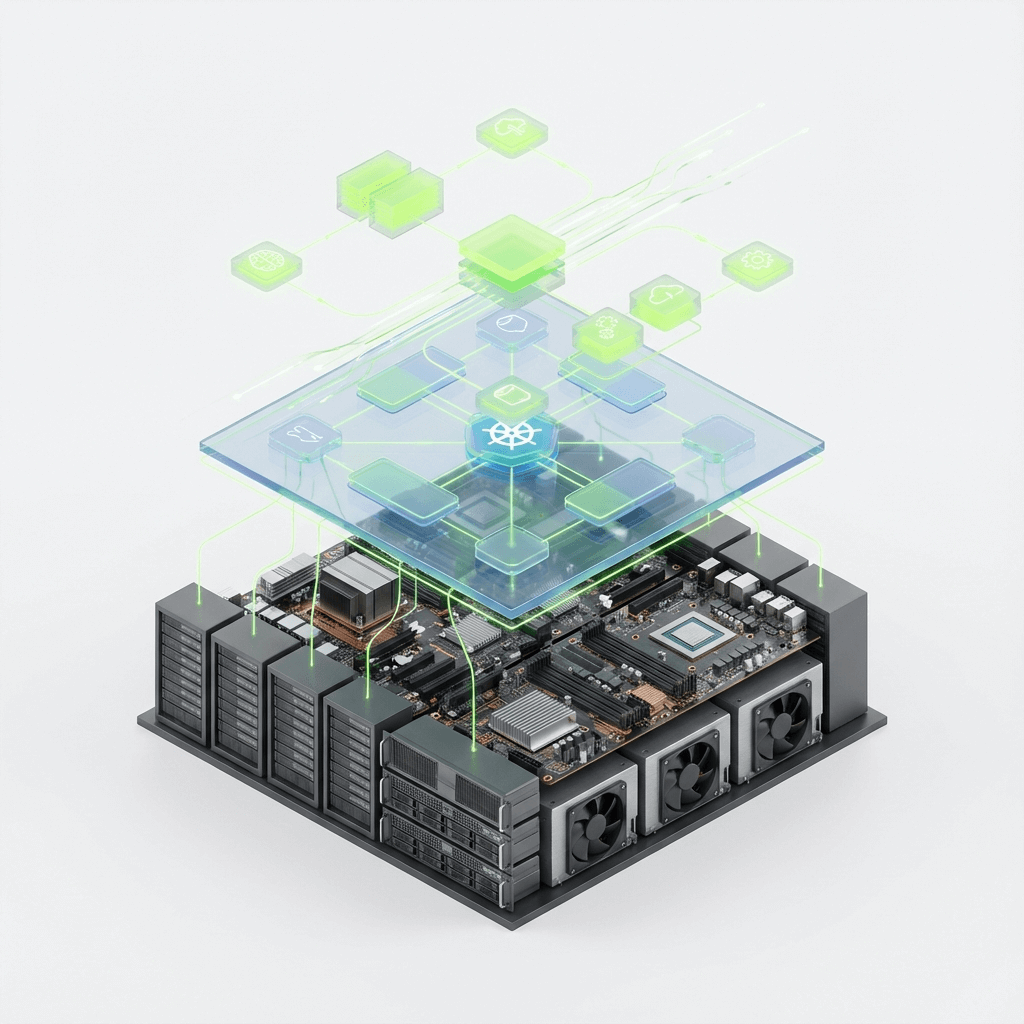
A Full-Stack AI Factory is an integrated environment where high-performance hardware (like NVIDIA H100 GPUs) meets enterprise-grade software (NVIDIA AI Enterprise). It goes beyond simple server installation by utilizing container orchestration (Kubernetes) and MLOps pipelines to automate the training and deployment of Artificial Intelligence models. This approach ensures that expensive GPU resources are utilized efficiently, reducing idle time and accelerating ROI for businesses.
Key Decision Factors
When building this infrastructure, enterprises must balance hardware isolation against flexibility. For multi-tenant environments where security is paramount, utilizing Multi-Instance GPU (MIG) technology on A100 or H100 cards is essential. However, for internal development clusters, time-slicing and software-level virtualization often provide better resource density. Always ensure your NVIDIA AI Enterprise licensing is active to unlock these advanced virtualization features and receive enterprise support.
In the rapidly evolving landscape of 2026, the paradigm of high-performance computing has shifted fundamentally. We are no longer simply building data centers; we are constructing AI Factories. Just as traditional factories take raw materials and convert them into valuable goods, an AI factory takes raw data and converts it into intelligence, actionable insights, and generative models.
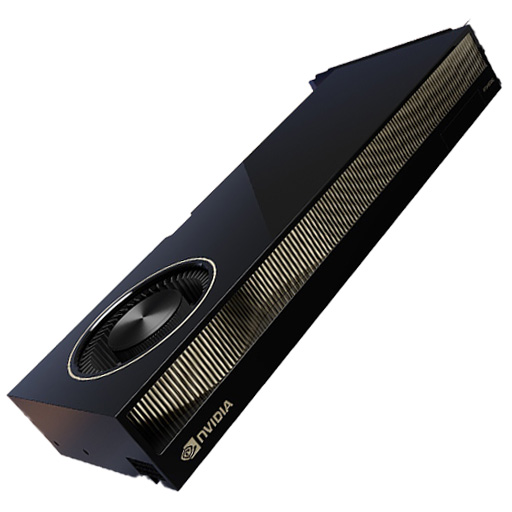
For enterprises in the Middle East, particularly within the tech-forward hub of Dubai, the race is no longer just about acquiring the most powerful silicon. While securing an inventory of the NVIDIA H100 NVL or the legendary NVIDIA A100 is a critical first step, it is merely the foundation. The true competitive advantage lies in the orchestration layer—the software stack that ensures these expensive GPUs are utilized at maximum efficiency rather than idling in a server rack.
This comprehensive guide explores the convergence of hardware and software. We will dissect how NVIDIA AI Enterprise (NVAIE) serves as the operating system for your AI infrastructure, how to orchestrate multi-GPU clusters using Kubernetes, and how to build a seamless MLOps pipeline that justifies the ROI of your hardware investment. At ITCT Shop, we believe that understanding this full-stack approach is essential for any organization looking to deploy production-grade AI.
What is NVIDIA AI Enterprise? The “OS” of Artificial Intelligence
Many IT administrators make the mistake of viewing GPU drivers as a simple utility. In the consumer world (GeForce), this might be true. However, in the enterprise data center, the software stack is arguably as complex and vital as the hardware itself.
NVIDIA AI Enterprise is an end-to-end, cloud-native suite of AI and data analytics software. It acts as the bridge between your physical infrastructure—whether it’s a SOIKA AI Workstation or a massive HGX H100 Server—and your data science applications.
1. The Necessity of Licensing in 2026
Why do enterprises pay for NVAIE when open-source drivers exist? The answer boils down to three pillars: Optimization, Security, and Virtualization.
- Virtualization (vGPU): Without an NVAIE license, modern data center GPUs cannot be effectively virtualized. If you want to run virtual desktop infrastructures (VDI) or split a single GPU across multiple virtual machines (VMs) using NVIDIA vGPU software, the enterprise license is mandatory.
- Enterprise Support: Running a production workload on a “community support” basis is a risk few CTOs can afford. NVAIE comes with guaranteed SLAs and direct access to NVIDIA enterprise support, which is crucial when a critical inference service goes down.
- Certified Security: In 2026, supply chain attacks on AI models are a real threat. NVAIE provides scanned, signed, and secure containers, ensuring that the libraries you are running haven’t been compromised.
2. Key Components of the Suite
The suite is vast, but for an AI Factory, these components are the engines of production:
- NVIDIA NIM (NVIDIA Inference Microservices): A game-changer introduced broadly in late 2024 and perfected in 2025. NIMs are pre-built, optimized containers for deploying foundation models. Instead of a DevOps engineer spending weeks figuring out the dependencies to run Llama 3 or Falcon 180B, they can pull a NIM and have it running on an NVIDIA H100 80GB in minutes.
- RAPIDS cuDF: This library allows data scientists to run pandas-like data manipulation code entirely on the GPU. For extract-transform-load (ETL) tasks, this can speed up processing by 50x-100x compared to CPU-only servers.
- Triton Inference Server: The standard for serving models. It supports all major frameworks (TensorFlow, PyTorch, ONNX) and maximizes GPU utilization by dynamically batching incoming requests.
The Hardware Foundation: Selecting the Right Engine
Before diving deeper into orchestration, we must align the software with the correct hardware. At ITCT Shop, we see many clients struggling to choose between different GPU classes. The software stack behaves differently depending on the underlying silicon architecture.
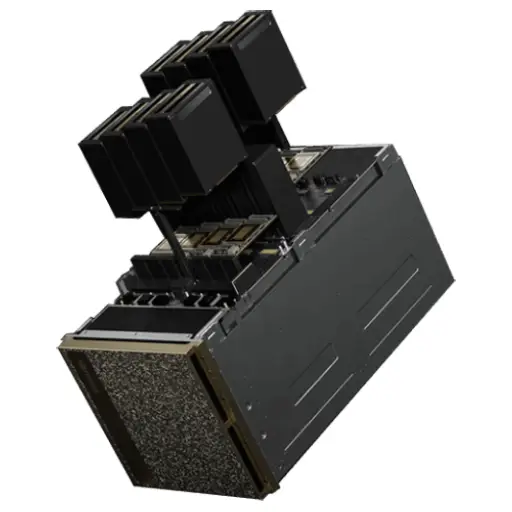
1. The Heavy Lifters: NVIDIA H100 and HGX Systems
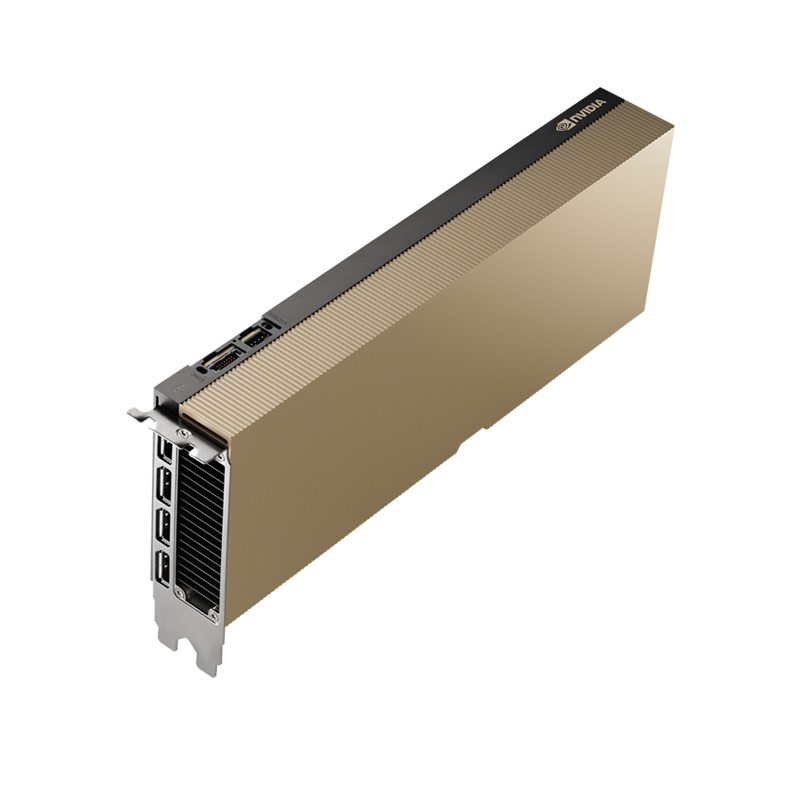
The NVIDIA H100 (Hopper architecture) remains the gold standard for LLM training in 2026.
- Transformer Engine: The H100 includes a specific “Transformer Engine” that dynamically switches between FP8 and FP16 precision. This drastically reduces memory usage without losing model accuracy.
- NVLink Switch System: In an HGX H100 optimized server, the GPUs talk to each other at 900 GB/s. This is critical for model parallelism, where a single AI model is too large to fit on one card and must be split across 4 or 8 GPUs.
2. The Versatile Standard: NVIDIA A100
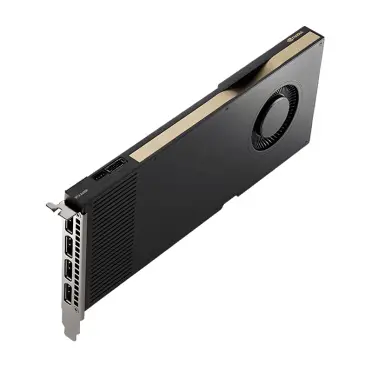
Even in 2026, the NVIDIA A100 40GB/80GB is the workhorse of the industry. It offers the best price-to-performance ratio for inference and fine-tuning mid-sized models.
- Best For: Enterprise inference, traditional computer vision, and recommendation systems.
- Availability: Generally more readily available in the Dubai market compared to the constrained H100 supply chain.
3. Development at the Edge: SOIKA Workstations
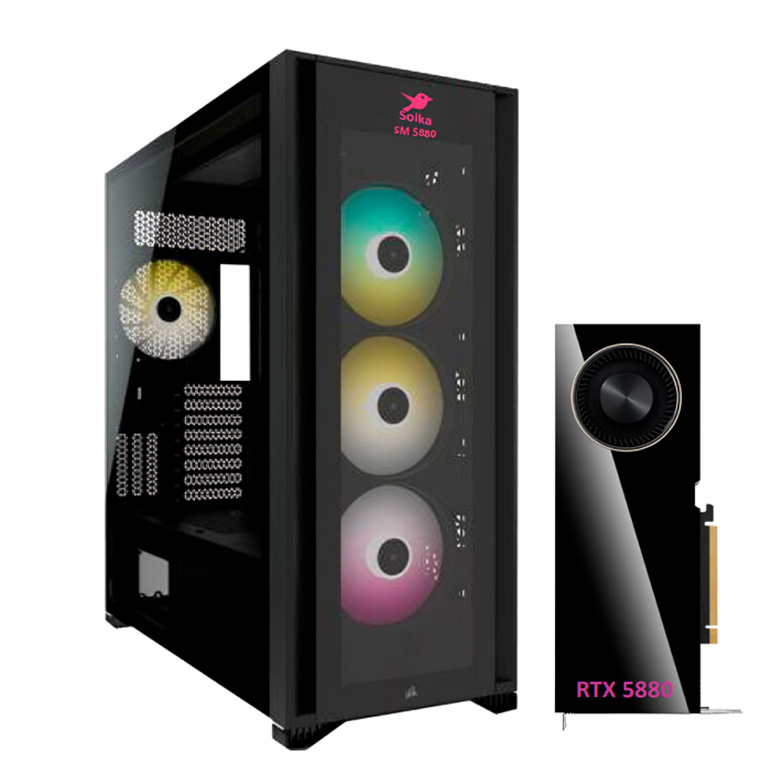
For data privacy reasons, many Dubai-based entities prefer not to send data to the cloud. SOIKA AI Workstations, often equipped with A6000 Ada or smaller H100 configurations, allow developers to prototype locally before pushing code to the main cluster.
| Feature | NVIDIA H100 NVL | NVIDIA A100 80GB | L40S |
|---|---|---|---|
| Primary Use Case | LLM Training & Heavy Inference | General Purpose AI & HPC | Generative AI & Graphics |
| Architecture | Hopper | Ampere | Ada Lovelace |
| Memory Bandwidth | 7.8 TB/s (NVL pair) | 2 TB/s | 864 GB/s |
| Sparsity Support | Yes (4th Gen) | Yes (3rd Gen) | Yes (4th Gen) |
| Recommended ITCT Product | View Product | View Product | View Catalog |
Container Orchestration: Running Kubernetes on Multi-GPU Clusters
Building the cluster is one thing; managing it is another. In a modern AI Factory, you rarely run scripts directly on bare metal. Instead, Kubernetes (K8s) is the orchestration layer that manages containerized workloads.
However, “Vanilla Kubernetes” does not understand what a GPU is. It treats a server as a pool of CPU and RAM. To bridge this gap, we need the NVIDIA GPU Operator.
1. The NVIDIA GPU Operator
This is a specific Kubernetes operator that automates the management of all NVIDIA software components needed to provision GPUs. It automatically containerizes and deploys:
- The NVIDIA drivers (to talk to the hardware).
- The Kubernetes Device Plugin (to tell K8s “Hey, I have 8 GPUs here”).
- The DCGM Exporter (for metrics).
Without this operator, your IT team is stuck manually updating drivers on every node in the cluster—a nightmare scenario for scalability.
2. Multi-Instance GPU (MIG): Maximizing ROI
One of the most powerful features of the NVIDIA A100 and H100 is MIG (Multi-Instance GPU). In a traditional setup, if a developer runs a small Jupyter notebook on an A100 80GB, they lock the entire card. The other 70GB of VRAM sits idle.
With MIG: You can partition a single A100 into up to seven completely isolated instances. Each instance has its own dedicated compute units and high-bandwidth memory slices.
- Scenario: A university or research lab in Dubai buys one DGX System. Using MIG, they can provide dedicated GPU resources to 7 different students simultaneously from a single card, effectively 56 users per DGX unit (8 cards x 7 slices).
3. Time-Slicing vs. MIG
Not all GPUs support MIG (e.g., older V100s or some workstation cards). In these cases, we use Time-Slicing.
- How it works: Kubernetes allows multiple pods to submit work to the GPU. The GPU driver rapidly switches context between tasks.
- Pros: Increases utilization.
- Cons: No memory isolation. If one process crashes the GPU memory, it affects all other processes on that card.
- Verdict: Use MIG for production/security (Hardware isolation). Use Time-Slicing for dev/test environments (Software interleaving).
NVIDIA AI Enterprise
Simplifying MLOps: From Hardware Provisioning to Model Deployment
Hardware and Kubernetes provide the infrastructure, but MLOps (Machine Learning Operations) provides the workflow. A Full-Stack AI Factory must streamline the path from code to production.
Phase 1: Infrastructure as Code (IaC)
Modern ITCT Shop customers don’t just plug in servers; they provision them with code. Tools like Terraform and Ansible are used to configure the bare-metal servers. This ensures that every node in your cluster is identical, reducing “configuration drift.”
Phase 2: The Training Pipeline
Once the infrastructure is ready, data scientists use frameworks like NVIDIA NeMo. NeMo is part of the AI Enterprise suite and is specifically designed for:
- Large Language Models (LLMs): Training GPT-style models.
- Multimodal Models: Handling image and text together.
- Speech AI: ASR (Automatic Speech Recognition) and TTS (Text-to-Speech).
NeMo abstracts away the complexity of distributed training. It automatically handles the sharding of the model across the NVLink connections in your HGX Server, allowing researchers to focus on the data, not the MPI (Message Passing Interface) protocols.
Phase 3: Efficient Inference Serving
Deployment is often more expensive than training because it runs 24/7. Using Triton Inference Server (included in NVAIE), you can achieve:
- Dynamic Batching: Grouping multiple incoming requests into a single batch to maximize GPU throughput.
- Concurrent Model Execution: Running a PyTorch model and a TensorFlow model on the same GPU simultaneously.
Phase 4: Observability and Monitoring
You cannot manage what you cannot measure. Integrating DCGM (Data Center GPU Manager) with Prometheus and Grafana allows IT administrators to visualize critical metrics:
- Power Usage: Is the H100 drawing its full 700W? If not, is the workload CPU-bound?
- Temperature: Are the cooling systems in your Dubai data center coping with the heat load?
- SM Clock Frequencies: Is the GPU throttling due to thermal limits?
Challenges in 2026: Power, Cooling, and Network Fabric
As we move deeper into the AI era, the bottleneck shifts from compute to the supporting infrastructure.
The Thermal Challenge
The NVIDIA H100 NVL has a TDP (Thermal Design Power) that pushes the limits of air cooling. For our clients in the UAE, where ambient temperatures are high, data center cooling efficiency is paramount. We are seeing a shift towards Liquid Cooling solutions for high-density racks.
The Networking Bottleneck
An AI Factory is only as fast as its network. When training a trillion-parameter model, GPUs spend a significant amount of time “talking” to each other to synchronize gradients.
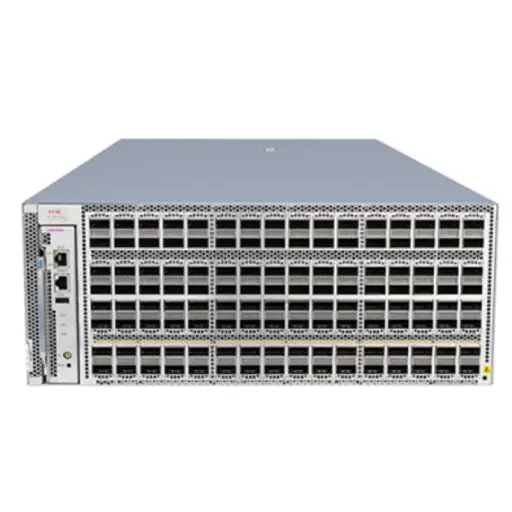
- InfiniBand vs. Ethernet: While Ethernet (RoCE v2) is catching up, NVIDIA Quantum InfiniBand remains the gold standard for low-latency, high-throughput AI fabrics.
- Spectrum-X: For those committed to Ethernet, NVIDIA’s Spectrum-X platform provides the necessary congestion control to prevent packet loss during massive training runs.
ITCT Shop: Your Local Partner in Dubai
Why does geography matter in the cloud era? Because hardware is physical. ITCT Shop is strategically located in Dubai, serving as a critical hub for the Middle East and North Africa (MENA) region.
- Supply Chain Agility: We maintain local stock of critical components like the NVIDIA A100 and H100, drastically reducing lead times compared to ordering from US or European suppliers.
- Data Sovereignty: Many government and financial institutions in the UAE are mandated to keep data within the country. Building your own AI Factory with hardware from ITCT Shop ensures compliance with local data residency laws, unlike renting cloud GPUs in a foreign jurisdiction.
- Technical Expertise: Our team understands the specific challenges of the region, from power voltage standards to cooling requirements for high-density deployments in desert climates.
Conclusion: Building the Future, Today
The “Full-Stack AI Factory” is not just a buzzword; it is the architectural blueprint for the next decade of computing. It requires a holistic view that integrates the raw power of NVIDIA H100 and A100 GPUs with the intelligence of NVIDIA AI Enterprise software and the orchestration capabilities of Kubernetes.
By treating your infrastructure as a unified factory—rather than a collection of disparate servers—you unlock the ability to scale AI initiatives from a single workstation to a supercomputing cluster.
Whether you are a startup prototyping your first LLM or a government entity building a sovereign AI cloud, the journey begins with the right foundation. Explore our extensive catalog of AI Computing Hardware at ITCT Shop, and let us help you build the factory of the future.
“In 2026, the bottleneck is rarely the GPU speed itself, but the data pipeline feeding it. We find that implementing the NVIDIA GPU Operator on Kubernetes creates a much smoother handover between IT operations and data scientists.” — Lead Cloud Infrastructure Engineer
“Many organizations in Dubai underestimate the importance of the software layer. Without the proper AI Enterprise stack, an H100 cluster is just a very expensive heater. The software is what turns that heat into intelligence.” — Director of AI Strategy, MENA Region
“For inference workloads, we typically recommend a containerized approach using NVIDIA NIMs. It drastically reduces deployment time from weeks to hours compared to traditional manual configuration.” — Senior MLOps Architect
Last update at December 2025