
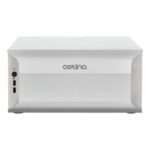
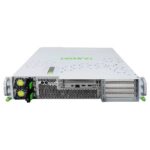

Author: ITCT Tech Editorial Unit
Reviewer: ITCT Enterprise Infrastructure Team
Last Updated: January 13, 2026
Reading Time: 16 minutes
References:
- NVIDIA MGX Modular Architecture Specifications
- Intel Xeon 6700-series Processor Data Sheets
- Aetina Product Catalogs (AEX-2UA1, AIP-FR68, AIP-KQ67)
- Qualcomm Cloud AI 100 Ultra Technical Documentation
Quick Answer: What are Aetina Edge AI Systems?
Aetina Edge AI Systems are specialized computing platforms designed to process artificial intelligence workloads directly at the network edge, rather than in the cloud. The portfolio includes three distinct tiers: the AEX-2UA1 (a high-performance 2U server using NVIDIA MGX architecture for data centers), the AIP-FR68 (a flexible AI workstation certified for generative AI), and the AIP-KQ67 (a cost-effective GPU expansion box). These systems enable enterprises to handle sensitive data locally, reduce latency, and ensure operational efficiency in environments ranging from factory floors to telecom facilities.
Key Decision Factors
Choosing the right system depends on infrastructure and workload intensity. Select the AEX-2UA1 for mission-critical, high-density environments requiring dual GPUs and NVLink connectivity. Choose the AIP-FR68 for mixed workloads, specifically if your organization needs to run Generative AI or Large Language Models (LLMs) using Qualcomm accelerators or RTX A6000 GPUs. For entry-level deployments, pilot projects, or cost-sensitive expansion requiring standard RTX cards (up to 300W), the AIP-KQ67 offers the best balance of performance and affordability.
1. Aetina Edge AI Systems: The Evolution of Edge AI Computing in Enterprise Infrastructure
The landscape of enterprise artificial intelligence has undergone a fundamental transformation in recent years, with edge computing emerging as the cornerstone of modern AI deployment strategies. As organizations seek to process sensitive data locally, reduce latency, and maintain operational efficiency, the demand for sophisticated edge AI systems has reached unprecedented levels. According to industry research, enterprise data processed at the edge is projected to reach 75% by 2025, representing a dramatic shift from the traditional cloud-centric approach that dominated the previous decade.
Aetina Corporation has positioned itself at the forefront of this technological revolution, developing three distinct yet complementary edge AI systems that address the diverse computational requirements of modern enterprises. The AEX-2UA1, AIP-FR68, and AIP-KQ67 represent different approaches to edge AI computing, each optimized for specific use cases ranging from high-performance server-grade deployments to flexible workstation configurations. These systems incorporate cutting-edge technologies from industry leaders including NVIDIA’s MGX architecture, Intel’s latest Xeon processors, and Qualcomm’s Cloud AI accelerators, creating a comprehensive ecosystem for enterprise edge AI applications.
The strategic importance of selecting the appropriate edge AI system cannot be overstated, as these decisions directly impact an organization’s ability to implement advanced AI workflows, manage computational resources efficiently, and maintain competitive advantages in increasingly AI-driven markets. This comprehensive analysis examines each system’s architectural design, performance capabilities, deployment scenarios, and total cost of ownership considerations, providing enterprise decision-makers with the detailed insights necessary to make informed infrastructure investments.
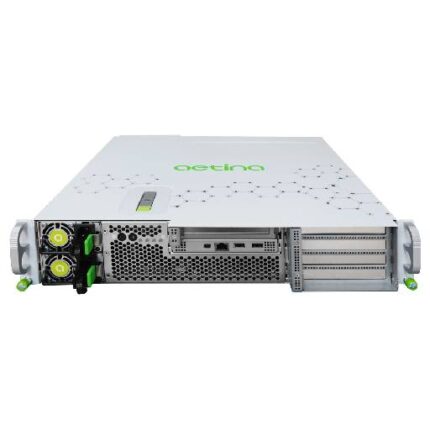
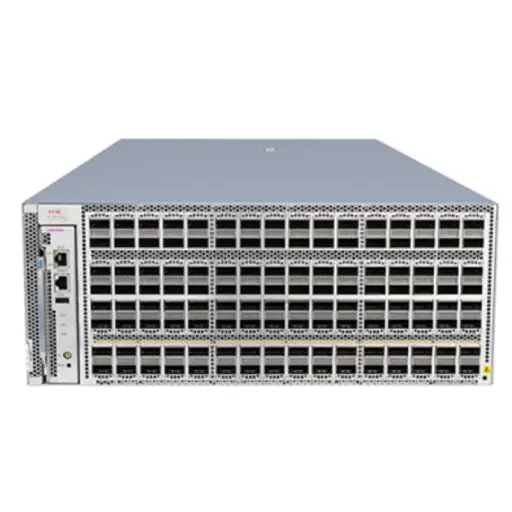
Aetina SuperEdge AEX-2UA1 (MGX Server)
| Feature | Details |
|---|---|
| Processor | Latest Intel® Xeon® 6 (Granite Rapids-SP, Sierra Forest-SP) up to 250W TDP |
| Memory | 8× DDR5 RDIMM channels, 6400 MT/s DDR5 or 8000 MT/s MCR DIMM |
| GPU Support | Up to 2× NVIDIA dual-width GPUs with NVLink for high-speed GPU-to-GPU communication |
| Expansion Slots | (2) PCIe Gen5 x16 FHFL, (1) PCIe Gen5 x8 FHFL (disabled with 2 dual-width GPUs), (1) PCIe Gen5 x16 FHHL for NIC/DPU |
2. Understanding Edge AI Systems and Their Enterprise Applications
Edge AI systems represent a paradigm shift in how organizations approach artificial intelligence deployment, moving computational power closer to data sources and end-users to address the limitations of traditional cloud-based AI architectures. These systems are specifically designed to handle AI workloads including machine learning inference, computer vision processing, natural language processing, and real-time analytics directly at the network edge, eliminating the need for constant cloud connectivity and reducing data transmission costs. The architecture of modern edge AI systems must balance several critical factors including computational power, energy efficiency, thermal management, and physical form factor constraints while maintaining the reliability and performance standards expected in enterprise environments.
The evolution of edge AI has been driven by several converging technological trends, including the proliferation of IoT devices, the increasing sophistication of AI models, and the growing emphasis on data privacy and sovereignty. Modern enterprises across industries such as manufacturing, healthcare, retail, and telecommunications are deploying edge AI systems to enable real-time decision making, reduce operational costs, and improve service delivery. For manufacturing organizations, edge AI systems enable predictive maintenance, quality control, and process optimization directly on factory floors. In healthcare settings, these systems support medical imaging analysis, patient monitoring, and diagnostic assistance while ensuring sensitive patient data remains within institutional boundaries. The retail sector leverages edge AI for inventory management, customer behavior analysis, and personalized shopping experiences, while telecommunications companies utilize these systems for network optimization, security monitoring, and service enhancement.
The technical requirements for enterprise edge AI systems extend beyond raw computational power to include considerations such as reliability, scalability, maintainability, and integration capabilities. Organizations must evaluate factors including GPU acceleration capabilities, memory bandwidth, storage performance, network connectivity options, and thermal design power when selecting edge AI platforms. Additionally, the ability to support multiple AI frameworks, containerized deployments, and orchestration platforms has become increasingly important as organizations adopt DevOps practices for AI model lifecycle management. The three Aetina systems examined in this analysis each address different aspects of these requirements, offering distinct advantages for specific deployment scenarios and organizational needs.
3. Aetina AEX-2UA1: NVIDIA MGX Short-Depth Edge Server Deep Dive
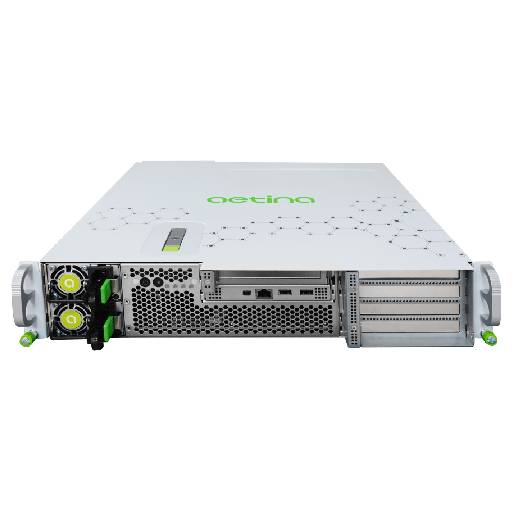
The Aetina AEX-2UA1 represents the pinnacle of enterprise edge AI server technology, built upon NVIDIA’s groundbreaking MGX modular architecture to deliver unprecedented performance in a compact 2U form factor. This system is specifically engineered to address the most demanding edge AI applications, combining a single Intel Xeon 6700-series processor with dual double-width GPU support and advanced NVIDIA NVLink interconnect technology. The 420mm short-depth design makes it uniquely suitable for deployment in space-constrained environments including telecom facilities, branch offices, and edge data centers where traditional full-depth servers cannot be accommodated.
The architectural foundation of the AEX-2UA1 leverages Intel’s latest Xeon 6700-series processors with Performance-cores, specifically optimized for AI and high-performance computing workloads. These processors feature enhanced vector processing capabilities, increased memory bandwidth, and integrated AI acceleration features that complement the system’s GPU resources. The eight-channel memory configuration supports high-speed DDR5 memory modules, providing the memory bandwidth necessary for data-intensive AI applications. The system’s PCIe Gen5 infrastructure ensures maximum throughput for GPU communications and storage access, with dedicated slots for up to two double-width GPUs connected via NVIDIA NVLink for optimal inter-GPU communication.
Key Technical Features and Capabilities
- Single Intel Xeon 6700-series processor with Performance-cores optimized for AI workloads
- Support for dual double-width NVIDIA GPUs with NVLink bridge connectivity
- Compact 2U short-depth form factor (420mm depth) for space-constrained deployments
- Eight-channel DDR5 memory configuration supporting high-bandwidth applications
- Multiple PCIe Gen5 slots including 2x x16 FHFL and 1x x8 FHFL for GPU expansion
- Hot-swappable PCIe Gen5 E1.S storage slots and M.2 NVMe support
- 1+1 Redundant Titanium-level power supplies (1600W standard, 2000W optional)
- Advanced thermal management with optimal fan speed control
- NVIDIA Bluefield-3 and ConnectX-7 network acceleration support
- Intel Platform Firmware Resilience (PFR) and TPM 2.0 security features
The AEX-2UA1’s NVIDIA MGX foundation provides exceptional flexibility for current and future hardware configurations, ensuring long-term investment protection as GPU and accelerator technologies evolve. This modular approach allows organizations to upgrade GPU configurations without replacing the entire server infrastructure, significantly reducing total cost of ownership over the system’s operational lifetime. The system’s design prioritizes ease of maintenance with hot-swappable components including fans, storage devices, and power supplies, minimizing downtime and operational disruption in mission-critical edge deployments.
4. Aetina AIP-FR68: MegaEdge AI Workstation Comprehensive Analysis
The Aetina AIP-FR68 stands as a revolutionary AI workstation that bridges the gap between desktop computing and enterprise-grade AI infrastructure, earning NVIDIA Certified System (NCS) certification for its exceptional integration of Intel’s 13th generation Core processors with high-performance NVIDIA RTX GPUs. This system represents Aetina’s commitment to democratizing AI computing by providing enterprise-level capabilities in a more accessible desktop form factor, making advanced AI workloads feasible for organizations that require powerful AI processing but cannot accommodate full server infrastructure.
The AIP-FR68’s design philosophy centers around versatility and expandability, supporting multiple GPU configurations including NVIDIA RTX A6000, RTX 6000 Ada, and dual Qualcomm Cloud AI 100 Ultra accelerators. This flexibility allows organizations to tailor the system’s performance characteristics to their specific AI workload requirements, whether focusing on computer vision, natural language processing, or generative AI applications. The system’s support for up to 870 TOPS of AI performance through Qualcomm’s accelerators positions it as a formidable platform for on-premises generative AI deployments, enabling organizations to run large language models and other advanced AI applications without relying on cloud services.
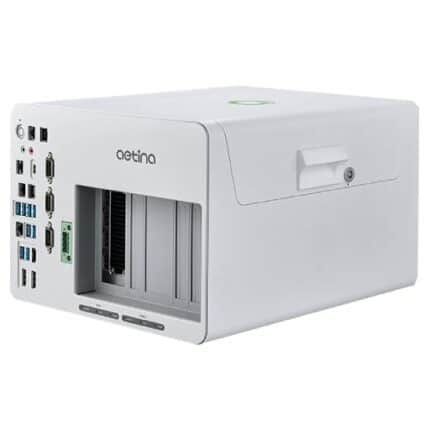
Aetina MegaEdge AIP-FR68 (PCIe AI Workstation)
- Up to 870 TOPS processing power for heavy workloads in machine learning, computer vision, and generative AI
- Support for LLMs up to 70 billion parameters with 128GB onboard memory on the AI card
- Full compatibility with popular frameworks such as TensorFlow, PyTorch, ONNX, and inference servers like Triton and VLLM
Advanced Connectivity and Expansion Options
- Intel 13th Generation Core i9/i7/i5 processors with TDP up to 65W
- NVIDIA NCS certification with RTX A6000 and RTX 6000 Ada GPU support
- Dual Qualcomm Cloud AI 100 Ultra support delivering up to 870 TOPS performance
- Four 2.5-inch SATA SSD hot-swappable storage bays with RAID configuration support
- Multiple high-speed network interfaces including 10G BASE-T and 2.5G RJ-45 ports
- Comprehensive I/O connectivity including USB 3.2 Gen2 and Type-C ports
- Multiple display outputs supporting 4K and 8K resolutions
- Five PCIe expansion slots for peripheral and accelerator integration
- Industrial-grade design with vibration and shock resistance
- EdgeEye out-of-band remote management capability
The AIP-FR68’s innovative screwless chassis design represents a significant advancement in system maintainability and user experience, allowing technicians to access internal components quickly without specialized tools. This design philosophy extends to the system’s storage configuration, featuring tool-free SSD installation and removal capabilities that reduce maintenance time and complexity. The platform’s support for Power over Ethernet (PoE) on selected network ports simplifies camera and sensor deployments in computer vision applications, reducing infrastructure complexity and installation costs for surveillance and monitoring systems.
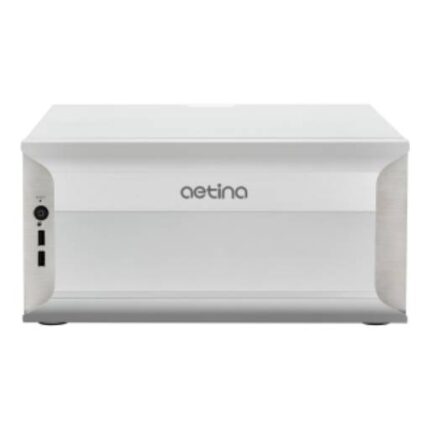
5. Aetina AIP-KQ67: Flexible GPU-Expansion Platform Detailed Review
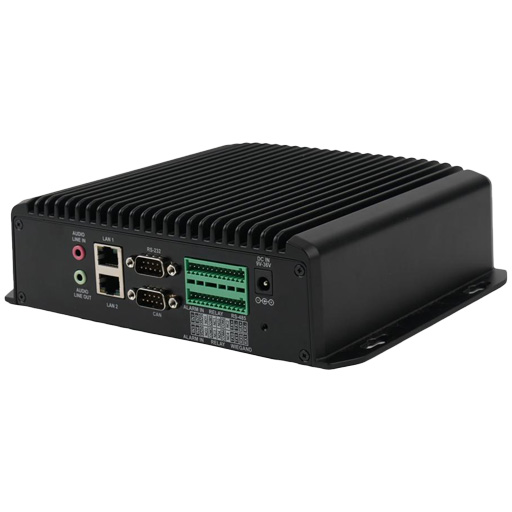
The Aetina AIP-KQ67 emerges as the most versatile platform in Aetina’s edge AI portfolio, specifically engineered to accommodate a wide range of NVIDIA RTX series GPUs while maintaining cost-effectiveness and deployment flexibility. Built around Intel’s 12th and 13th generation Core processors and certified for NVIDIA A2 Tensor Core GPU integration, this system serves as an ideal entry point for organizations beginning their edge AI journey or requiring scalable AI processing capabilities that can evolve with changing business requirements.
The AIP-KQ67’s design prioritizes flexibility and user-friendliness, featuring an innovative screwless chassis with dust filter covers that significantly simplify maintenance operations and extend system longevity in challenging industrial environments. The platform supports up to 128GB of DDR5 memory across four DIMM slots, providing substantial memory bandwidth for memory-intensive AI applications including large model inference and complex computer vision processing. Its comprehensive expansion capabilities, including PCIe Gen5 x16, multiple PCIe x4 slots, and M.2 storage options, enable organizations to customize the system configuration based on specific application requirements and budget constraints.
Comprehensive I/O and Expansion Capabilities
- Intel 12th/13th Generation Core i9/i7/i5 processor support
- NVIDIA A2 Tensor Core GPU certification with RTX series compatibility
- Support for high-performance NVIDIA RTX GPUs up to 300W TDP
- Four high-speed network ports (1x 1GbE, 3x 2.5GbE) for diverse connectivity needs
- Triple independent display outputs supporting 4K and 8K resolutions
- Comprehensive expansion slot configuration including PCIe Gen5 x16 and multiple PCIe x4 slots
- Dual M.2 slots for high-speed NVMe storage and expansion cards
- Tool-free maintenance design with quick-release SSD trays
- Adjustable footpads for flexible mounting configurations
- Industrial-grade build quality with vibration and shock resistance
The AIP-KQ67’s unique positioning as a GPU-expansion platform makes it particularly suitable for computer vision applications, surveillance systems, and AI inference deployments where processing requirements may vary significantly over time. The system’s ability to accommodate various GPU configurations from entry-level AI accelerators to high-end RTX cards provides organizations with a clear upgrade path as their AI capabilities mature and processing requirements increase. This scalability, combined with the system’s competitive pricing and robust build quality, makes it an attractive option for organizations seeking to establish edge AI capabilities without significant initial capital investment.
6. Technical Specifications Comparison Table
| Specification | AEX-2UA1 | AIP-FR68 | AIP-KQ67 |
|---|---|---|---|
| Processor | Single Intel Xeon 6700-series with P-cores | Intel 13th Gen Core i9/i7/i5 (up to 65W) | Intel 12th/13th Gen Core i9/i7/i5 |
| Chipset | N/A (Direct CPU Connection) | Intel R680E | Intel Q670E |
| GPU Support | Up to 2 Double-Width PCIe GPUs with NVLink | NVIDIA RTX A6000/6000 Ada, Qualcomm Cloud AI 100 Ultra | NVIDIA RTX series up to 300W, A2 Tensor Core |
| Memory | 8-Channel Memory Configuration | 4x 288-pin U-DIMM slots | 4x 288-pin U-DIMM up to 128GB (4000MHz) |
| Form Factor | 2U Rackmount (438mm x 420mm x 88mm) | Desktop/Wall Mount (340 x 215 x 279 mm) | Desktop/Wall Mount (413 x 315 x 159 mm) |
| Storage | 4x Hot-swap PCIe Gen5 E1.S + 2x M.2 NVMe | 4x 2.5″ SATA SSD + 2x M.2 (Gen4 x4) | 2x 2.5″ SATA SSD + 2x M.2 slots |
| Network | 1x RJ45 1GbE BMC + Bluefield-3/ConnectX-7 Support | 3x 2.5G RJ-45 + 1x 10G BASE-T + RS-485/232 | 4x Ethernet (1x 1GbE + 3x 2.5GbE) |
| PCIe Expansion | 2x FHFL Gen5 x16 + 1x FHFL Gen5 x8 + 1x FHHL Gen5 x16 | Multiple PCIe slots (Gen4 x16, Gen4 x8, Gen3 x4, Gen3 x1) | 1x PCIe Gen5 x16 + 2x PCIe x4 + 1x PCIe x2 |
| Power Supply | 1600W/2000W 1+1 Redundant Titanium PSU | DC 24-48V up to 600W | 500W/850W FLEX ATX PSU (AC 100-240V) |
| Operating Temperature | 10°C to 35°C (50°F to 95°F) | 0°C to 50°C (varies with GPU configuration) | -10°C to 50°C (with 0.5m/s airflow) |
| Certifications | NVIDIA MGX Architecture | NVIDIA NCS Certified | CE/FCC/LVD/UKCA/RoHS |
7. Performance Analysis and Use Case Scenarios
The performance characteristics of each Aetina system reflect their distinct design objectives and target applications, with the AEX-2UA1 delivering enterprise server-class performance for the most demanding edge AI workloads, while the AIP-FR68 and AIP-KQ67 provide more specialized capabilities for specific application domains. Performance analysis must consider not only raw computational power but also factors such as power efficiency, thermal management, and sustained performance under continuous operation conditions typical in edge deployment environments.
The AEX-2UA1’s dual GPU configuration with NVLink connectivity provides exceptional parallel processing capabilities for large-scale AI model training and inference operations. This architecture excels in scenarios requiring high-throughput batch processing, such as video analytics pipelines processing multiple camera feeds simultaneously, or real-time fraud detection systems analyzing thousands of transactions per second. The system’s Intel Xeon processor provides robust CPU performance for preprocessing tasks, data orchestration, and system management functions, while the dual GPUs handle computationally intensive AI operations. Typical use cases include telecommunications network optimization, smart city infrastructure management, autonomous vehicle testing, and large-scale industrial IoT applications where edge processing requirements exceed the capabilities of smaller systems.
The AIP-FR68’s versatility shines in mixed workload environments where organizations require both traditional computing capabilities and specialized AI acceleration. The system’s support for Qualcomm Cloud AI 100 Ultra accelerators makes it particularly well-suited for generative AI applications, natural language processing, and conversational AI systems that require low latency and high throughput. Manufacturing organizations leverage the AIP-FR68 for predictive maintenance systems, quality control applications, and process optimization tasks that combine traditional data analysis with modern AI techniques. Healthcare institutions deploy these systems for medical imaging analysis, patient monitoring, and diagnostic support applications where the combination of high-performance GPUs and robust CPU capabilities provides comprehensive processing power for complex healthcare AI workflows.
8. Deployment Considerations and Total Cost of Ownership
Successful deployment of edge AI systems requires careful consideration of multiple factors beyond initial hardware costs, including infrastructure requirements, operational expenses, maintenance considerations, and long-term scalability planning. The total cost of ownership analysis must encompass not only the purchase price of the systems but also ongoing operational costs including power consumption, cooling requirements, maintenance expenses, and potential upgrade costs over the system’s operational lifetime.
The AEX-2UA1’s enterprise server design requires appropriate rack infrastructure, redundant power supplies, and professional cooling systems, making it most suitable for organizations with existing data center or server room facilities. While the initial investment is substantial, the system’s modular MGX architecture provides excellent long-term value through its ability to accommodate future GPU upgrades without requiring complete system replacement. Organizations considering the AEX-2UA1 should factor in the costs of professional installation, ongoing maintenance contracts, and potential infrastructure upgrades required to support the system’s power and cooling requirements. The system’s redundant power supplies and hot-swappable components minimize downtime risks, but organizations should also consider the availability of qualified technical personnel for maintenance and troubleshooting operations.
The AIP-FR68 and AIP-KQ67 offer more flexible deployment options with lower infrastructure requirements, making them suitable for organizations without dedicated server facilities. These systems can be deployed in office environments, industrial settings, or remote locations with standard electrical power and environmental conditions. The desktop form factors reduce installation complexity and ongoing maintenance requirements, while their innovative chassis designs facilitate user-serviceable maintenance operations. However, organizations should consider the systems’ expansion limitations and potential need for future upgrades when planning long-term AI infrastructure strategies. The lower initial costs of these systems make them attractive for proof-of-concept projects and pilot deployments, with the understanding that successful implementations may require migration to more powerful platforms as requirements grow.
9. Integration with Existing Infrastructure
The integration of edge AI systems into existing enterprise infrastructure presents both opportunities and challenges that must be carefully evaluated during the planning and procurement process. Modern organizations typically operate heterogeneous IT environments including legacy systems, cloud services, hybrid architectures, and emerging edge computing platforms, requiring AI systems that can seamlessly integrate with diverse technologies while maintaining security, reliability, and performance standards.
All three Aetina systems support standard enterprise technologies including containerization platforms, orchestration tools, and AI development frameworks, enabling integration with existing DevOps and MLOps workflows. The systems’ support for popular AI frameworks including TensorFlow, PyTorch, and ONNX Runtime ensures compatibility with existing AI models and development tools. Network connectivity options across the platforms support various enterprise networking architectures, from traditional Ethernet networks to advanced software-defined networking implementations. Organizations using AI computing infrastructure can leverage these systems’ compatibility with standard enterprise management tools and monitoring systems.
The AEX-2UA1’s enterprise server architecture integrates naturally with existing data center infrastructure, supporting standard server management protocols, network boot capabilities, and enterprise security frameworks. Its NVIDIA MGX foundation provides compatibility with NVIDIA’s enterprise software stack including AI Enterprise, Omniverse, and Fleet Command management platforms. Organizations with existing AI edge infrastructure will find the system’s management interfaces and monitoring capabilities consistent with enterprise server standards, facilitating integration with existing IT operations workflows and automation systems.
10. Future-Proofing and Scalability
The rapid evolution of AI technologies and the increasing sophistication of edge computing requirements necessitate careful consideration of future-proofing and scalability factors when selecting edge AI systems. Organizations must balance immediate performance requirements with the flexibility to adapt to emerging technologies, changing workload patterns, and evolving business needs over the typical 3-5 year operational lifetime of enterprise computing infrastructure.
The AEX-2UA1’s NVIDIA MGX architecture provides exceptional future-proofing capabilities through its modular design approach, which enables organizations to upgrade GPU configurations as new technologies become available without requiring complete system replacement. This modularity extends to storage, networking, and accelerator components, providing multiple upgrade paths as requirements evolve. The system’s support for emerging technologies including NVIDIA’s next-generation GPUs, advanced networking accelerators, and high-speed storage interfaces positions it as a long-term platform capable of adapting to future AI workload requirements. Organizations investing in the AEX-2UA1 can expect to maintain competitive AI processing capabilities through targeted component upgrades rather than complete system refreshes.
The AIP-FR68 and AIP-KQ67 platforms offer different approaches to scalability, with extensive expansion slot configurations that enable organizations to add specialized accelerators, storage devices, and networking capabilities as requirements change. The systems’ support for multiple GPU architectures provides flexibility in balancing performance, power consumption, and cost considerations as AI workload requirements evolve. Organizations can begin with entry-level configurations and progressively upgrade GPU and accelerator components based on actual workload demands and budget availability. This approach enables cost-effective scaling while providing clear migration paths to higher-performance configurations when justified by business requirements. For comprehensive guidance on AI system selection, organizations should reference NVIDIA Jetson comparison guides and AI workstation selection resources.
11. Frequently Asked Questions
12. Conclusion and Recommendations
The comprehensive analysis of Aetina’s three flagship edge AI systems reveals distinct positioning and capabilities that address different segments of the enterprise AI market. Each system represents a carefully engineered solution optimized for specific deployment scenarios, performance requirements, and organizational constraints. The selection of the appropriate system depends on multiple factors including performance requirements, budget constraints, infrastructure capabilities, and long-term scalability objectives.
For organizations requiring maximum performance and enterprise-grade reliability, the AEX-2UA1 stands as the clear choice, offering NVIDIA MGX architecture, dual GPU support with NVLink, and comprehensive enterprise features. Its modular design provides exceptional future-proofing capabilities and upgrade flexibility, making it ideal for mission-critical applications in telecommunications, smart cities, and large-scale industrial IoT deployments. The system’s higher initial cost is offset by its long-term value proposition and ability to adapt to evolving requirements through component upgrades rather than complete system replacement.
The AIP-FR68 emerges as the optimal solution for organizations seeking versatile AI capabilities in a desktop form factor, particularly those focusing on generative AI, mixed workloads, or applications requiring both traditional computing and specialized AI acceleration. Its NVIDIA NCS certification, Qualcomm Cloud AI support, and comprehensive connectivity options make it suitable for healthcare, manufacturing, and research applications where flexibility and performance must be balanced with accessibility and ease of deployment.
The AIP-KQ67 represents the most cost-effective entry point into enterprise edge AI, offering excellent scalability and upgrade potential for organizations beginning their AI journey or requiring distributed edge processing capabilities. Its support for various NVIDIA RTX configurations, innovative maintenance design, and competitive pricing make it ideal for pilot projects, proof-of-concept deployments, and applications where initial capital investment must be minimized while preserving future expansion options.
Ultimately, the success of edge AI implementations depends not only on selecting appropriate hardware platforms but also on comprehensive planning that includes infrastructure readiness, software compatibility, staff training, and long-term maintenance strategies. Organizations should conduct thorough requirements analysis, pilot testing, and total cost of ownership evaluation before making final platform selections. The rapid evolution of AI technologies and edge computing requirements necessitates platforms that balance immediate performance needs with long-term flexibility and scalability, qualities that all three Aetina systems demonstrate in their respective market segments.
For additional resources and expert guidance on AI infrastructure selection, organizations can explore industry reports and detailed technical documentation from Aetina Corporation and consult with specialized vendors who understand the complexities of enterprise edge AI deployment. The investment in appropriate edge AI infrastructure represents a critical foundation for organizational AI capabilities and competitive advantage in an increasingly AI-driven business environment.
“The short-depth design of the AEX-2UA1 is a decisive factor for telecom deployments. Being able to fit enterprise-grade MGX architecture into a 420mm rack depth solves a massive legacy infrastructure challenge.” — Telecommunications Infrastructure Team
“For maintenance teams, the screwless chassis design on the AIP-FR68 and KQ67 series is not just a cosmetic feature; it significantly reduces downtime during routine SSD or GPU swaps in industrial environments.” — Field Operations Team
“While the AEX-2UA1 is the powerhouse, the AIP-FR68’s ability to host Qualcomm Cloud AI 100 Ultra accelerators makes it the most specialized choice for on-premise Generative AI inference where latency is the primary KPI.” — AI Solutions Architecture Team
“We typically recommend the AIP-KQ67 for proof-of-concept phases. It provides a clear upgrade path for standard RTX cards without the heavy initial capital expenditure of a full MGX server deployment.” — Enterprise Procurement Team
Last update at December 2025