
Description
The NVIDIA RTX A5500 represents a significant milestone in professional workstation graphics technology, delivering exceptional performance for demanding creative and technical workflows. Built on the revolutionary NVIDIA Ampere architecture, this powerhouse GPU combines cutting-edge ray tracing capabilities, artificial intelligence acceleration, and massive parallel processing power to transform how professionals approach complex visualization, rendering, and computational tasks.
Whether you are working with intricate 3D models in CAD applications, rendering photorealistic scenes for architectural visualization, training deep learning models, or handling multi-application workflows that demand exceptional graphical fidelity, the RTX A5500 provides the robust foundation your professional workstation requires. This comprehensive guide explores every aspect of the NVIDIA RTX A5500, from its technical specifications to real-world performance benefits.
Key Specifications at a Glance
- 24GB GDDR6 ECC Memory with 768 GB/s bandwidth
- 10,240 CUDA Cores for parallel processing
- 320 Third-Generation Tensor Cores for AI acceleration
- 80 Second-Generation RT Cores for real-time ray tracing
- PCIe 4.0 x16 interface
- 230W Total Board Power (TBP)
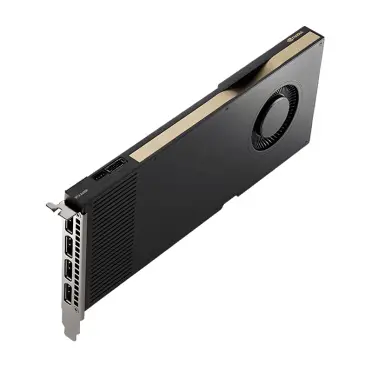
- 4x DisplayPort 1.4a outputs supporting up to 8K resolution
Understanding the NVIDIA RTX A5500 Architecture
The NVIDIA RTX A5500 is engineered on the groundbreaking Ampere architecture, which represents a quantum leap in graphics processing technology. This architecture introduces substantial improvements across every dimension of GPU performance, from traditional rasterization to modern ray tracing and artificial intelligence workloads. The Ampere architecture delivers up to 2x the performance per watt compared to previous generation Turing-based solutions, making the RTX A5500 both powerful and remarkably efficient for professional applications.

CUDA Cores: The Foundation of Parallel Processing
At the heart of the RTX A5500 lies an impressive array of 10,240 CUDA cores, providing exceptional parallel processing capabilities for compute-intensive applications. These cores enable professionals to accelerate everything from scientific simulations and financial modeling to video encoding and image processing. The massive CUDA core count ensures smooth performance even when working with complex scenes containing millions of polygons or processing high-resolution datasets that would overwhelm lesser graphics solutions.
Tensor Cores: Accelerating AI and Machine Learning
The inclusion of 320 third-generation Tensor Cores positions the RTX A5500 as an excellent choice for professionals working with artificial intelligence and machine learning applications. These specialized processing units deliver up to 272.8 TFLOPS of AI performance using sparsity optimization, dramatically accelerating neural network training and inference tasks. Whether you are developing computer vision algorithms, working with natural language processing models, or utilizing AI-enhanced features in creative applications like Adobe Sensei or NVIDIA Canvas, the Tensor Cores provide the computational horsepower required for responsive, real-time AI workflows.
RT Cores: Real-Time Ray Tracing Excellence
Professional visualization demands photorealistic rendering quality, and the RTX A5500 delivers this through 80 second-generation RT Cores capable of 66.6 TFLOPS of ray tracing performance. These dedicated hardware accelerators enable real-time ray tracing in applications like Autodesk VRED, Chaos V-Ray, NVIDIA Omniverse, and other professional rendering solutions. Architects can visualize accurate lighting scenarios in their designs, product designers can evaluate materials and finishes with photorealistic accuracy, and content creators can achieve cinematic-quality renders in a fraction of the time required by traditional CPU-based rendering methods.
Memory Architecture: 24GB GDDR6 with ECC Protection
One of the most critical specifications for professional workloads is memory capacity, and the RTX A5500 excels with a generous 24GB of GDDR6 memory. This substantial memory allocation, accessed through a 384-bit memory interface delivering 768 GB/s of bandwidth, ensures that professionals can work with extraordinarily large datasets without encountering memory limitations. Complex 3D assemblies, high-resolution textures, massive point clouds from LiDAR scanning, and large-scale simulation datasets all remain resident in GPU memory for optimal performance.
Equally important for professional applications is the inclusion of Error Correction Code (ECC) memory protection. ECC memory automatically detects and corrects single-bit errors and detects multi-bit errors, ensuring data integrity during long-running simulations, critical rendering tasks, and mission-critical computational workflows. This reliability feature distinguishes professional workstation graphics cards from consumer gaming GPUs, providing the confidence professionals need when working on projects where accuracy and reliability are paramount.
Complete Technical Specifications
| Specification | Details |
|---|---|
| Architecture | NVIDIA Ampere |
| GPU Memory | 24GB GDDR6 with ECC |
| Memory Interface | 384-bit |
| Memory Bandwidth | 768 GB/s |
| CUDA Cores | 10,240 |
| Tensor Cores | 320 (3rd Generation) |
| RT Cores | 80 (2nd Generation) |
| Single-Precision Performance | 34.1 TFLOPS |
| RT Core Performance | 66.6 TFLOPS |
| Tensor Performance | 272.8 TFLOPS (with sparsity) |
| System Interface | PCIe 4.0 x16 |
| Total Board Power | 230W |
| Power Connector | 1x 8-pin PCIe |
| Thermal Solution | Active cooling |
| Form Factor | 4.4″ H x 10.5″ L, Dual slot, Full height |
| Display Outputs | 4x DisplayPort 1.4a |
| Maximum Displays | 4 simultaneous displays |
| Maximum Resolution | 4x 4096×2160 @ 120Hz 4x 5120×2880 @ 60Hz 2x 7680×4320 @ 60Hz |
| Encode/Decode Engines | 1x Encode, 2x Decode (including AV1) |
| NVLink Support | Yes (112.5 GB/s bidirectional) |
| Graphics APIs | DirectX 12 Ultimate, Shader Model 6.6, OpenGL 4.6, Vulkan 1.3 |
| Compute APIs | CUDA 11.6, DirectCompute, OpenCL 3.0 |
| VR Ready | Yes |
Professional Applications and Use Cases
The NVIDIA RTX A5500 excels across a remarkably diverse range of professional applications, making it an ideal choice for multi-disciplinary teams and professionals who work across multiple software platforms. The GPU’s balanced architecture ensures excellent performance whether your workflow emphasizes traditional 3D graphics, modern ray-traced rendering, AI-enhanced features, or compute-intensive simulation tasks.
3D Design and CAD Applications
Engineers and designers working with computer-aided design (CAD) software will appreciate the RTX A5500’s ability to handle extraordinarily complex assemblies with millions of parts. Applications such as Autodesk AutoCAD, SOLIDWORKS, Siemens NX, and PTC Creo benefit from the massive CUDA core count and generous memory capacity, enabling smooth viewport manipulation, rapid regeneration of complex features, and responsive interaction even with the most demanding models.
The GPU’s certified drivers, tested extensively with professional CAD applications, ensure stability and reliability during long design sessions. Features like hardware-accelerated anti-aliasing, ambient occlusion, and real-time shadows enhance the design review experience, allowing engineers to identify potential issues earlier in the development process. When integrated into professional workstations, the RTX A5500 transforms the CAD experience, reducing waiting times and enabling designers to focus on creativity rather than struggling with sluggish performance.
Architectural Visualization and Rendering
Architects and visualization specialists can leverage the RTX A5500’s advanced ray tracing capabilities to create stunning photorealistic renderings directly from their BIM models. Applications like Autodesk Revit combined with real-time ray tracing engines such as Enscape, Lumion, or Twinmotion enable architects to visualize accurate lighting conditions, material reflections, and atmospheric effects in real-time, dramatically accelerating the design iteration process and improving communication with clients.
The 24GB of memory proves particularly valuable when rendering high-resolution images or animations containing detailed textures, complex geometry, and photorealistic materials. Traditional CPU-based rendering solutions can take hours or even days to produce final-quality images, but the RTX A5500’s combination of CUDA cores and RT Cores reduces render times to minutes, enabling designers to produce more design alternatives and respond quickly to client feedback.
Media and Entertainment Production
Content creators working in video production, motion graphics, and visual effects benefit substantially from the RTX A5500’s capabilities. Applications like Adobe Premiere Pro, After Effects, DaVinci Resolve, and Autodesk Maya utilize GPU acceleration for real-time playback of complex timelines, faster rendering of effects, and responsive viewport performance when working with high-resolution footage including 4K, 6K, and 8K video content.
The dedicated encode and decode engines, including support for the efficient AV1 codec, accelerate video transcoding workflows, enabling editors to work with proxy files that maintain visual quality while providing responsive editing performance. Color grading workflows in DaVinci Resolve particularly benefit from the GPU’s computational power, allowing colorists to apply sophisticated corrections and effects while maintaining real-time playback.
Machine Learning and Data Science
Data scientists and machine learning engineers will find the RTX A5500’s Tensor Cores invaluable for training neural networks and performing inference tasks. Popular frameworks including TensorFlow, PyTorch, and NVIDIA’s own CUDA Deep Neural Network library (cuDNN) are optimized to leverage Tensor Cores, dramatically accelerating training times compared to CPU-only solutions.
The 24GB of ECC-protected memory enables training of larger models without requiring expensive distributed training setups, while the memory bandwidth ensures that data can be fed to the processing cores efficiently. Whether you are developing computer vision models for autonomous vehicles, training natural language processing algorithms, or implementing recommender systems, the RTX A5500 provides professional-grade AI acceleration at a compelling price point.
NVLink Technology: Scaling Beyond 24GB
For workflows that demand even more memory capacity than the standard 24GB configuration provides, the RTX A5500 supports NVIDIA NVLink technology. By connecting two RTX A5500 cards using an NVLink bridge (sold separately), professionals can create a unified memory pool of 48GB while also gaining additional computational resources from the second GPU.
The NVLink connection provides 112.5 GB/s of bidirectional bandwidth between the two GPUs, far exceeding the capabilities of traditional PCIe-based multi-GPU configurations. This high-speed interconnect enables applications that support NVLink to treat the two cards as a single logical GPU, eliminating the need to manually manage data distribution across multiple cards and providing a seamless scaling path for memory-intensive workloads such as large-scale simulation, enormous 3D datasets, and training large language models.
Display Capabilities and Multi-Monitor Support
Professional workflows often benefit from expansive screen real estate, and the RTX A5500 delivers exceptional multi-display capabilities through its four DisplayPort 1.4a outputs. Each output supports resolutions up to 8K (7680×4320) at 60Hz, or you can configure four 4K displays running at 120Hz for ultra-smooth motion and responsive interaction.
The DisplayPort 1.4a standard includes support for Display Stream Compression (DSC), enabling high refresh rates even at maximum resolutions while maintaining visually lossless quality. For professionals working with color-critical applications, the outputs support 10-bit and 12-bit color depths, ensuring accurate color reproduction throughout the workflow from capture through final delivery.
NVIDIA Mosaic technology, supported on Windows and Linux platforms, enables you to combine multiple displays into a single large desktop surface, perfect for creating immersive visualization environments or configuring elaborate multi-window workflows where you can view different aspects of your project simultaneously without constantly switching between applications.
Performance Comparison with Competing Solutions
RTX A5500 vs RTX A6000
While the NVIDIA RTX A6000 represents the flagship of the professional Ampere lineup, the RTX A5500 delivers approximately 80-85% of the A6000’s performance at a significantly lower price point. The primary differences include the A6000’s 48GB of memory (versus 24GB), slightly higher CUDA core count (10,752 vs 10,240), and higher power consumption (300W vs 230W).
For many professional workflows, particularly those that fit comfortably within 24GB of memory, the RTX A5500 provides exceptional value, delivering nearly equivalent performance while consuming less power and generating less heat. However, workflows involving exceptionally large datasets, such as high-resolution volumetric rendering, massive point clouds, or training very large neural networks, may benefit from the A6000’s doubled memory capacity.
RTX A5500 vs Consumer RTX 3090
While consumer graphics cards like the GeForce RTX 3090 may appear attractive due to their gaming-focused specifications, the RTX A5500 offers several critical advantages for professional use cases. These include ECC memory for data integrity, certified drivers rigorously tested with professional applications, support for NVIDIA RTX Virtual Workstation software for remote work scenarios, and professional support backed by NVIDIA’s enterprise service organization.
The RTX A5500 also includes features specifically designed for professional workflows, such as higher reliability through rigorous testing and validation, optimized drivers that prioritize stability over raw gaming performance, and compatibility with professional display technologies including Quadro Sync for synchronized multi-projector environments.
Software Certification and Driver Support
One of the most significant advantages of choosing professional graphics solutions like the RTX A5500 over consumer alternatives is the extensive software certification program. NVIDIA works directly with leading independent software vendors (ISVs) to test and certify drivers with professional applications, ensuring optimal performance, stability, and compatibility.
Certified applications span the full spectrum of professional workflows, including CAD and engineering tools like Autodesk AutoCAD, Inventor, and Revit; SOLIDWORKS; Siemens NX; and PTC Creo. Media and entertainment applications including Adobe Creative Cloud, Autodesk Maya, Foundry Nuke, and Blackmagic Design DaVinci Resolve are extensively tested. Scientific computing and visualization platforms such as ANSYS, MATLAB, and ParaView also receive certification.
Professional driver releases follow a different cadence than consumer gaming drivers, prioritizing stability and compatibility over immediate support for the latest games. NVIDIA provides long-term support for professional drivers, including security updates and critical bug fixes, ensuring that professional workstations remain reliable and secure throughout their operational lifespan.
Virtualization and Remote Workstation Capabilities
Modern professional workflows increasingly incorporate remote work scenarios, and the RTX A5500 supports NVIDIA RTX Virtual Workstation (vWS) software, enabling IT administrators to deploy powerful GPU-accelerated virtual desktops. This capability allows professionals to access the full performance of RTX A5500 hardware from thin clients, laptops, or even tablets, making it possible to work from anywhere while maintaining access to powerful workstation-class computational resources.
Virtual GPU (vGPU) technology partitions a single physical GPU into multiple virtual GPUs, each with dedicated memory and compute resources. This enables multiple users to share a single workstation-class GPU while maintaining consistent performance and isolation between virtual machines. For organizations managing remote teams or providing workstation access to contractors and partners, vGPU technology delivers significant cost savings while maintaining the performance and reliability that professional workflows demand.
Thermal Design and Acoustic Performance
Despite its impressive performance specifications, the RTX A5500 maintains a relatively modest 230W total board power rating, making it compatible with a wide range of workstation platforms without requiring extreme power supplies or cooling solutions. The active cooling system utilizes a vapor chamber and optimized fan curve to maintain appropriate operating temperatures while keeping acoustic levels reasonable, even under sustained heavy workloads.
The dual-slot form factor strikes an excellent balance between cooling capacity and system compatibility, fitting comfortably in standard workstation chassis while leaving adjacent PCIe slots available for additional expansion cards such as high-speed storage controllers, professional audio interfaces, or specialized capture cards. The card’s length of 10.5 inches is compatible with most workstation cases, though system integrators should verify clearance, particularly in compact or specialized chassis designs.
Why Choose ITCT Shop for Your RTX A5500
At ITCT Shop, we specialize in providing professional-grade computing solutions for creative professionals, engineers, and data scientists. Our expertise in workstation configuration ensures that your RTX A5500 is paired with complementary components optimized for your specific workflow requirements.
We offer comprehensive pre-sales consultation to help you determine whether the RTX A5500 represents the optimal solution for your applications, and our post-sales support team provides ongoing assistance to ensure you achieve maximum value from your investment. Contact our specialists today to discuss how the NVIDIA RTX A5500 can transform your professional workflow.
Frequently Asked Questions
Conclusion: Professional Performance Redefined
The NVIDIA RTX A5500 represents an exceptional value proposition for professionals seeking workstation-class graphics performance without the premium pricing of flagship models. Its combination of 24GB ECC memory, 10,240 CUDA cores, advanced ray tracing capabilities, and AI acceleration through Tensor Cores positions it as an ideal solution for diverse professional workflows spanning engineering, architecture, media production, scientific computing, and data science.
Whether you are configuring a new custom workstation, upgrading an existing system, or deploying remote workstation infrastructure, the RTX A5500 delivers the performance, reliability, and feature set that professional applications demand. Its certification with leading professional software applications, backed by NVIDIA’s proven track record in professional visualization, ensures that you are investing in a proven, reliable platform that will serve your needs for years to come.
At ITCT Shop, we are committed to helping professionals like you identify the optimal computing solutions for your unique requirements. The NVIDIA RTX A5500 frequently represents the sweet spot between performance and value, delivering capabilities that rival much more expensive alternatives while maintaining a reasonable total cost of ownership. Explore our complete selection of professional graphics cards or contact our experienced team to discuss how we can build the perfect workstation solution tailored to your specific workflow needs.
Ready to Experience Professional-Grade Performance?
Order Your NVIDIA RTX A5500 Today
Questions? Contact Our Professional Solutions Team
Last update at December 2025
Additional information
| Architecture |
Ampere |
|---|---|
| GPU Memory |
24GB GDDR6 with error correction code (ECC) |
| CUDA Cores |
10240 |
| Max Power Consumption |
230 W |
| Memory Type |
GDDR6 with ECC |
| Thermal |
Active |
| Memory Bandwidth |
768 GB/s |
Reviews
There are no reviews yet.