Stock Status
AI Storage
Categories
Use Cases
Stock Status
Free delivery by Tomorrow, Sunday, Apr 12
Free delivery by Tomorrow, Sunday, Apr 12
Free delivery by Tomorrow, Sunday, Apr 12

Free delivery by Tomorrow, Sunday, Apr 12
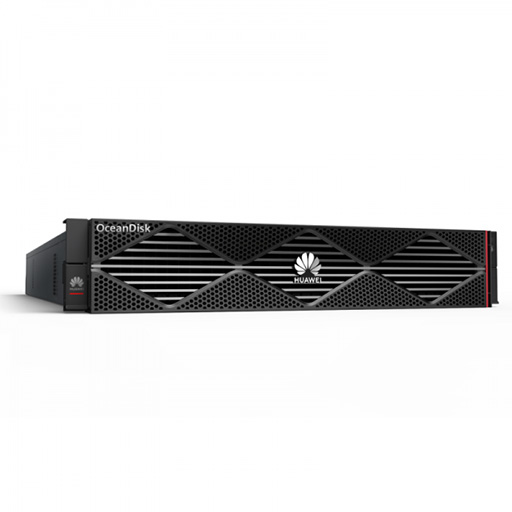
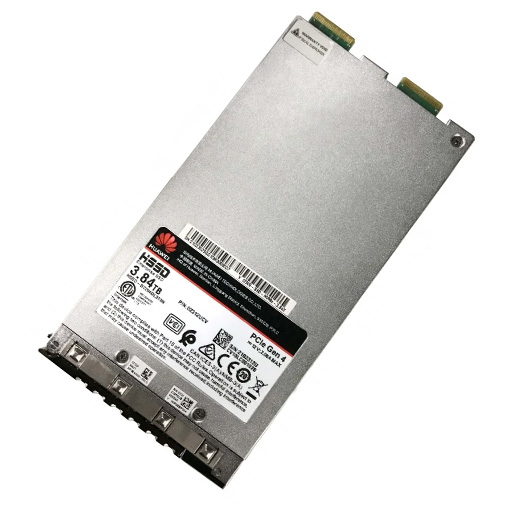
What is AI Storage?
AI Storage refers to a specialized data storage architecture designed to handle the massive scale, high velocity, and complex processing requirements of Artificial Intelligence (AI) and Machine Learning (ML) workloads. Unlike traditional storage, AI-optimized storage eliminates data bottlenecks by providing ultra-low latency and massive throughput, ensuring that GPUs and AI processors are constantly fed with data for training and inference.
Why AI Infrastructure Needs Specialized Storage
Traditional storage architectures were built for human-scale interactions, but AI operates at machine-scale. When building an AI infrastructure, the storage layer must be as advanced as the compute layer to prevent GPU Starvation—a state where expensive processors sit idle waiting for data.
1. Eliminating the GPU Bottleneck
Modern GPUs, such as the NVIDIA H100, can process data at incredible speeds. Traditional NAS (Network Attached Storage) or HDD-based systems create a “bottleneck,” where the data transfer rate is significantly slower than the processing power. Specialized AI Storage uses End-to-End NVMe and RDMA (Remote Direct Memory Access) to ensure a constant, high-speed flow of data directly to the GPU memory.
2. Handling Unstructured Data at Scale
AI training typically involves massive datasets consisting of unstructured data—millions of small files like images, voice snippets, or sensor logs. Specialized AI storage is optimized for:
-
High IOPS (Input/Output Operations Per Second): To quickly open and read millions of small files.
-
Metadata Performance: Rapidly locating files within a multi-petabyte namespace.
3. Support for Parallel File Systems
In an AI cluster, hundreds of compute nodes often need to access the same dataset simultaneously. Standard storage protocols (like NFS or SMB) can crash under this pressure. AI-specialized storage utilizes Parallel File Systems (like Lustre, Weka, or GPFS), allowing data to be stripped across multiple storage nodes so that every GPU gets maximum bandwidth at the same time.
4. Write-Intensive Checkpointing
AI training is not just about reading; it involves frequent checkpointing—saving the state of a model during training. These are massive write operations that happen periodically. Specialized AI storage provides the Write Throughput necessary to save these checkpoints instantly, ensuring that if a system fails, hours of expensive training time aren’t lost.
5. Efficient Data Tiering
AI projects have different phases: data ingestion, cleaning, training, and archiving. Specialized AI storage often includes AI-Driven Data Management that automatically moves “hot” data to high-speed Flash (SSD) for training and “cold” data to cheaper Object Storage (HDD), optimizing both performance and cost.
AI Storage vs. Traditional Storage
The fundamental difference between AI storage and traditional storage lies in data orchestration. Traditional storage (NAS/SAN) was designed for “General Purpose” workloads where data is accessed sequentially or in small bursts. In contrast, AI workloads are “IO-Intensive” and highly concurrent. While traditional systems prioritize data integrity and capacity at a lower cost, AI Storage is engineered for Extreme Performance, utilizing a distributed architecture to feed hungry GPU clusters without a single millisecond of delay.
| Feature | Traditional Enterprise Storage | AI-Optimized Storage |
| Primary Goal | Data Archiving & Office Apps | GPU Acceleration & Model Training |
| Data Access | Sequential / Low Concurrency | Massively Parallel Access |
| Typical Latency | 5 – 10 Milliseconds (ms) | < 100 Microseconds ($\mu$s) |
| Throughput | Gigabytes per second (GB/s) | Terabytes per second (TB/s) |
| Protocol | NFS, SMB, iSCSI | NVMe-oF, RDMA, Parallel File Systems |
| Data Type | Structured (Databases) | Unstructured (Video, Images, Logs) |
| Scalability | Scale-Up (Limited) | Scale-Out (Linear & Infinite) |
| Hardware | HDD or Hybrid SSD | All-Flash (NVMe) |
Top AI Storage Vendors in 2026
To build a future-proof AI infrastructure, selecting the right vendor is as critical as the hardware itself. Here are the industry leaders dominating the AI storage market in 2026:
1. Pure Storage (FlashBlade//EXA)
Pure Storage remains a leader with its DirectFlash technology. Their FlashBlade//EXA series is specifically engineered for massive AI clusters, providing parallelized I/O that significantly outperforms traditional SSD-based systems. It is the go-to choice for companies looking for extreme density and power efficiency.
2. Dell Technologies (PowerScale)
Dell’s PowerScale (formerly Isilon) is recognized as the world’s most scalable file storage. In 2026, Dell has introduced AI-optimized nodes that use 70% less power while delivering 8x more throughput. Its integration with NVIDIA DGX SuperPOD makes it a favorite for large-scale enterprise data centers.
3. NetApp (AIDE & ONTAP AI)
NetApp has transformed from a traditional NAS provider to an AI powerhouse. Their AI Data Engine (AIDE) provides a unified data fabric that spans on-premises, edge, and multi-cloud environments. NetApp is ideal for organizations that require seamless data mobility and advanced governance across hybrid clouds.
4. VAST Data
As the primary disruptor in the market, VAST Data offers a “disaggregated shared-everything” (DASE) architecture. This eliminates the need for complex storage tiering, allowing all data to live on a single, massive, flash-performance tier at the cost of archive storage. It is highly recommended for Deep Learning and Big Data analytics.
5. WEKA (WEKApod)
WEKA is the “speed king” of AI storage. Their WEKApod solution is a turnkey platform that delivers the highest IOPS and throughput density in the industry. It is specifically designed to eliminate “GPU starvation” in the most demanding training environments, such as autonomous driving and drug discovery.
Summary Table for Quick Selection:
| Vendor | Best For… | Key Advantage |
| Pure Storage | Power Efficiency & Simplicity | Lowest power consumption/rack space. |
| Dell | Exabyte-scale File Storage | Massive scalability & NVIDIA certification. |
| NetApp | Hybrid & Multi-Cloud AI | Best data management & mobility. |
| VAST Data | Consolidating Large Datasets | Single-tier architecture for all data. |
| WEKA | Maximum Performance Density | Ultra-low latency for model training. |
Types of AI Storage Architectures
AI workloads are not monolithic; different stages of the AI lifecycle require different storage characteristics. Here are the three primary types of storage architectures used in AI environments:
1. All-Flash Storage (The Performance Layer)
All-Flash arrays are the backbone of AI training. Since deep learning requires reading millions of files per second, SSD and NVMe-based systems are mandatory.
-
Best for: Model training and real-time inference.
-
Why: It offers the lowest latency and highest IOPS, ensuring GPUs never wait for data.
2. Parallel File Systems (The Scalability Layer)
Unlike traditional scale-up storage, Parallel File Systems (PFS) distribute data across multiple storage nodes. This allows a single file or dataset to be read by hundreds of GPUs simultaneously.
-
Best for: Large-scale clusters and High-Performance Computing (HPC).
-
Why: It eliminates the bottlenecks found in standard NFS/SMB protocols.
3. Object Storage (The Data Lake Layer)
Object storage (like S3-compatible systems) is designed for massive scale and cost-efficiency. It is the ideal place to store the “raw data” (images, videos, logs) before it is processed.
-
Best for: Data lakes, long-term archiving, and massive unstructured datasets.
-
Why: It provides infinite scalability and excellent metadata management at a lower cost than Flash.
4. Software-Defined AI Storage (The Hybrid Layer)
This type decouples the storage software from the underlying hardware. It allows organizations to run high-performance AI storage on “commodity hardware” or across different cloud providers.
-
Best for: Hybrid cloud environments and flexible infrastructure.
-
Why: It prevents vendor lock-in and allows for rapid scaling as AI models grow.
Key Benefits of Implementing AI Storage
In the era of massive data, traditional storage is a liability. Transitioning to an AI-optimized storage architecture offers transformative advantages that directly impact the success of your machine learning projects.
1. Maximum GPU Utilization (ROI Optimization)
GPUs are the most expensive part of the AI stack. Without AI storage, these processors often sit idle waiting for data (a phenomenon known as I/O Wait). Specialized AI storage ensures a continuous data pipeline, allowing you to get 100% of the performance you paid for in your compute layer.
2. Accelerated “Time-to-Market”
Training a complex AI model can take weeks on traditional storage. AI Storage, with its massive throughput and low latency, can reduce training cycles from weeks to days or even hours. This speed allows organizations to deploy models faster and stay ahead of the competition.
3. Infinite Scalability without Performance Loss
Unlike traditional NAS, which slows down as you add more data, AI Storage architectures (Scale-Out) maintain consistent performance. Whether you are managing 100 Terabytes or 100 Petabytes, the system scales linearly, providing a predictable environment for growing datasets.
4. Enhanced Data Security and Governance
Modern AI storage solutions come with built-in Data Management tools. They offer advanced encryption, immutable snapshots (protection against ransomware), and automated compliance features, ensuring that your most valuable asset—your data—is protected and auditable.
5. Lower Total Cost of Ownership (TCO)
While the initial investment in All-Flash AI storage might seem high, it reduces costs in the long run. By making your AI training more efficient, you need fewer GPU nodes to achieve the same results, which significantly cuts down on power, cooling, and data center floor space expenses.
Why Source Your AI Storage from ITCTShop?
Choosing ITCTShop for specialized equipment like AI Storage and advanced network infrastructure is a strategic move for modern enterprises. By focusing on edge computing and next-generation storage solutions, ITCTShop ensures not just high-performance hardware, but long-term system stability.