
Stock Status
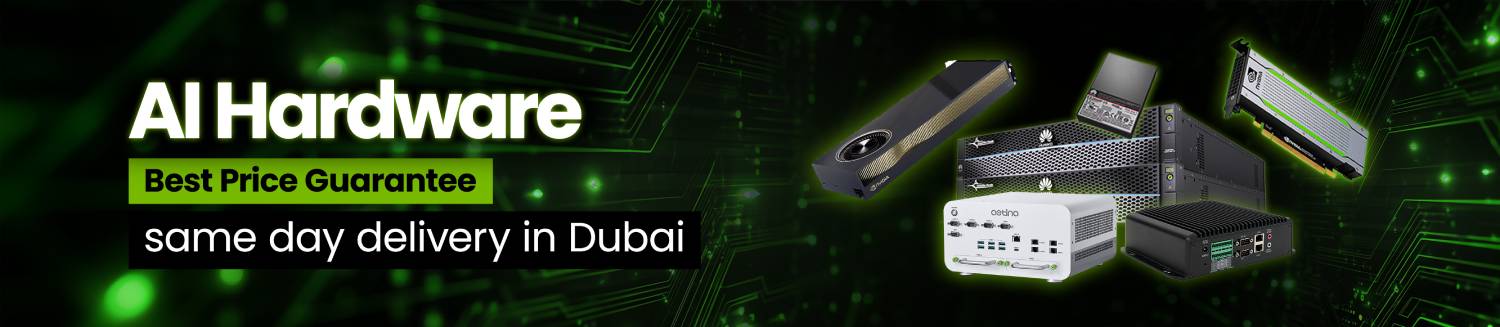
AI Computing
Categories
Use Cases
Stock Status
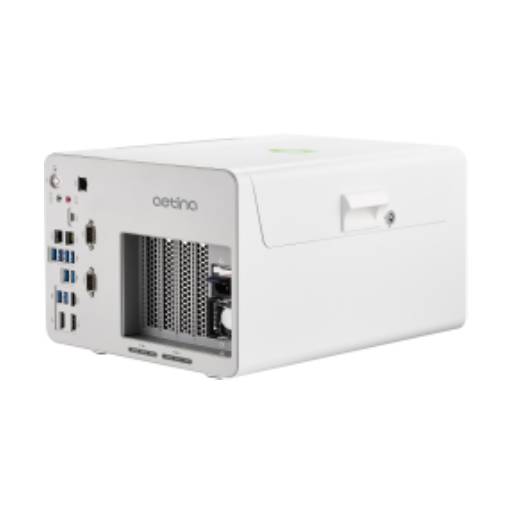
Free delivery by Tomorrow, Friday, Apr 10
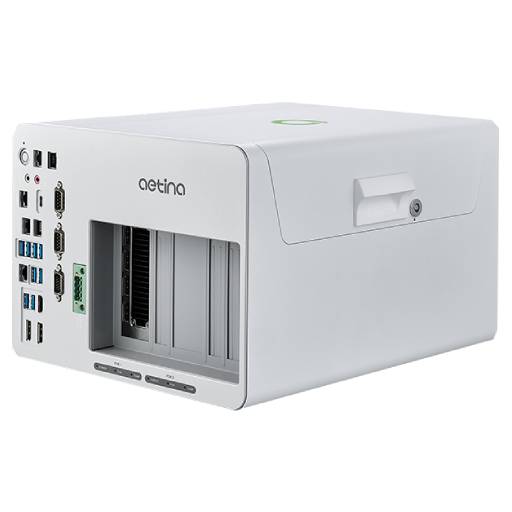
Free delivery by Tomorrow, Friday, Apr 10
Free delivery by Tomorrow, Friday, Apr 10
Free delivery by Tomorrow, Friday, Apr 10
Free delivery by Tomorrow, Friday, Apr 10
Free delivery by Tomorrow, Friday, Apr 10
Free delivery by Tomorrow, Friday, Apr 10
Free delivery by Tomorrow, Friday, Apr 10
Free delivery by Tomorrow, Friday, Apr 10
Free delivery by Tomorrow, Friday, Apr 10
Free delivery by Tomorrow, Friday, Apr 10
Free delivery by Tomorrow, Friday, Apr 10
What is AI Computing?
AI Computing is the specialized infrastructure and process used to handle the massive data and complex calculations required by Artificial Intelligence. Unlike traditional computing, which follows rigid rules, AI computing uses advanced hardware (like GPUs and TPUs) to mimic neural networks, allowing machines to learn, reason, and solve problems at lightning speed.
Why Do We Need AI Computing?
The primary goal of AI computing is to bridge the gap between human-like intuition and machine-scale processing. It isn’t just about “faster computers”; it’s about enabling capabilities that were previously impossible.
The Purpose of AI Computing
The fundamental purpose of AI Computing is to provide the massive computational throughput required to simulate human-like intelligence. Unlike general-purpose computing, which is designed for sequential logic, AI Computing is architected specifically to handle the “brute force” mathematical operations (such as matrix multiplications) that drive neural networks. It serves as the physical engine that transforms raw data into actionable insights, moving beyond simple automation toward autonomous reasoning.
Core Objectives
-
Handling High-Dimensional Data: To process and find patterns within massive, unstructured datasets like high-resolution video, genomic sequences, and natural language.
-
Accelerating Model Training: To reduce the “time-to-market” for AI models, turning months of complex calculations into hours of efficient processing.
-
Enabling Real-Time Inference: To allow AI systems to make split-second decisions in safety-critical environments, such as autonomous driving or surgical robotics.
-
Scaling Neural Networks: To provide the infrastructure necessary to run Large Language Models (LLMs) that contain billions of parameters.
-
Energy Optimization: To achieve a higher performance-per-watt ratio, making large-scale AI environmentally sustainable and commercially viable.
-
Edge Deployment: To shift intelligence from centralized clouds to local devices, ensuring low latency and enhanced data privacy.
Applications of AI Computing
AI Computing is the engine behind the world’s most advanced technologies. It moves beyond standard software by enabling machines to “see,” “hear,” and “reason” in real-time. By utilizing specialized hardware clusters, industries can now solve multi-dimensional problems that were once considered computationally impossible. From predicting global climate shifts to enabling autonomous machinery, AI Computing is the foundational layer for the next industrial revolution.
-
Healthcare & Life Sciences: Powering high-speed drug discovery, genomic sequencing, and AI-assisted robotic surgeries that require sub-millisecond precision.
-
Autonomous Systems: Providing the massive “brain-power” for self-driving vehicles, drones, and warehouse robots to navigate complex, changing environments without human input.
-
Generative AI & Content Creation: Running Large Language Models (LLMs) and diffusion models to generate human-like text, cinematic video, and realistic 3D assets at scale.
-
Financial Intelligence: Enabling real-time fraud detection, algorithmic high-frequency trading, and personalized wealth management through deep pattern analysis.
-
Smart Infrastructure & Energy: Optimizing city-wide traffic flows and managing smart grids to reduce energy consumption through predictive load balancing.
-
Scientific Research: Accelerating breakthroughs in material science and climate modeling by running complex simulations that involve billions of variables.
-
Cybersecurity: Powering autonomous “threat-hunting” agents that can detect and neutralize zero-day vulnerabilities before they are exploited.
Types of AI Computing
AI Computing is not a “one-size-fits-all” technology. Depending on the complexity of the task—whether it is teaching a new model from scratch or running a pre-trained model on a smartphone—different computational architectures are required. These types are designed to balance raw power, energy efficiency, and speed (latency) based on the specific needs of the AI application.
1. AI Training Computing (Compute-Intensive)
This is the “learning” phase of AI. It involves feeding massive datasets into a neural network so it can learn patterns. This type requires enormous clusters of high-performance GPUs or TPUs working in parallel for weeks or months. It is the most power-hungry and expensive form of AI computing.
2. AI Inference Computing (Execution-Focused)
Inference occurs when a trained model is put to work. For example, when you ask ChatGPT a question or use FaceID to unlock your phone, the model is “inferring” an answer. This type focuses on low latency and efficiency rather than raw training power, ensuring users get results in milliseconds.
3. Cloud AI Computing (Centralized)
This refers to AI processing that happens in massive data centers (like AWS, Google Cloud, or Azure). It provides “Elastic Compute,” meaning companies can rent thousands of powerful processors remotely to handle heavy workloads without owning the physical hardware.
4. Edge AI Computing (Local & Decentralized)
Edge computing brings AI directly to the device—such as cameras, drones, or medical sensors—instead of sending data to the cloud. This is critical for privacy, security, and applications that cannot afford a delay in internet connection (like an autonomous car’s braking system).
5. Neuromorphic Computing (Brain-Inspired)
This is an emerging type of computing that mimics the physical structure of the human brain (neurons and synapses). Unlike traditional chips, neuromorphic chips only consume power when “neurons” fire, making them incredibly energy-efficient for sensory tasks like speech or gesture recognition.
6. Accelerated Computing (Hardware-Specific)
This involves using specialized hardware accelerators instead of general-purpose CPUs.
-
GPUs (Graphics Processing Units): The gold standard for parallel processing.
-
TPUs (Tensor Processing Units): Google’s custom chips designed specifically for machine learning math.
-
ASICs: Chips custom-built for one specific AI task to achieve maximum speed.
Understanding AI Computing: The Engine of Modern Intelligence
AI Computing is a specialized branch of computer science designed to handle the extreme mathematical demands of Artificial Intelligence. While a standard computer (like a laptop) is built to follow a list of simple instructions one after another, AI Computing is built to perform millions of calculations at the exact same time.
Think of it this way: A traditional computer is like a high-speed train on a single track. AI Computing is like a massive highway with thousands of lanes, allowing a huge volume of traffic (data) to move simultaneously. This “parallel” power is what allows an AI to recognize your face, translate languages instantly, or generate realistic images.
The Evolution of AI Computing
The journey of AI computing is a transition from simple logic to massive parallel power. Originally, AI relied on CPUs, which process tasks one by one, making them too slow for complex neural networks. The turning point came in 2012 when researchers began using GPUs; these chips can handle thousands of calculations simultaneously, finally giving AI the “muscle” it needed to learn from vast datasets. By 2016, the industry shifted toward specialized hardware like Google’s TPU, designed exclusively for AI math to increase speed and reduce energy costs.
Today, we have entered the age of Superclusters, where thousands of chips are linked to act as a single giant brain, enabling the massive generative models we see now. Moving forward, the focus is on Edge Computing, aiming to bring this immense power directly into smaller, energy-efficient devices like smartphones.
The Future Outlook of AI Computing
The future of AI computing is moving toward Autonomous Systems and Extreme Efficiency. By 2026 and beyond, the focus is shifting from passive tools to “Agentic AI”—intelligent systems that don’t just answer questions but independently execute complex, multi-step tasks. To support this, hardware is evolving in two directions: massive “AI Superfactories” that link global networks for heavy research, and Edge AI, which brings high-speed intelligence directly onto local devices like smartphones and sensors to ensure privacy and zero latency.
We are also seeing the rise of Neuromorphic and Hybrid Quantum computing, aiming to solve the “Energy Paradox” by providing 10,000x more efficiency than today’s chips. Ultimately, AI computing will become “ambient”—invisible, sustainable, and embedded into every physical object around us.
Shop AI Hardware at ITCT Shop
ITCT Shop is your premier global destination for high-end AI computing hardware, offering the industry’s most powerful GPUs and processors at the guaranteed best prices. We specialize in sourcing elite tech for developers and data centers, ensuring you get authentic, cutting-edge equipment without the premium markup.
For our clients in the UAE, we provide exclusive Same-Day Delivery in Dubai, while our robust logistics network ensures fast worldwide shipping to any country. From local projects to global infrastructures, ITCT Shop delivers the power of AI to your doorstep with speed and reliability.