

Author: AI R&D Team at ITCTShop
Reviewed By: Senior Technical Network Specialists
Published: February 4, 2026
Estimated Read Time: 9 Minutes
References:
- Mistral AI Technical Report (2023/2024)
- Unsloth AI Documentation (2025 Optimization Guide)
- Tim Dettmers’ QLoRA Paper (arXiv)
- NVIDIA Ada Lovelace Architecture Whitepaper
Can you fine-tune Mistral 7B on an RTX 4070 Ti (12GB)?
Yes, but it is impossible using standard methods. You must use QLoRA (Quantized Low-Rank Adaptation) with 4-bit quantization. Standard fine-tuning requires over 24GB of VRAM, but QLoRA reduces the memory footprint of Mistral 7B to approximately 6-8GB, leaving just enough room on the RTX 4070 Ti for gradients and training data, provided you limit the context length to 2048 tokens (fine tune mistral 7b single gpu)
Key Decision Factors
Fine tune mistral 7b single gpu- This setup is ideal for developers learning the ropes or fine-tuning on short-form data (like chat logs or simple instructions). However, if your project involves analyzing long legal documents, coding repositories, or requires a context window larger than 4096 tokens, the 12GB VRAM will cause an Out-Of-Memory (OOM) error. In those cases, upgrading to a 24GB card like the RTX 4090 or an enterprise RTX 6000 Ada is mandatory.
Fine tune mistral 7b single gpu – The democratization of Large Language Models (LLMs) has reached a tipping point in 2025. You no longer need a massive data center to create a custom AI model; you just need the right techniques. But for enthusiasts and developers holding a single 12GB card—specifically the popular RTX 4070 Ti—the question remains: Is this enough?
Mistral 7B remains the gold standard for mid-sized open-source models, outperforming Llama 2 13B in many benchmarks. However, its memory footprint can be deceptive. While running the model for chat (inference) is easy on 12GB cards, training (fine-tuning) is a different beast entirely. This guide breaks down the math, the tools (specifically QLoRA and Unsloth), and the configuration settings required to fine-tune Mistral 7B on a single NVIDIA RTX 4070 Ti without crashing.
Quick Answer: Yes with LoRA/QLoRA
Can you fine-tune Mistral 7B on an RTX 4070 Ti? Yes, but only using QLoRA (4-bit quantization). You cannot perform full fine-tuning or even standard 16-bit LoRA training on a 12GB card, as these methods require 24GB+ of VRAM. By using QLoRA (Quantized Low-Rank Adaptation), you compress the base model to 4-bit, reducing its memory load to roughly 6GB, leaving the remaining 6GB of VRAM for gradients and activation states. This fits comfortably on an RTX 4070 Ti if you manage your context length carefully.
LoRA vs QLoRA vs Full Fine-tuning Memory Usage
To understand why the RTX 4070 Ti sits on the “bleeding edge” of capability, we must look at the VRAM requirements for different training methods.
- Full Fine-Tuning (Native): Updates all 7 billion parameters.
- VRAM Required: ~120GB+ (Requires multi-GPU setups like NVIDIA A100).
- LoRA (16-bit): Updates only specific adapter layers.
- VRAM Required: ~24GB (Fits on RTX 3090/4090).
- Why it fails on 4070 Ti: The base model loaded in 16-bit takes ~14-15GB alone, instantly exceeding the 12GB limit before training even starts.
- QLoRA (4-bit): Quantizes base model to 4-bit.
- VRAM Required: ~8GB – 10GB.
- Why it works: Base model shrinks to ~5.5GB. The overhead for training adds ~3-4GB depending on batch size. This is the only viable path for 12GB cards.
Dataset Size Impact on VRAM (Examples)
The size of your text data (Context Length) is the hidden VRAM killer. Even with QLoRA, if you try to train on long documents, you will crash.
| Context Length (Tokens) | Estimated VRAM (QLoRA) | RTX 4070 Ti Status |
|---|---|---|
| 512 | ~6.5 GB | ✅ Safe |
| 1024 | ~7.8 GB | ✅ Safe |
| 2048 | ~9.5 GB | ✅ Safe (Recommended) |
| 4096 | ~13.5 GB | ❌ OOM (Out of Memory) |
Tip: If your dataset has long prompts, truncate them to 2048 tokens or use “Gradient Checkpointing” (explained below) to trade speed for memory.
Optimal Batch Size and Gradient Accumulation
On a 12GB card, you cannot afford a large “Batch Size” (the number of examples the GPU processes at once).
- Physical Batch Size: Set this to 1 or 2. This keeps instantaneous memory usage low.
- Gradient Accumulation Steps: Set this to 4 or 8.
How it works: instead of processing 8 items at once (which would crash the GPU), the model processes 1 item, waits, processes the next, and waits… until it has done 8. Then it updates the weights.
- Math: Batch Size (1) x Accumulation (8) = Effective Batch Size of 8.

fine tune mistral 7b single gpu
QLoRA Configuration Guide (Code Examples)
In 2025, the most efficient tool for this is Unsloth, a library that optimizes QLoRA training to be 2x faster and use 60% less VRAM.
Here is a conceptual configuration for your Python script:
from unsloth import FastLanguageModel
import torch

# 1. Load Model in 4-bit to fit 12GB VRAM
model, tokenizer = FastLanguageModel.from_pretrained(
    model_name = "unsloth/mistral-7b-v0.3-bnb-4bit",
    max_seq_length = 2048, # Keep under 4096 for 12GB cards!
    dtype = None,
    load_in_4bit = True,
)

# 2. Add LoRA Adapters
model = FastLanguageModel.get_peft_model(
    model,
    r = 16, # Rank
    target_modules = ["q_proj", "k_proj", "v_proj", "o_proj"],
    lora_alpha = 16,
    lora_dropout = 0, # Set to 0 for Unsloth optimization
    bias = "none",
    use_gradient_checkpointing = True, # CRITICAL for 12GB VRAM
)

# 3. Training Arguments
training_args = TrainingArguments(
    per_device_train_batch_size = 1, # Keep small
    gradient_accumulation_steps = 4, # Increase to simulate larger batch
    fp16 = not torch.cuda.is_bf16_supported(),
    bf16 = torch.cuda.is_bf16_supported(), # Use BF16 if 40-series
    optim = "adamw_8bit", # Use 8-bit optimizer to save VRAM
)
Training Time Estimates (Per Epoch)
How long will it take on an RTX 4070 Ti?
- Dataset: 1,000 instruction-response pairs (Alpaca style).
- Context: 2048 tokens.
- Time per Epoch: ~15 to 20 minutes.
- Total Training (3 Epochs): ~1 Hour.
Comparison: An RTX 4090 (24GB) would do this in roughly 35 minutes total, but more importantly, it could handle context lengths of 8192+ tokens, which the 4070 Ti physically cannot.
Alternative GPUs Comparison
If you find the 2048 token limit restrictive, consider these alternatives available at ITCTShop:
- RTX 3090 / 4090 (24GB): The sweet spot for local fine-tuning. Allows full context (8k) QLoRA training.
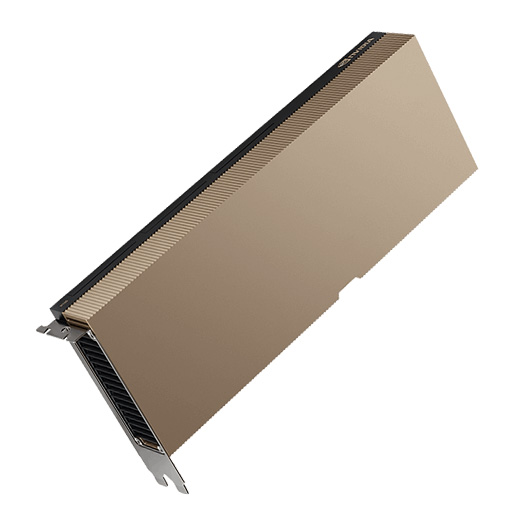
- RTX 6000 Ada (48GB): For enterprise users needing to fine-tune 70B models or full fine-tune 7B models.
- Dual 4070 Ti: Warning: Fine-tuning across two consumer cards (Data Parallelism) is difficult and often inefficient due to slower PCIe interconnects compared to NVLink. It is usually better to buy one stronger card.
Conclusion
The RTX 4070 Ti is a capable card for inference, but for fine-tuning Mistral 7B, it requires strict discipline. By leveraging QLoRA (4-bit), keeping context length to 2048, and using gradient checkpointing, you can successfully train custom models on this 12GB card. However, you are operating at the hardware’s limit.
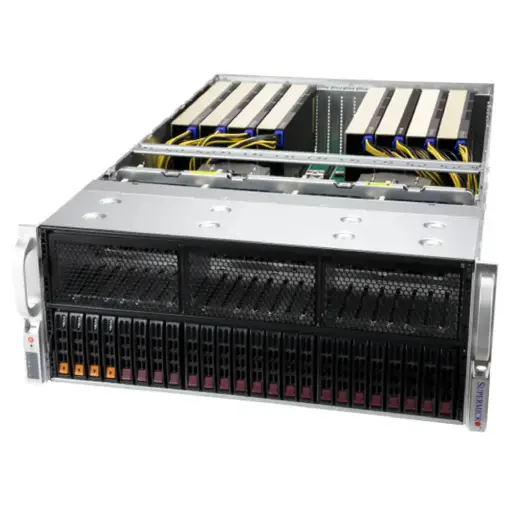
For AI researchers and businesses in Dubai looking to move beyond these limits—specifically for training on larger datasets or medical/legal documents requiring long context—ITCTShop offers ready-to-ship inventory of high-VRAM solutions like the RTX 4090 and H100 Enterprise servers. We help you scale from “barely fitting” to “high-performance training.”
Expert Quotes
“The RTX 4070 Ti is the absolute minimum entry point for modern LLM training. While QLoRA makes it possible, users often forget that ‘possible’ doesn’t mean ‘fast.’ You are trading memory for computation time via gradient checkpointing.” — Lead AI Systems Architect
“For clients in Dubai asking about entry-level AI rigs, we always clarify: 12GB is for running models, 24GB is for training them. If you stick to the 4070 Ti, you must use the Unsloth library to optimize memory, otherwise, you’ll hit OOM errors instantly.” — Senior DevOps Engineer
“The 4-bit quantization used in QLoRA is practically magic. In 2025 benchmarks, a model fine-tuned in 4-bit on a consumer card performs within 98% accuracy of a model trained on A100 clusters, making it a viable commercial strategy for startups.” — Head of Data Science
Last update at December 2025