
Products Mentioned in This Article
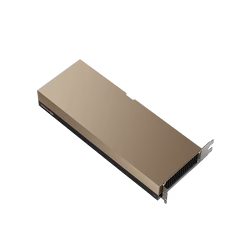
 NVIDIA T4 Tensor Core GPU: The Smart Choice for AI Inference and Data Center WorkloadsUSD1,520
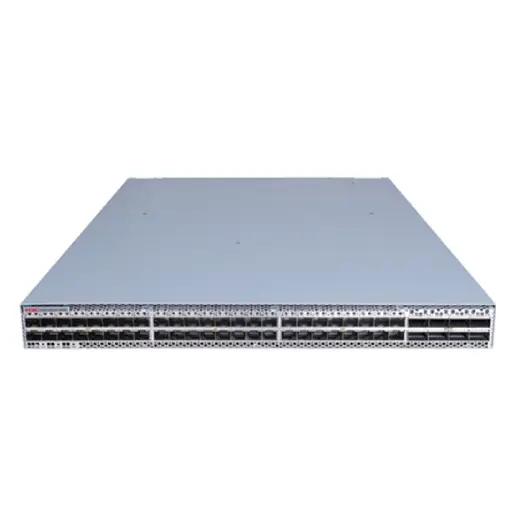
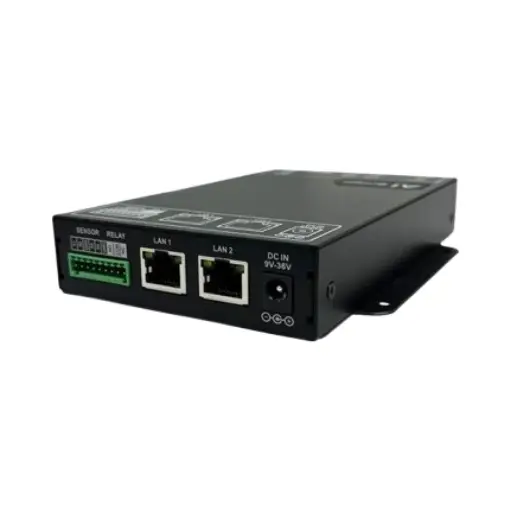
 AI Bridge LTE TS2-08: The Ultimate 8/16-Channel Edge AI Analytics Powerhouse with LTE & GPSUSD7,200
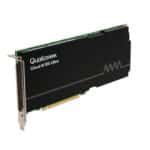 Qualcomm Cloud AI100 UltraUSD17,600
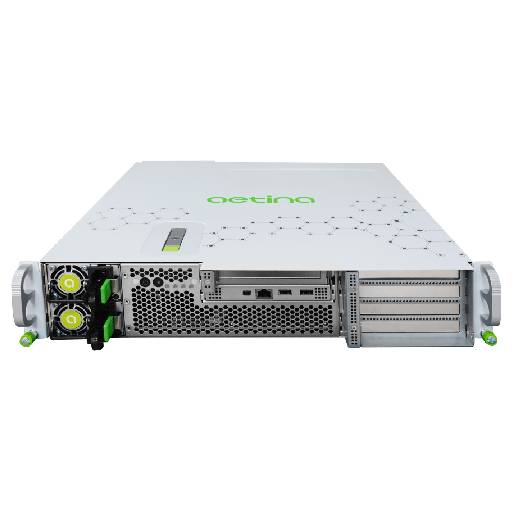
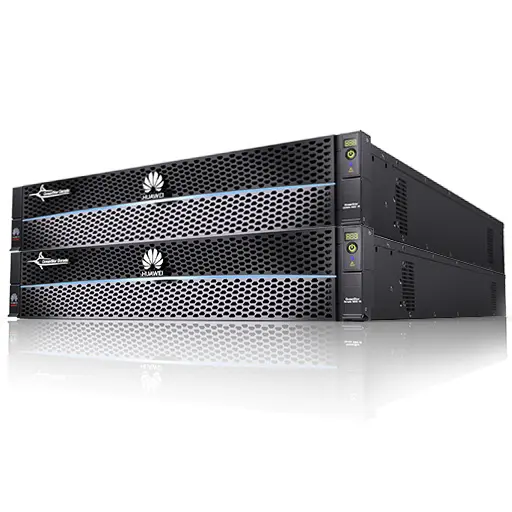
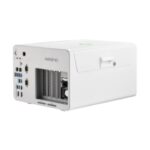 Aetina MegaEdge AIP-FR68 (PCIe AI Training Workstation)USD24,000
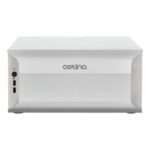 Aetina MegaEdge AIP-KQ67 (PCIe AI Workstation)USD25,600

Author: ITCT Tech Editorial Unit
Reviewer: ITCT Edge Infrastructure Team
Last Updated: January 13, 2026
Reading Time: 25 minutes
References:
- NVIDIA Jetson AGX Orin Official Documentation
- Qualcomm Cloud AI 100 Ultra Technical Data
- Microsoft Azure IoT Edge Deployment Guidelines (Referenced in text)
- ITCT Shop Product Catalog (IDs: 86324, 86318, 72313, 72302, 72299, 86334)
Quick Answer: What is Edge AI Computing?
Edge AI computing is a decentralized architectural approach where artificial intelligence algorithms are executed directly on devices (like cameras, sensors, and industrial gateways) near the data source, rather than in remote cloud data centers. By processing data locally on specialized hardware—ranging from embedded modules like NVIDIA Jetson to high-performance accelerators like the Qualcomm Cloud AI 100—organizations achieve millisecond-level latency, significant bandwidth savings, and enhanced data privacy for critical applications in manufacturing, retail, and autonomous systems.
Key Decision Factors
Selecting the right edge AI solution depends on power, form factor, and performance needs. For battery-powered or space-constrained mobile devices (drones, robots), NVIDIA Jetson modules (Nano/Orin) are the optimal choice (5-60W). For enterprise video analytics or dense server deployments, Inference GPUs (NVIDIA T4, A2) or AI Bridge appliances offer better scalability. For large-scale, high-efficiency telecom or enterprise edge scenarios, the Qualcomm Cloud AI 100 Ultra provides industry-leading performance-per-watt (400+ TOPS at 75W).
Edge AI computing represents a fundamental shift in how artificial intelligence applications are deployed and executed. Rather than relying on centralized cloud infrastructure, edge AI brings computational intelligence directly to the point where data is generated—whether that’s a factory floor, retail store, hospital, or autonomous vehicle. This distributed approach to AI processing delivers unprecedented advantages in latency reduction, bandwidth optimization, privacy preservation, and operational reliability.
The edge AI market has exploded in recent years, driven by the proliferation of IoT devices, advances in AI accelerator hardware, and the growing need for real-time decision-making in critical applications. Organizations across industries are discovering that many AI workloads perform better, cost less, and provide greater value when executed at the edge rather than in the cloud. This comprehensive guide explores the complete landscape of edge AI computing, from hardware platforms and accelerators to deployment strategies and real-world applications.
Understanding the diverse ecosystem of edge AI devices and solutions is essential for making informed technology decisions. This guide covers everything from compact embedded modules like NVIDIA Jetson to powerful inference GPUs, specialized video analytics systems, and enterprise-grade AI accelerators. Whether you’re architecting a smart manufacturing system, deploying retail analytics, or building autonomous machines, this guide provides the technical depth and practical insights you need to succeed with edge AI.
What is Edge AI Computing
Edge AI computing refers to the deployment and execution of artificial intelligence algorithms directly on devices located at or near the source of data generation, rather than processing data in centralized cloud data centers. This architectural approach brings AI capabilities to the “edge” of the network—to cameras, sensors, industrial equipment, vehicles, and other endpoint devices. Edge AI systems perform inference, and increasingly training, locally on specialized hardware accelerators designed for efficient AI workloads.
The fundamental advantage of edge AI lies in its ability to process data in real-time without the latency introduced by network transmission to distant cloud servers. This is particularly critical for applications requiring immediate responses, such as autonomous vehicle navigation, industrial quality inspection, or medical diagnostics. A self-driving car cannot afford the 100-200ms round-trip latency to a cloud server when making split-second decisions about obstacle avoidance. Similarly, a manufacturing defect detection system must identify quality issues in milliseconds to trigger corrective actions on high-speed production lines.
Beyond latency, edge AI offers significant bandwidth savings by processing data locally and transmitting only relevant insights or compressed results to the cloud. A smart city deployment with thousands of video cameras would overwhelm network infrastructure if every camera streamed full-resolution video to the cloud for analysis. Edge AI enables each camera to perform local video analytics, sending only alerts and metadata rather than continuous video streams. This distributed architecture also enhances privacy and security by keeping sensitive data on-premises rather than transmitting it over networks where it could be intercepted or compromised.
The edge AI architecture typically consists of three layers: the edge devices themselves (sensors, cameras, industrial equipment), edge compute platforms (embedded AI modules, edge servers, AI accelerators), and the cloud backend for aggregation, advanced analytics, and model management. Modern edge AI systems leverage specialized hardware like Tensor Processing Units (TPUs), Neural Processing Units (NPUs), and GPU accelerators optimized for inference workloads. These accelerators deliver orders of magnitude better performance and power efficiency compared to traditional CPUs for AI operations.
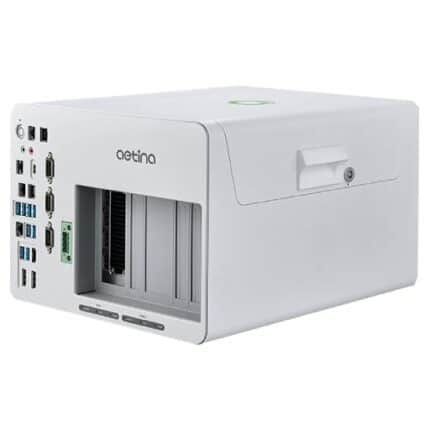
Aetina MegaEdge AIP-FR68 (PCIe AI Workstation)
- Up to 870 TOPS processing power for heavy workloads in machine learning, computer vision, and generative AI
- Support for LLMs up to 70 billion parameters with 128GB onboard memory on the AI card
- Full compatibility with popular frameworks such as TensorFlow, PyTorch, ONNX, and inference servers like Triton and VLLM
Edge AI Device Categories
The edge AI hardware ecosystem encompasses diverse device categories, each optimized for specific deployment scenarios and performance requirements. Understanding these categories is essential for selecting the right technology for your application.
GPU-Based Edge Devices represent the highest performance category, leveraging discrete graphics processors optimized for parallel AI computations. These devices, including solutions based on NVIDIA’s inference GPUs like the T4, A2, and L40, deliver exceptional throughput for complex AI models. They excel in applications requiring simultaneous processing of multiple video streams, large-scale language models, or high-resolution computer vision. For comprehensive analysis of GPU options, see our Inference GPUs for Edge Deployment: T4, A2, L40 Performance Guide.
Embedded AI Modules provide compact, power-efficient solutions for edge AI in space-constrained and mobile applications. NVIDIA’s Jetson family—including Orin, Xavier, and Nano variants—exemplifies this category, integrating GPU, CPU, and AI accelerators in a small form factor. These modules typically consume 5-60W and deliver 0.5-275 TOPS of AI performance, making them ideal for robotics, drones, autonomous vehicles, and portable medical devices. Learn more in our NVIDIA Jetson Complete Guide: Orin, Xavier & Nano Comparison.
AI Accelerator Cards designed specifically for inference workloads offer optimized performance-per-watt for edge deployments. The Qualcomm Cloud AI 100 Ultra exemplifies this category, delivering over 400 TOPS while consuming only 75W. These accelerators use specialized architectures optimized for neural network inference, providing superior efficiency compared to general-purpose GPUs. Discover detailed specifications in our Qualcomm Cloud AI100 Ultra: Complete Guide for Enterprise Edge AI.
Specialized Video Analytics Appliances integrate AI processing with video management capabilities in turnkey solutions. AI Bridge systems, for example, combine edge AI inference with video analytics software optimized for surveillance and monitoring applications. These appliances simplify deployment by providing pre-configured hardware and software stacks tailored for specific use cases. Explore video analytics solutions in our AI Bridge Video Analytics: Complete Buyer’s Guide.
Rugged Industrial Edge Computers are built to withstand harsh environments while delivering reliable AI performance. Aetina’s edge AI systems, such as the AEX-2UA1 and AIP-FR68, feature industrial-grade construction, wide temperature ranges, and compliance with industrial standards. These systems integrate powerful AI accelerators with robust connectivity, storage, and I/O capabilities for demanding industrial applications. Review industrial options in our Aetina Edge AI Systems: AEX-2UA1, AIP-FR68 & AIP-KQ67 Comparison.
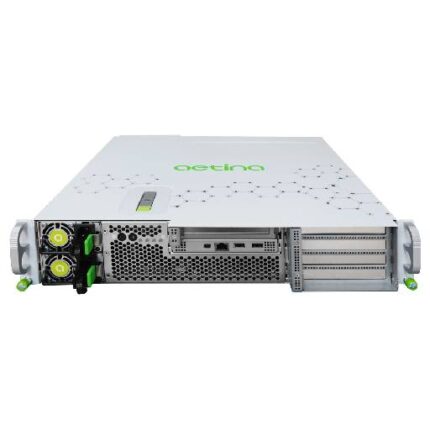
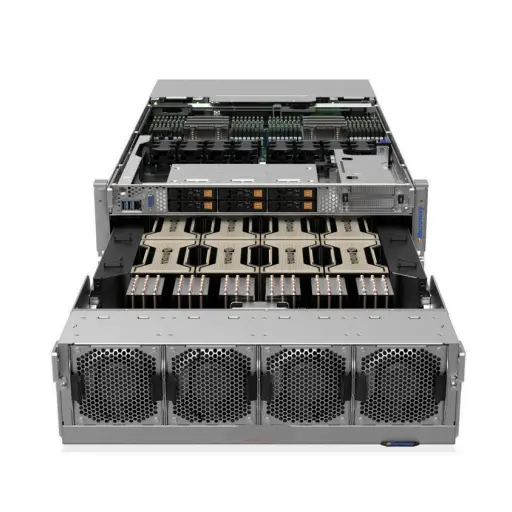
Aetina SuperEdge AEX-2UA1 (MGX Server)
| Feature | Details |
|---|---|
| Processor | Latest Intel® Xeon® 6 (Granite Rapids-SP, Sierra Forest-SP) up to 250W TDP |
| Memory | 8× DDR5 RDIMM channels, 6400 MT/s DDR5 or 8000 MT/s MCR DIMM |
| GPU Support | Up to 2× NVIDIA dual-width GPUs with NVLink for high-speed GPU-to-GPU communication |
| Expansion Slots | (2) PCIe Gen5 x16 FHFL, (1) PCIe Gen5 x8 FHFL (disabled with 2 dual-width GPUs), (1) PCIe Gen5 x16 FHHL for NIC/DPU |
NVIDIA Jetson Platform
The NVIDIA Jetson platform has established itself as the leading embedded AI computing solution, powering millions of edge devices across robotics, autonomous machines, smart cameras, and industrial IoT applications. Built on NVIDIA’s CUDA-X acceleration libraries and supporting the full AI software stack from TensorFlow and PyTorch to NVIDIA’s own TAO Toolkit, Jetson modules deliver unmatched developer ecosystem support and production-ready reliability.
The Jetson family spans from entry-level education and prototyping with Jetson Nano (0.5 TOPS, $59) to high-performance edge AI with Jetson AGX Orin (275 TOPS, $599-$1099). This scalability allows developers to prototype on affordable hardware and seamlessly transition to production with higher-performance modules using the same software stack. All Jetson modules share the same NVIDIA architecture, ensuring code portability and simplified development workflows.
Jetson Orin represents the latest generation, built on NVIDIA’s Ampere architecture with up to 2048 CUDA cores and 64 Tensor Cores. The Orin lineup includes Orin Nano (20-67 TOPS, 7-25W), Orin NX (70-100 TOPS, 10-25W), and AGX Orin (200-275 TOPS, 15-60W). These modules deliver up to 8X the performance of previous-generation Xavier while maintaining similar power envelopes, enabling sophisticated AI applications like multi-sensor fusion for autonomous vehicles, real-time video analytics with transformer models, and complex industrial vision inspection.
Jetson Xavier remains relevant for applications requiring strong AI performance at competitive price points. Xavier NX delivers 21 TOPS at 10-15W, while AGX Xavier provides 32 TOPS at 10-30W. Xavier modules excel in scenarios like intelligent video analytics, collaborative robots, and edge AI inference for logistics automation. The architecture includes 512 CUDA cores, 64 Tensor Cores, and hardware video encoding/decoding supporting up to 8 concurrent streams.
Jetson Nano serves educational, maker, and low-power IoT applications with 0.5 TOPS at 5-10W and prices starting at $59. While less powerful than newer modules, Nano’s accessibility and ecosystem have made it the platform of choice for AI education, hobbyist projects, and proof-of-concept development.
For detailed performance benchmarks, software compatibility, and selection guidance across the complete Jetson lineup, consult our comprehensive NVIDIA Jetson Complete Guide: Orin, Xavier & Nano Comparison.
Reference: NVIDIA Jetson AGX Orin Official
AI Bridge Video Analytics Solutions
AI Bridge technology represents a specialized approach to edge AI video analytics, providing seamless integration between AI inference capabilities and video management systems (VMS). These solutions address the growing demand for intelligent video analytics in security, retail, industrial monitoring, and smart city applications where traditional video surveillance must evolve into actionable intelligence platforms.
The core value proposition of AI Bridge systems lies in their ability to retrofit existing camera infrastructure with advanced AI capabilities. Rather than replacing entire camera networks—a costly and disruptive proposition—AI Bridge appliances connect to existing IP cameras via standard protocols (RTSP, ONVIF) and perform AI inference on video streams. This architecture enables organizations to leverage investments in existing surveillance infrastructure while adding sophisticated capabilities like person detection, face recognition, object tracking, crowd analysis, license plate recognition, and anomaly detection.
AI Bridge video analytics platforms typically offer multiple hardware configurations optimized for different deployment scales. Entry-level models like the TE1-04 support 4-8 camera channels with basic analytics, suitable for small retail stores or office deployments. Mid-range systems like the TS2-08 handle 8-16 channels with advanced analytics including object classification, behavior analysis, and heat mapping—ideal for larger retail environments, warehouses, and manufacturing facilities. Enterprise models featuring LTE connectivity provide cellular network failover and remote deployment capabilities for distributed sites without reliable wired networking.
Modern AI Bridge solutions leverage edge AI accelerators to deliver real-time analytics with minimal latency. Processing occurs locally on the appliance, eliminating the bandwidth costs and latency of cloud-based analytics while ensuring video data never leaves the premises—a critical consideration for privacy-sensitive applications in healthcare, banking, and government sectors. The appliances integrate with popular VMS platforms including Milestone XProtect, Genetec Security Center, and Avigilon Control Center, presenting analytics results as metadata overlays on live and recorded video.
The software stack powering AI Bridge systems typically includes pre-trained deep learning models for common use cases, customizable rule engines for defining alerts and actions, and dashboards for visualizing analytics insights. Advanced implementations support model customization and retraining using customer-specific data, enabling optimization for unique environments and requirements. Integration capabilities extend beyond VMS to include access control systems, point-of-sale systems, building management platforms, and business intelligence tools.
For organizations evaluating AI Bridge solutions, key selection criteria include supported camera capacity, AI model library breadth, processing performance (frames per second per channel), integration ecosystem, and management capabilities. Detailed analysis of leading AI Bridge platforms, including performance benchmarks and deployment scenarios, is available in our AI Bridge Video Analytics: Complete Buyer’s Guide (TE1-04, TS2-08, LTE Models).
Inference GPU Options
While embedded modules like Jetson excel in compact, power-constrained edge deployments, many edge AI applications require the raw computational power of discrete GPUs. Inference GPUs deliver the parallel processing capabilities needed for complex models, high-resolution video processing, large batch inference, and multi-model serving scenarios common in edge server and edge data center architectures.
NVIDIA T4 Tensor Core GPU
The NVIDIA T4 has become the workhorse GPU for edge inference, striking an optimal balance between performance, power efficiency, and cost. Built on the Turing architecture with 2,560 CUDA cores and 320 Tensor Cores, the T4 delivers up to 130 TOPS INT8 performance while consuming only 70W—low enough for passive cooling in many server designs. The 16GB GDDR6 memory provides sufficient capacity for most inference models while maintaining a competitive price point.
T4’s versatility makes it suitable for diverse edge applications including video transcoding with AI enhancement, natural language processing for voice assistants, computer vision for quality inspection, and batch inference serving for multiple models. The GPU supports multiple precision formats (FP32, FP16, INT8, INT4) with automatic mixed precision, allowing optimal performance for various model types. Real-world benchmarks demonstrate T4 delivering 40X higher inference throughput than CPU alternatives for ResNet-50 and similar gains for BERT and other popular architectures.
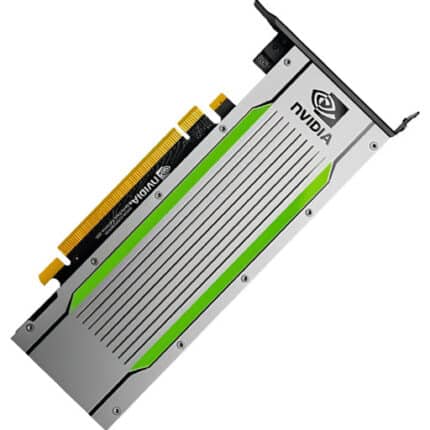
NVIDIA A2 Compact GPU
The A2 addresses scenarios where space and power constraints are paramount yet GPU acceleration remains beneficial. This compact, low-profile GPU consumes just 40-60W and fits in single-slot configurations, making it ideal for dense edge server deployments, embedded systems, and retrofit installations where physical space is limited. Despite its compact form factor, A2 delivers 20 TOPS with 1,280 CUDA cores and 40 Tensor Cores.
A2 excels in intelligent video analytics workloads, supporting up to 12 concurrent 1080p video streams with real-time AI inference. The GPU’s low power consumption and small footprint make it particularly attractive for edge deployments in retail, transportation, healthcare, and industrial settings where cooling capacity and rack space are constrained. Organizations deploying distributed edge inference across many sites appreciate A2’s ability to deliver GPU acceleration without the infrastructure requirements of larger GPUs.

L40 for AI and Graphics
The L40 represents NVIDIA’s most powerful edge-deployable GPU, delivering 362 TFLOPS of AI performance alongside professional graphics capabilities. Built on the Ada Lovelace architecture with 18,176 CUDA cores, 568 Tensor Cores, and 48GB GDDR6X memory, L40 targets applications requiring maximum performance at the edge—autonomous vehicle development, medical imaging with 3D visualization, large language model serving, and multi-modal AI workloads combining vision, language, and graphics.
L40’s 300W TDP positions it for edge servers and workstations rather than embedded deployments, but its performance justifies the power budget in demanding applications. The GPU’s dual-purpose design supporting both AI inference and graphics rendering makes it uniquely valuable for scenarios like virtual production, industrial digital twins, and medical imaging where AI analysis must integrate with high-fidelity visualization.
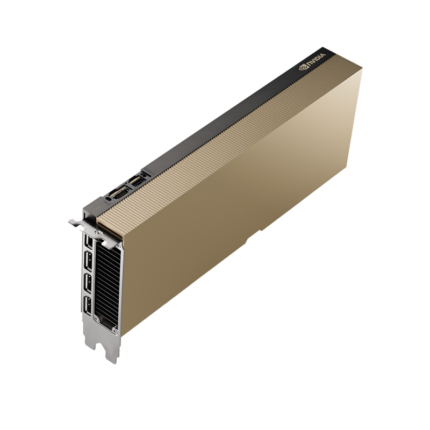
Comparison Table: Inference GPU Specifications
| GPU Model | Architecture | CUDA Cores | Tensor Cores | Memory | Memory Bandwidth | TDP | AI Performance | Best For |
|---|---|---|---|---|---|---|---|---|
| NVIDIA T4 | Turing | 2,560 | 320 | 16GB GDDR6 | 320 GB/s | 70W | 130 TOPS INT8 | Cost-effective edge inference, video analytics |
| NVIDIA A2 | Ampere | 1,280 | 40 | 16GB GDDR6 | 200 GB/s | 40-60W | 20 TOPS | Space-constrained edge, dense deployments |
| NVIDIA L40 | Ada Lovelace | 18,176 | 568 | 48GB GDDR6X | 864 GB/s | 300W | 362 TFLOPS | High-performance edge, AI + graphics |
For comprehensive performance analysis, deployment scenarios, and selection guidance for edge inference GPUs, refer to our detailed Inference GPUs for Edge Deployment: T4, A2, L40 Performance Guide.
Aetina Edge AI Systems
Aetina specializes in ruggedized, industrial-grade edge AI computing systems built on NVIDIA Jetson platforms but engineered for the demanding requirements of industrial, transportation, and outdoor deployments. These systems integrate Jetson modules with industrial I/O, wide temperature range operation, shock and vibration resistance, and comprehensive connectivity options required for real-world edge AI applications.
The AEX-2UA1 exemplifies Aetina’s compact fanless design philosophy, integrating Jetson Xavier NX or Orin NX modules in a rugged aluminum chassis measuring just 158mm x 121mm x 54mm. Despite its compact footprint, the system provides extensive connectivity including dual GigE, USB 3.2, CAN bus, and M.2 expansion for wireless modules. The fanless thermal design enables operation in -25°C to 60°C ambient temperatures while maintaining full AI performance—essential for outdoor installations in smart city infrastructure, agricultural monitoring, and mining applications.
The AIP-FR68 targets higher-performance industrial edge AI with support for Jetson AGX Orin, delivering up to 275 TOPS in a compact form factor. This system adds richer I/O including quad GigE for multi-camera applications, multiple PCIe slots for AI accelerators or specialized I/O cards, and industrial protocol support (Modbus, OPC-UA, EtherNet/IP). The AIP-FR68 excels in manufacturing quality inspection systems, autonomous mobile robots, and intelligent transportation applications requiring complex AI models and multi-sensor fusion.
The AIP-KQ67 represents Aetina’s most powerful edge AI system, featuring Intel Xeon processors alongside Jetson AGX Orin in a hybrid architecture. This combination enables sophisticated edge applications requiring both CPU-intensive data processing and GPU-accelerated AI inference. The system’s modular design supports multiple configurations from air-cooled to liquid-cooled thermal management, accommodating deployments from factory floors to data center edge environments. Applications include industrial metaverse platforms, advanced driver assistance system (ADAS) testing, and hybrid AI-physics simulations.
All Aetina systems undergo rigorous validation for industrial standards including CE, FCC, and IEC 60068 environmental testing. The systems ship with NVIDIA JetPack SDK pre-installed, comprehensive SDK support, and reference designs accelerating time-to-deployment for system integrators and OEMs. Remote management capabilities including out-of-band access and containerized application deployment via Kubernetes integration enable scalable edge fleet management.
For organizations deploying edge AI in challenging environments, Aetina’s industrial engineering expertise delivers production-ready systems eliminating the need for custom hardware development. Detailed specifications, thermal performance data, and application examples are available in our Aetina Edge AI Systems: AEX-2UA1, AIP-FR68 & AIP-KQ67 Comparison guide.
Qualcomm Cloud AI100 Ultra
The Qualcomm Cloud AI 100 Ultra represents a fundamentally different approach to edge AI acceleration, leveraging a custom AI-optimized architecture rather than general-purpose GPU computing. This purpose-built inference accelerator delivers over 400 TOPS peak performance while consuming only 75W, achieving industry-leading performance-per-watt critical for large-scale edge deployments where power and cooling costs directly impact total cost of ownership.
Built on Qualcomm’s 7nm process technology, the Cloud AI 100 Ultra integrates 16 Qualcomm AI Cores—specialized processors optimized for neural network operations including convolutions, matrix multiplications, and activation functions. The architecture includes 32GB of on-device memory and high-bandwidth interconnects enabling efficient model parallelism for large neural networks. This design delivers consistent, predictable latency critical for real-time applications—avoiding the performance variability sometimes encountered with GPUs handling mixed workloads.
The Ultra variant expands upon the standard Cloud AI 100 with enhanced compute density, supporting larger models and higher throughput for demanding enterprise edge scenarios. A single card can execute multiple concurrent AI models, enabling edge servers to handle diverse workloads—simultaneous object detection, classification, natural language processing, and anomaly detection—without model switching overhead. This multi-model capability proves essential in unified edge platforms serving multiple applications or tenants.
Qualcomm provides comprehensive software support through the Cloud AI SDK, supporting popular frameworks including TensorFlow, PyTorch, and ONNX. The SDK includes model optimization tools that analyze neural network architectures and apply quantization, pruning, and compilation optimizations tailored to the Cloud AI 100 hardware. These optimizations frequently deliver 2-3X performance improvements compared to unoptimized models while maintaining accuracy within acceptable bounds for most applications.
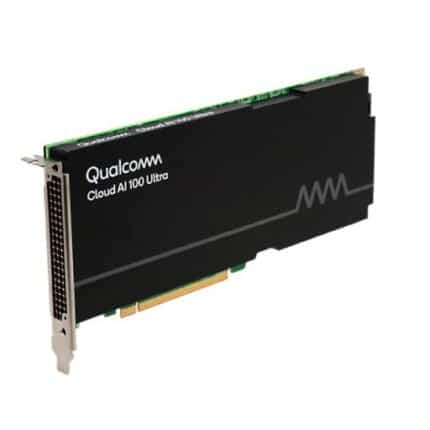
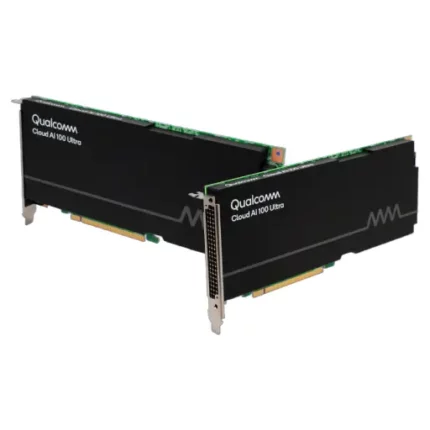
Qualcomm Cloud AI100 Ultra
Enterprise adoption of Cloud AI 100 Ultra has accelerated in telecommunications (5G edge processing), retail (distributed inference for inventory and analytics), healthcare (medical image analysis), and smart manufacturing. The accelerator’s PCIe Gen4 x16 interface enables flexible deployment in edge servers, workstations, and ruggedized edge computing platforms. Multiple cards can be deployed in a single system for scaling inference capacity, with Qualcomm’s software stack handling model distribution and load balancing across accelerators.
For enterprises evaluating Cloud AI 100 Ultra for large-scale edge AI deployments, detailed performance benchmarks across diverse model types, cost-per-inference analysis, and deployment architectures are available in our comprehensive Qualcomm Cloud AI100 Ultra: Complete Guide for Enterprise Edge AI.
Reference: Qualcomm Cloud AI 100 Ultra Official
Edge Computer Hardware Requirements
Successful edge AI deployments require careful consideration of hardware requirements beyond the AI accelerator itself. The complete edge computing platform must address processing, memory, storage, networking, power, and environmental factors to ensure reliable, long-term operation.
Processing Requirements: Modern edge AI applications typically employ heterogeneous computing architectures combining CPUs, GPUs, and specialized AI accelerators. The CPU handles general-purpose tasks including data preprocessing, application logic, networking, and system management. For most edge AI scenarios, a modern ARM processor (Cortex-A78, Neoverse) or x86 CPU (Intel Core, Xeon D, AMD EPYC Embedded) with 4-8 cores provides sufficient compute for system tasks while the AI accelerator handles inference workloads.
Memory and Storage: Edge AI systems require adequate memory for model storage, input data buffering, and operating system operations. Minimum configurations typically include 8-16GB RAM, though applications involving large models, high-resolution video processing, or multiple concurrent models may require 32-64GB. Storage requirements vary dramatically based on application: simple inference systems may operate with 32-128GB eMMC or SSD, while video analytics systems recording footage locally require 512GB-4TB. NVMe SSDs provide optimal performance for applications with high data ingest rates.
Power and Thermal Management: Power consumption represents a critical constraint for edge deployments, particularly in remote locations, mobile platforms, or installations with limited cooling capacity. Total system power typically ranges from 10W for embedded modules to 500W+ for edge servers with multiple GPUs. Thermal design must account for worst-case ambient temperatures and ensure accelerators maintain performance under sustained load. Many edge environments require fanless designs, industrial temperature ratings (-40°C to 85°C), or sealed enclosures for dust and moisture protection.
Connectivity: Edge AI systems require robust networking for receiving input data, transmitting results, and supporting remote management. Common connectivity requirements include: Gigabit Ethernet or faster for wired networking, with many applications requiring dual-port configurations for network redundancy; Wi-Fi 6/6E for wireless connectivity in mobile or difficult-to-wire locations; 4G LTE or 5G cellular for remote sites or mobile deployments; and Bluetooth, Zigbee, or LoRaWAN for IoT sensor integration.
Complete Edge AI Solutions Comparison
The following table provides a comprehensive comparison of major edge AI platforms, enabling informed technology selection based on your specific requirements:
| Solution | AI Performance | Power Consumption | Memory | Form Factor | Primary Use Cases | Price Range |
|---|---|---|---|---|---|---|
| NVIDIA Jetson Nano | 0.5 TOPS | 5-10W | 2-4GB | Small module (70x45mm) | Education, prototyping, basic edge AI | $ |
| NVIDIA Jetson Xavier NX | 21 TOPS | 10-15W | 8-16GB | Small module (70x45mm) | Industrial IoT, robotics, smart cameras | $$ |
| NVIDIA Jetson Orin Nano | 20-67 TOPS | 7-25W | 4-8GB | Small module (70x45mm) | Robotics, autonomous machines, vision AI | $$ |
| NVIDIA Jetson AGX Orin | 200-275 TOPS | 15-60W | 32-64GB | Medium module (100x87mm) | Autonomous vehicles, advanced robotics | $ |
| NVIDIA T4 GPU | 130 TOPS INT8 | 70W | 16GB GDDR6 | PCIe card (Full-height) | Edge servers, video analytics, ML inference | $$ |
| NVIDIA A2 GPU | 20 TOPS | 40-60W | 16GB GDDR6 | PCIe card (Low-profile) | Dense edge servers, space-constrained deployments | $$ |
| NVIDIA L40 GPU | 362 TFLOPS | 300W | 48GB GDDR6X | PCIe card (Dual-slot) | High-performance edge, AI + graphics workloads | |
| AI Bridge TE1-04 | Varies | 15-30W | System-dependent | Appliance (compact) | Small-scale video analytics (4-8 cameras) | $$ |
| AI Bridge TS2-08 | Varies | 40-80W | System-dependent | Appliance (rack-mount) | Enterprise video analytics (8-16 cameras) | $ |
| Aetina AEX-2UA1 | 21-100 TOPS | 15-25W | 8-32GB | Compact box (158x121x54mm) | Industrial edge AI, outdoor deployments | $ |
| Aetina AIP-FR68 | 200-275 TOPS | 30-60W | 32-64GB | Industrial box (medium) | Manufacturing, AMR, intelligent transportation | |
| Aetina AIP-KQ67 | 275+ TOPS | 150-300W | 64GB+ | Rackmount server | Industrial edge servers, hybrid architectures | |
| Qualcomm Cloud AI100 | 400+ TOPS | 75W | 32GB | PCIe card (Half-height) | Enterprise edge inference, telco edge | $ |
| Qualcomm Cloud AI100 Ultra | 600+ TOPS | 150W | 64GB | PCIe card (Full-height) | Large-scale enterprise edge, 5G MEC |
Price Range Legend:
- $ = Under $500
- $$ = $500-$2,000
- $ = $2,000-$5,000
-
= Above $5,000
Use Cases and Applications
Edge AI computing enables transformative applications across industries by bringing intelligence directly to where decisions must be made. The following use cases demonstrate the breadth and value of edge AI deployments:
Smart Manufacturing
Manufacturing has emerged as a leading edge AI application domain, with deployments spanning quality inspection, predictive maintenance, worker safety, and production optimization. Computer vision systems powered by edge AI perform real-time defect detection on production lines, identifying quality issues with greater accuracy and consistency than human inspectors while operating at production speeds measuring thousands of parts per minute. These systems leverage high-resolution industrial cameras paired with edge AI accelerators running custom-trained models optimized for specific defects in specific materials and products.
Predictive maintenance applications use edge AI to analyze sensor data from machinery—vibration, temperature, acoustic emissions, power consumption—identifying anomalies indicating impending failures. By processing this analysis at the edge, systems provide immediate alerts enabling preventive intervention before catastrophic failures occur. This approach has demonstrated 30-50 percent reductions in unplanned downtime across automotive, electronics, and food and beverage manufacturing operations.
Retail Analytics
Retail environments leverage edge AI for customer analytics, inventory management, loss prevention, and store operations optimization. In-store customer behavior analysis uses AI-powered video analytics to track customer journeys through stores, identify product interaction patterns, measure dwell times, and analyze demographics—all while preserving privacy through on-device processing that never transmits identifiable video. These insights inform store layout optimization, product placement strategies, and staffing decisions.
Automated checkout systems represent perhaps the most visible retail edge AI application, using computer vision to identify products and enable frictionless shopping experiences. These systems require substantial edge compute capacity to process multiple camera angles in real-time, tracking products as customers add and remove items from baskets. Edge processing ensures the sub-second latency required for responsive customer experiences while managing bandwidth costs that would be prohibitive with cloud processing.
Healthcare Imaging
Medical imaging applications increasingly deploy AI at the edge to accelerate diagnosis, improve image quality, and enable new care delivery models. Edge AI systems in radiology departments perform real-time image enhancement, automated measurements, and preliminary analysis—flagging potential abnormalities for radiologist review. This AI-assisted workflow improves diagnostic accuracy while accelerating time-to-diagnosis, particularly valuable in emergency scenarios where rapid assessment directly impacts patient outcomes.
Point-of-care ultrasound devices integrate edge AI to enable clinicians without specialized imaging training to capture diagnostic-quality images. The AI provides real-time guidance during image acquisition, automatically identifying anatomical landmarks and optimizing imaging parameters. On-device inference ensures these capabilities function in resource-limited settings without reliable connectivity—expanding access to diagnostic imaging in rural clinics, ambulances, and field hospitals.
Smart Cities
Urban environments deploy edge AI across transportation management, public safety, environmental monitoring, and infrastructure management. Intelligent traffic management systems use edge AI-powered camera networks to analyze traffic patterns in real-time, detecting congestion, accidents, and rule violations. These systems dynamically adjust traffic signal timing to optimize flow, reducing commute times and emissions while improving safety. Edge processing enables these adjustments at scale across thousands of intersections without overwhelming network infrastructure.
Public safety applications leverage edge AI for proactive incident detection and response coordination. Video analytics identify suspicious behaviors, unattended objects, and crowd dynamics indicating potential safety concerns—alerting authorities to investigate before incidents escalate. Edge processing ensures these capabilities function reliably even during network disruptions while addressing privacy concerns by analyzing video locally without centralized storage.
Autonomous Systems
Autonomous vehicles, drones, and mobile robots represent perhaps the most demanding edge AI application category, requiring real-time processing of multiple sensor streams for perception, localization, path planning, and control. These systems cannot tolerate cloud processing latency and must function reliably without connectivity—necessitating powerful on-board edge AI capabilities.
Modern autonomous vehicles employ multiple edge AI accelerators processing inputs from cameras, lidar, radar, and ultrasonic sensors. Vision models detect and classify objects—vehicles, pedestrians, traffic signs, lane markings. Sensor fusion algorithms combine multi-modal inputs to build comprehensive environmental representations. Path planning systems chart safe, efficient routes considering dynamic obstacles, traffic rules, and mission objectives. These computations must complete within milliseconds to enable safe navigation at highway speeds, requiring hundreds of TOPS of edge AI performance.
Reference: Microsoft Azure IoT Edge
Choosing the Right Edge AI Solution
Selecting the optimal edge AI platform requires systematic evaluation across multiple dimensions: performance requirements, power constraints, form factor limitations, software ecosystem compatibility, cost considerations, and deployment environment factors.
Performance Analysis begins with characterizing your AI workload: model architecture, input data dimensions, required throughput (inferences per second), and latency constraints. Computer vision applications processing 1080p video at 30fps require substantially different compute capabilities than natural language processing for voice assistants or anomaly detection on structured sensor data. Benchmark your specific models on candidate platforms to validate they meet real-world performance targets under sustained load.
Power and Thermal Constraints often prove decisive in edge deployments. Battery-powered mobile systems may have 5-15W power budgets necessitating efficient embedded modules like Jetson Orin Nano. Industrial applications in temperature-controlled environments can accommodate higher power devices like Jetson AGX Orin or inference GPUs. Outdoor deployments in direct sunlight or extreme temperatures require industrial-grade thermal design and may necessitate fanless solutions despite performance trade-offs.
Form Factor and Environmental Factors influence hardware selection for physical integration and ruggedization requirements. Compact embedded modules integrate into drones, robots, and medical devices where space is premium. PCIe accelerators suit edge servers and workstations with expansion slots. Industrial deployments may require IP-rated enclosures, shock and vibration resistance, and wide temperature operation—factors driving selection toward specialized systems from vendors like Aetina rather than consumer-grade hardware.
Software Ecosystem and Development Tools significantly impact time-to-deployment and long-term maintainability. NVIDIA’s CUDA ecosystem and JetPack SDK provide mature, comprehensive tools for Jetson and GPU platforms with extensive community support. Qualcomm’s Cloud AI SDK offers strong optimization tools but a smaller developer community. Evaluate framework support (TensorFlow, PyTorch, ONNX), pre-trained model availability, and development tool maturity for your specific application domain.
Total Cost of Ownership extends beyond initial hardware costs to encompass software licensing, development effort, deployment complexity, power consumption, maintenance, and scaling costs. A higher-performance, higher-cost platform may deliver lower TCO if it simplifies development, reduces deployment time, or enables serving multiple applications from a single device. Power consumption directly impacts operating costs in large-scale deployments—a factor favoring efficient accelerators like Qualcomm Cloud AI 100 Ultra despite higher upfront costs.
For comprehensive selection guidance addressing your specific requirements, consult our detailed platform guides: NVIDIA Jetson Complete Guide, Inference GPUs Performance Guide, Aetina Edge AI Systems Comparison, Qualcomm Cloud AI100 Ultra Guide, and AI Bridge Video Analytics Guide.
Frequently Asked Questions
1. What is edge AI computing and how does it differ from cloud AI?
Edge AI computing executes artificial intelligence algorithms directly on devices at or near the source of data generation—such as cameras, sensors, robots, and industrial equipment—rather than transmitting data to centralized cloud data centers for processing. This architectural difference yields several critical advantages: dramatically reduced latency (milliseconds vs. hundreds of milliseconds for cloud round-trips), elimination of network bandwidth costs for transmitting raw data, enhanced privacy and security by keeping sensitive data on-premises, and continued operation during network outages. Cloud AI remains appropriate for non-time-sensitive workloads, computationally intensive training operations, and applications requiring massive scale beyond edge device capabilities. Modern architectures increasingly employ hybrid approaches: edge devices perform real-time inference while periodically synchronizing with cloud systems for model updates, aggregated analytics, and long-term data storage.
2. Which edge AI platform is best for video analytics applications?
Video analytics workloads benefit from different platforms depending on deployment scale and requirements. For compact, single-camera or small multi-camera deployments (1-4 cameras), NVIDIA Jetson modules—particularly Xavier NX or Orin Nano—provide excellent balance of performance, power efficiency, and cost in compact form factors. These platforms deliver 21-67 TOPS sufficient for real-time analytics on multiple video streams while consuming only 10-25W. For larger deployments (8-32 cameras), specialized video analytics appliances like AI Bridge systems or edge servers equipped with NVIDIA T4 or A2 GPUs offer better scaling and typically include pre-integrated video management software. Enterprise deployments with 50+ cameras benefit from edge servers with multiple T4 GPUs or high-performance accelerators like Qualcomm Cloud AI 100 Ultra, providing the throughput to process dozens of concurrent video streams with sophisticated AI models.
3. What are the power consumption differences between edge AI devices?
Power consumption varies dramatically across edge AI platforms, ranging from 5W for entry-level modules to 500W+ for high-performance edge servers. NVIDIA Jetson Nano operates at 5-10W, suitable for battery-powered and solar-powered deployments. Jetson Xavier NX and Orin Nano consume 10-25W, appropriate for embedded applications with modest power budgets. High-performance Jetson AGX Orin requires 15-60W depending on configuration and workload. Discrete inference GPUs span a wider range: NVIDIA A2 operates at 40-60W, T4 at 70W, and L40 at 300W. Qualcomm Cloud AI 100 delivers 400+ TOPS at just 75W, achieving industry-leading performance-per-watt. When evaluating power, consider both peak consumption and typical operating power under your specific workload—many platforms employ dynamic power management that significantly reduces consumption during idle or light load periods.
4. Can I use multiple edge AI devices in a distributed system?
Yes, distributed edge AI architectures employing multiple devices are increasingly common and often preferable to single centralized systems. Distributed architectures provide several advantages: geographic distribution processing data at multiple physical locations, scalability by adding devices as demand grows, resilience through redundancy and continued operation despite individual device failures, and load balancing across devices to optimize resource utilization. Implementation requires careful consideration of workload distribution strategies (by location, by model type, by data source), inter-device communication for cooperative inference or federated learning, centralized management and monitoring capabilities, and model synchronization to ensure devices run consistent versions. Technologies like Kubernetes and edge orchestration platforms (AWS IoT Greengrass, Azure IoT Edge, NVIDIA Fleet Command) provide frameworks for managing distributed edge AI deployments at scale.
5. What is the role of Tensor Cores in edge inference?
Tensor Cores are specialized processing units integrated into NVIDIA GPUs and Jetson modules, optimized specifically for the matrix multiplication operations that dominate deep learning computations. These cores deliver dramatically higher throughput and efficiency compared to standard CUDA cores for AI workloads, particularly when processing models quantized to lower precision formats like FP16, INT8, or INT4. For example, a Jetson AGX Orin with 64 Tensor Cores delivers 275 TOPS INT8 performance—far exceeding what its 2048 CUDA cores could achieve alone. Tensor Cores prove especially valuable for inference workloads involving convolutional neural networks (common in computer vision), transformer models (used in natural language processing and increasingly in vision), and large matrix operations (characteristic of recommendation systems and classification tasks). For detailed performance comparisons across devices with different Tensor Core configurations, see our Inference GPUs Performance Guide.
6. How do I choose between NVIDIA Jetson and inference GPUs?
The choice between embedded Jetson modules and discrete inference GPUs depends primarily on form factor constraints, power budgets, and performance requirements. Choose Jetson modules when: deploying in space-constrained environments (robots, drones, portable devices), operating with limited power budgets (under 60W), requiring ruggedized or mobile solutions, or building systems where the module integrates directly into a custom carrier board. Select inference GPUs when: deploying in standard servers or workstations with PCIe slots, requiring maximum inference throughput (T4 delivers 130 TOPS INT8 vs. Jetson Orin’s 275 TOPS but in a very different form factor and power envelope), serving multiple concurrent models or applications from a single server, or scaling systems by adding GPUs to existing infrastructure. Many organizations deploy hybrid architectures: Jetson modules at the network edge in distributed locations, feeding summary data to edge servers equipped with inference GPUs for more complex processing.
7. What are the main advantages of AI Bridge solutions?
AI Bridge solutions provide significant advantages for organizations deploying video analytics on existing camera infrastructure. The primary benefits include: retrofit capability enabling AI analytics on legacy cameras without costly camera replacement, centralized management simplifying configuration and monitoring across distributed sites, pre-integrated software stacks combining video management and AI analytics in turnkey solutions, on-premises processing preserving privacy by eliminating cloud transmission of video, and lower total cost of ownership compared to replacing entire camera networks or deploying cloud-based analytics at scale. AI Bridge appliances typically support 4-16 concurrent camera streams with real-time analytics, making them ideal for retail stores, small-to-medium manufacturing facilities, and distributed enterprise locations. For detailed model comparisons and deployment scenarios, consult our AI Bridge Video Analytics Complete Buyer’s Guide.
8. Is Qualcomm Cloud AI100 Ultra suitable for small deployments?
While Qualcomm Cloud AI 100 Ultra delivers exceptional performance and efficiency, it targets enterprise-scale deployments rather than small installations with 1-10 devices. The accelerator’s $3,000-$5,000+ price point and PCIe form factor requiring server infrastructure make economic sense for deployments with: high inference throughput requirements (hundreds to thousands of inferences per second), multiple concurrent AI models serving diverse applications, large-scale distributed infrastructure where power efficiency directly impacts operating costs, or telco edge computing scenarios requiring maximum performance per rack unit. For smaller deployments, more cost-effective solutions include NVIDIA Jetson modules, T4 or A2 GPUs, or specialized appliances like AI Bridge systems. Organizations planning to scale should consider Qualcomm Cloud AI 100 for future deployment phases even if initial pilots use other platforms, ensuring a migration path to enterprise-grade infrastructure.
9. What software frameworks are compatible with edge AI devices?
Modern edge AI platforms support the major deep learning frameworks used throughout the industry, though specific optimization levels vary by hardware vendor. NVIDIA Jetson and GPU platforms offer comprehensive support for TensorFlow, TensorFlow Lite, PyTorch, ONNX Runtime, and NVIDIA’s TensorRT inference optimization library. Models developed in any framework can typically be converted to TensorRT format for optimized inference performance on NVIDIA hardware. Qualcomm Cloud AI 100 supports TensorFlow, PyTorch, and ONNX through the Cloud AI SDK, with optimization tools for quantization and model compilation specific to Qualcomm hardware. Beyond inference frameworks, edge platforms increasingly support container orchestration (Docker, Kubernetes), enabling deployment of complete application stacks including pre-processing, inference, post-processing, and business logic. Edge-optimized versions of full cloud platforms (AWS IoT Greengrass, Azure IoT Edge, Google Cloud IoT Edge) provide additional integration with cloud services for model management, monitoring, and data aggregation.
10. How does edge AI impact data privacy and security?
Edge AI significantly enhances data privacy and security compared to cloud-based approaches by processing sensitive data locally without transmission over networks. This architectural approach addresses several critical concerns: data never leaving premises eliminates exposure to network interception or cloud provider breaches; organizations maintain complete control over data access and retention policies; compliance with privacy regulations (GDPR, HIPAA, CCPA) becomes simpler when data remains on-premises; and bandwidth is reduced by transmitting only AI insights rather than raw data. However, edge deployments introduce different security considerations: physical security of edge devices located in potentially accessible locations, securing the edge AI software stack against vulnerabilities and exploitation, managing credentials and certificates for device authentication, and ensuring secure model updates and configuration management. Comprehensive edge AI security requires: hardware-level security features (secure boot, TPM), encrypted storage for models and sensitive data, network security (VPN, firewalls), regular security updates and patch management, and monitoring for anomalous behavior indicating compromise.
Reference: AWS IoT Edge Computing
Conclusion
Edge AI computing has evolved from niche applications to mainstream technology enabling transformative capabilities across industries. The comprehensive ecosystem of hardware platforms—from compact embedded modules to powerful inference accelerators—provides solutions for virtually any edge AI deployment scenario. Success requires understanding the trade-offs between performance, power, cost, and form factor to select platforms aligned with application requirements.
The convergence of increasingly powerful edge AI hardware with mature software frameworks and growing developer expertise has eliminated technical barriers that previously constrained edge deployments. Organizations can now implement sophisticated AI capabilities—object detection and classification, natural language processing, anomaly detection, predictive analytics—directly at the edge with latency and reliability unachievable through cloud architectures. As 5G networks proliferate and edge computing infrastructure expands, the addressable opportunity for edge AI continues growing.
Future edge AI evolution will likely emphasize specialized accelerators optimized for specific workload types, tighter integration between edge and cloud systems for hybrid AI architectures, and enhanced security features addressing the unique challenges of distributed edge deployments. Organizations beginning edge AI initiatives today should architect solutions anticipating this evolution—selecting platforms with strong software ecosystems, planning for hybrid edge-cloud workflows, and implementing security and management capabilities enabling scaling from pilot deployments to enterprise-wide infrastructure.
For deep dives into specific platforms and technologies, explore our comprehensive guides: NVIDIA Jetson Complete Guide, Inference GPUs Performance Guide, AI Bridge Video Analytics Guide, Aetina Edge AI Systems Comparison, and Qualcomm Cloud AI100 Ultra Guide. These resources provide the technical depth and practical guidance needed to architect, deploy, and optimize edge AI systems delivering measurable business value.
“In manufacturing environments, the latency penalty of cloud processing is non-negotiable. Edge AI systems allow defect detection algorithms to trigger corrective actions on high-speed production lines in milliseconds, something impossible with round-trip cloud transmission.” — Industrial Automation Team
“While GPU-based servers offer massive throughput, power constraints often dictate the architecture. For remote sites relying on solar or limited power feeds, embedded modules like the Jetson Orin Nano running under 15W are often the only viable solution.” — Edge Infrastructure Team
“Privacy is a major driver for retail analytics. By processing video feeds locally on AI Bridge appliances and only transmitting metadata—not raw footage—stores can analyze customer behavior without ever exposing sensitive video data to the public cloud.” — Security & Analytics Team
“For enterprise-scale deployments, total cost of ownership is heavily influenced by energy efficiency. Accelerators like the Qualcomm Cloud AI 100 Ultra, designed specifically for inference, can offer a better long-term ROI than general-purpose GPUs in high-density edge servers.” — Enterprise Procurement Team
Last update at December 2025