
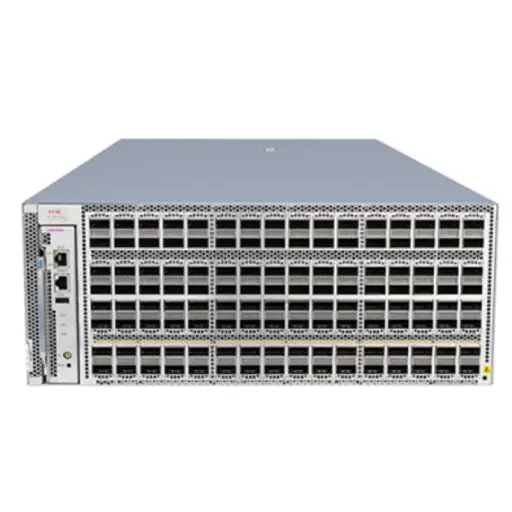
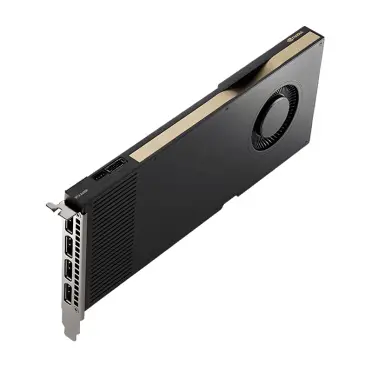
Products Mentioned in This Article

Author: ITCT Tech Editorial Unit
Reviewer: ITCT Technical Infrastructure Team
Last Updated: January 13, 2026
Reading Time: 8 minutes
References:
- NVIDIA Technical Specifications (T4, A2, L40 Data Sheets)
- Microsoft Azure GPU Deployment Guidelines (Referenced in text)
- ITCT Shop Product Catalog (IDs: 72313, 72302, 72299)
Quick Answer: What are Inference GPUs for Edge Deployment?
Edge inference GPUs are specialized hardware accelerators designed to run machine learning models directly on local devices rather than in the cloud. By moving processing closer to the data source, these units—specifically the NVIDIA T4, A2, and L40—significantly reduce latency, enhance data privacy, and ensure continuous operation in environments with limited connectivity. They utilize Tensor Cores to accelerate matrix operations, providing up to 20x performance improvements over CPU-only solutions for tasks ranging from video analytics to natural language processing.
Key Decision Factors
Choosing the right GPU depends heavily on power constraints and performance needs. The NVIDIA A2 (40-60W) is best for compact, power-constrained environments like IoT gateways. The NVIDIA T4 (70W) offers the most balanced performance-per-watt profile for general-purpose edge servers. For high-performance workloads requiring both heavy AI inference and professional graphics (such as autonomous vehicle simulation or medical imaging), the NVIDIA L40 (300W) is the superior choice, provided the infrastructure can support its higher power and cooling requirements.
The evolution of artificial intelligence at the network edge has revolutionized how organizations deploy machine learning models for real-time decision making. Edge inference represents a paradigm shift from centralized cloud processing to distributed computing, where AI models run directly on devices closer to data sources. This architectural approach reduces latency, improves privacy, and ensures continuous operation even when connectivity is limited.
Inference GPUs
NVIDIA’s latest generation of inference-optimized GPUs has transformed edge AI deployment capabilities. The Tesla T4, A2 Tensor Core, and L40 GPUs each offer distinct advantages for different edge computing scenarios, from compact IoT devices to high-performance edge servers. Understanding the performance characteristics, power requirements, and deployment considerations of these GPUs is crucial for architects and engineers designing modern edge AI infrastructure.
Overview of Edge Inference Requirements
Edge inference demands a careful balance between computational performance, power efficiency, and physical constraints. Unlike cloud-based inference, edge deployments must operate within strict power budgets, limited cooling capacity, and constrained physical footprints. The success of an edge AI deployment depends on selecting hardware that can deliver sufficient computational throughput while meeting these environmental constraints.
Modern edge inference workloads span a broad spectrum of applications, from computer vision processing in autonomous vehicles to natural language processing in smart speakers. Each application presents unique requirements for memory bandwidth, computational precision, and latency tolerance. The choice between different GPU architectures significantly impacts deployment success, operational costs, and long-term scalability.
Key Edge Deployment Considerations:
- Power consumption and thermal design power (TDP) limitations
- Form factor constraints and mechanical integration requirements
- Memory capacity for model storage and intermediate processing
- Inference throughput and latency performance requirements
- Cost-effectiveness and total cost of ownership
- Software ecosystem compatibility and deployment tools
NVIDIA T4 for Inference
The NVIDIA Tesla T4 represents a breakthrough in inference-optimized GPU design, specifically engineered for edge and data center inference workloads. Built on the Turing architecture, the T4 delivers exceptional performance per watt, making it ideal for deployment scenarios where power efficiency is paramount. The GPU’s 70W TDP enables passive cooling in many server configurations, reducing infrastructure complexity and operational costs.
The T4’s architecture incorporates 2,560 CUDA cores and 320 Tensor Cores, delivering up to 130 TOPS of INT8 inference performance. This computational capability, combined with 16GB of GDDR6 memory, enables the T4 to handle complex neural networks including large language models, computer vision pipelines, and multi-modal AI applications. The GPU’s memory bandwidth of 320 GB/s ensures efficient data movement between storage and processing units.
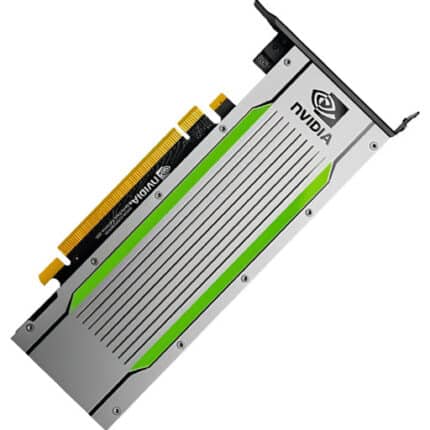
NVIDIA T4 Technical Specifications:
- GPU Architecture: Turing with 2nd generation RT cores
- CUDA Cores: 2,560 cores for parallel processing
- Tensor Cores: 320 mixed-precision Tensor Cores
- Memory: 16GB GDDR6 with ECC support
- Memory Bandwidth: 320 GB/s for high-throughput applications
- Power Consumption: 70W TDP for efficient deployment
- Form Factor: Low-profile PCIe card for dense server integration
- Performance: 8.1 TFLOPS FP32, 130 TOPS INT8 inference
The T4’s inference capabilities extend across multiple precision formats, from FP32 for maximum accuracy to INT8 and INT4 for optimized throughput. This flexibility allows developers to implement precision optimization techniques that can increase inference speed by up to 40x compared to CPU-only implementations. The GPU’s support for TensorRT optimization framework enables automatic precision calibration and network optimization.
Real-world T4 deployments demonstrate impressive performance across diverse applications. In video analytics scenarios, a single T4 can process up to 35 concurrent 1080p video streams with real-time object detection. For natural language processing tasks, the T4 achieves sub-millisecond inference latency for BERT-base models, making it suitable for interactive conversational AI applications.
NVIDIA A2 Compact GPU
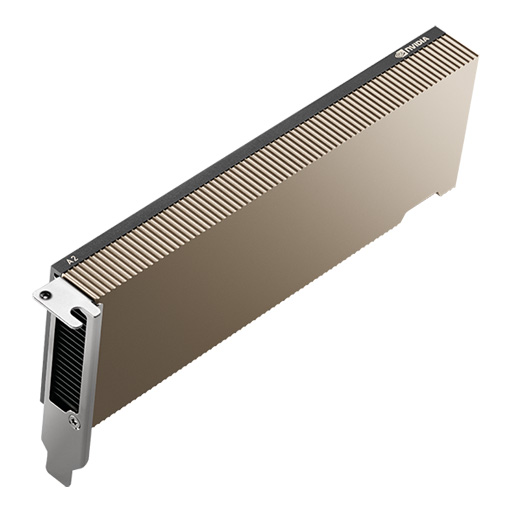
The NVIDIA A2 Tensor Core GPU addresses the growing demand for compact, power-efficient edge AI acceleration. Designed specifically for edge computing environments, the A2 delivers significant computational performance within a remarkably small power envelope of just 40-60W TDP. This efficiency makes the A2 ideal for edge servers, embedded systems, and IoT gateways where space and power are at a premium.
Built on the Ampere architecture, the A2 incorporates 1,280 CUDA cores and 40 third-generation Tensor Cores, delivering up to 20x higher inference performance compared to CPU-only solutions. The GPU’s 16GB of GDDR6 memory provides sufficient capacity for medium-scale models while maintaining excellent memory bandwidth for data-intensive applications. The A2’s compact single-slot design enables deployment in space-constrained environments without sacrificing computational capability.

NVIDIA A2 Technical Specifications:
- GPU Architecture: Ampere with 3rd generation Tensor Cores
- CUDA Cores: 1,280 cores optimized for edge workloads
- Tensor Cores: 40 mixed-precision Tensor Cores
- Memory: 16GB GDDR6 with high-bandwidth access
- Memory Bandwidth: 200 GB/s for efficient data processing
- Power Consumption: 40-60W TDP for edge deployment
- Form Factor: Low-profile, single-slot PCIe design
- Performance: Up to 20x CPU inference acceleration
The A2’s architectural improvements over previous generations include enhanced mixed-precision capabilities and improved energy efficiency. The GPU supports multiple concurrent inference streams, enabling efficient utilization across diverse workloads. Its advanced scheduler can dynamically allocate resources between different AI models, maximizing throughput while maintaining quality of service requirements.
Edge deployments utilizing the A2 demonstrate exceptional cost-effectiveness and operational efficiency. In intelligent video analytics applications, the A2 can process multiple camera feeds simultaneously while consuming minimal power. For conversational AI and natural language processing tasks, the GPU provides real-time response capabilities essential for interactive applications. The A2’s compact design enables deployment in retail kiosks, autonomous vehicles, and industrial IoT systems where traditional GPUs cannot fit.
L40 for AI & Graphics
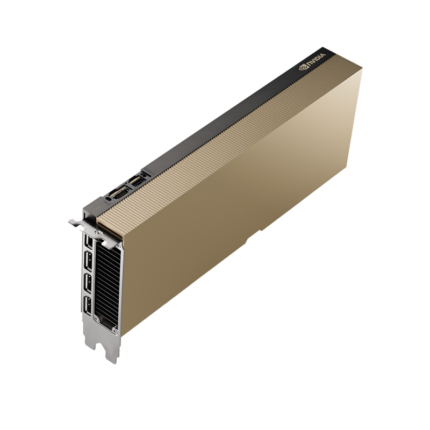
The NVIDIA L40 GPU represents the pinnacle of multi-workload acceleration, uniquely combining high-performance AI inference with professional graphics capabilities. Built on the Ada Lovelace architecture, the L40 delivers up to 5x higher inference performance compared to previous generation GPUs, making it suitable for demanding edge applications that require both computational power and visual processing capabilities.
The L40’s impressive specification includes 18,176 CUDA cores and 568 fourth-generation Tensor Cores, coupled with 48GB of GDDR6X memory. This substantial memory capacity enables the deployment of large-scale AI models that were previously confined to data center environments. The GPU’s 864 GB/s memory bandwidth ensures efficient handling of memory-intensive workloads, from large language models to high-resolution computer vision applications.
NVIDIA L40 Technical Specifications:
- GPU Architecture: Ada Lovelace with 4th generation Tensor Cores
- CUDA Cores: 18,176 cores for maximum computational throughput
- Tensor Cores: 568 mixed-precision Tensor Cores
- Memory: 48GB GDDR6X with ultra-high capacity
- Memory Bandwidth: 864 GB/s for data-intensive applications
- Power Consumption: 300W TDP for high-performance scenarios
- Form Factor: Full-height dual-slot PCIe design
- Performance: 5x inference acceleration vs previous generation
The L40’s dual-purpose design enables unique deployment scenarios where AI inference and graphics rendering must coexist. In autonomous vehicle applications, the same GPU can handle perception algorithms while rendering high-fidelity visualization for human-machine interfaces. Similarly, in medical imaging applications, the L40 can perform real-time AI-assisted diagnosis while providing interactive visualization capabilities for medical professionals.
Advanced features of the L40 include support for ray tracing acceleration, enabling realistic rendering for augmented and virtual reality applications. The GPU’s AV1 encoding capabilities provide efficient video compression for streaming applications, while its multiple display outputs support complex multi-screen configurations. These capabilities make the L40 particularly valuable in edge deployments that combine AI processing with rich visual experiences. [Discover L40 implementation guides](#)
Performance Comparison
A comprehensive comparison of the T4, A2, and L40 GPUs reveals distinct performance profiles optimized for different edge deployment scenarios. The following specifications highlight the key differences in computational capability, memory resources, and power requirements that influence deployment decisions.
| Specification | NVIDIA T4 | NVIDIA A2 | NVIDIA L40 |
|---|---|---|---|
| GPU Architecture | Turing | Ampere | Ada Lovelace |
| CUDA Cores | 2,560 | 1,280 | 18,176 |
| Tensor Cores | 320 (2nd gen) | 40 (3rd gen) | 568 (4th gen) |
| Memory | 16GB GDDR6 | 16GB GDDR6 | 48GB GDDR6X |
| Memory Bandwidth | 320 GB/s | 200 GB/s | 864 GB/s |
| TDP (Power) | 70W | 40-60W | 300W |
| Form Factor | Low-profile PCIe | Compact single-slot | Full-height dual-slot |
| FP32 Performance | 8.1 TFLOPS | 5.0 TFLOPS | 90.5 TFLOPS |
| INT8 Inference Performance | 130 TOPS | 80 TOPS | 1,400+ TOPS |
The performance comparison reveals complementary strengths across the three GPU options. The T4 provides an excellent balance of performance and efficiency, making it suitable for general-purpose edge inference. The A2 excels in power-constrained environments where compact deployment is essential. The L40 delivers maximum performance for demanding applications that can accommodate higher power consumption.
Tensor Core GPU Guide
Tensor Cores represent NVIDIA’s specialized processing units designed specifically for AI and machine learning workloads. These dedicated cores accelerate mixed-precision matrix operations that are fundamental to neural network inference and training. Understanding Tensor Core capabilities is essential for maximizing the performance of T4, A2, and L40 GPUs in edge inference applications. [Link to comprehensive Tensor Core article 1.6](#)
Each generation of Tensor Cores has introduced significant improvements in performance and supported data types. Second-generation Tensor Cores in the T4 support FP16, INT8, and INT4 precision modes with automatic mixed-precision capabilities. Third-generation Tensor Cores in the A2 add support for additional data types and improved sparsity handling. Fourth-generation Tensor Cores in the L40 provide the highest performance with support for FP8 precision and advanced transformer optimizations.
Tensor Core Capabilities by Generation:
- 2nd Generation (T4): FP16, INT8, INT4 support with 130 TOPS peak performance
- 3rd Generation (A2): Enhanced sparsity support, improved energy efficiency
- 4th Generation (L40): FP8 precision, transformer acceleration, 1400+ TOPS performance
- Automatic Mixed Precision: Dynamic precision selection for optimal performance
- Structured Sparsity: 2:4 sparse pattern acceleration for model compression
- Multi-Instance GPU: Parallel execution of multiple inference streams
Tensor Core optimization requires careful consideration of model architecture and precision requirements. Modern deep learning frameworks like TensorRT automatically leverage Tensor Cores through graph optimization and kernel fusion. Developers can achieve significant performance improvements by enabling mixed-precision training and inference, allowing models to dynamically select the optimal precision for each operation.
The impact of Tensor Cores on edge inference performance cannot be overstated. Compared to traditional CUDA cores, Tensor Cores can deliver up to 20x performance improvements for supported operations. This acceleration enables deployment of larger, more accurate models at the edge while maintaining real-time inference requirements. [Explore advanced Tensor Core optimization](#)
Use Cases and Deployment Scenarios
inference GPUs
The versatility of NVIDIA’s inference GPU portfolio enables deployment across a wide range of edge computing scenarios. Each GPU’s unique characteristics make it suitable for specific applications where performance, power, and form factor requirements vary significantly. Understanding these use cases helps architects select the optimal GPU for their specific deployment requirements.
NVIDIA T4 Deployment Scenarios:
- Intelligent video analytics in retail and security applications
- Conversational AI and natural language processing services
- Medical imaging analysis and diagnostic assistance
- Recommendation engines for e-commerce platforms
- Autonomous vehicle perception and sensor fusion
- Smart city infrastructure and traffic optimization
NVIDIA A2 Deployment Scenarios:
- IoT gateways with embedded AI processing capabilities
- Industrial automation and predictive maintenance
- Edge servers in telecommunications networks
- Compact robotics platforms with vision processing
- Smart building systems and environmental monitoring
- Mobile edge computing in 5G networks
NVIDIA L40 Deployment Scenarios:
- High-performance edge computing for scientific applications
- Virtual and augmented reality content generation
- Advanced driver assistance systems (ADAS) development
- Real-time ray tracing for immersive experiences
- Large language model deployment at the edge
- Multi-modal AI applications combining vision and language
Successful deployment requires careful consideration of infrastructure requirements, including power distribution, cooling systems, and network connectivity. Organizations must also evaluate software ecosystem compatibility, ensuring their chosen frameworks and tools support the selected GPU architecture. [Learn about deployment best practices](#)
Frequently Asked Questions
Edge inference refers to running AI models directly on devices at the network edge, rather than in centralized cloud data centers. GPUs provide massive parallel processing capabilities that accelerate neural network computations by 10-100x compared to CPUs. This acceleration enables real-time AI processing with lower latency, improved privacy, and reduced bandwidth requirements. Edge inference is essential for applications requiring immediate responses, such as autonomous vehicles, industrial automation, and interactive AI assistants.
The optimal choice depends on your specific requirements. The A2 is ideal for power-constrained environments (40-60W) and compact deployments. The T4 offers excellent balance of performance and efficiency (70W) for general edge inference. The L40 provides maximum performance (300W) for demanding applications requiring both AI and graphics capabilities. Consider your power budget, form factor constraints, and performance requirements when selecting between these options.
Tensor Cores are specialized processing units designed specifically for AI workloads, particularly matrix operations common in neural networks. They provide mixed-precision acceleration, supporting FP16, INT8, and other precision formats to maximize inference throughput. Tensor Cores can deliver up to 20x performance improvements compared to traditional CUDA cores for AI workloads, enabling deployment of larger, more accurate models while maintaining real-time performance requirements.
Power consumption varies significantly across the three GPUs. The A2 consumes 40-60W TDP, making it suitable for battery-powered or power-constrained edge devices. The T4 requires 70W TDP, enabling passive cooling in many server configurations. The L40 consumes 300W TDP, requiring active cooling and substantial power infrastructure. Consider your power budget and cooling capabilities when planning your deployment.
Yes, all three GPUs support concurrent execution of multiple AI models through Multi-Instance GPU (MIG) technology and software-based virtualization. The T4 can run up to 16 parallel inference streams, the A2 supports multiple concurrent workloads within its power envelope, and the L40 can handle numerous simultaneous models thanks to its large memory capacity and processing power. This capability maximizes GPU utilization and improves cost-effectiveness.
The primary differences lie in power consumption, form factor, and architecture generation. The A2 (40-60W) is more power-efficient and compact than the T4 (70W), making it better suited for space-constrained deployments. The A2 uses newer Ampere architecture with 3rd-generation Tensor Cores, while the T4 uses Turing architecture with 2nd-generation Tensor Cores. However, the T4 has more CUDA cores (2,560 vs 1,280) and higher memory bandwidth, providing better performance for compute-intensive applications.
The L40 is not overkill for edge applications that require high-performance AI processing or combined AI/graphics workloads. While its 300W power consumption limits deployment scenarios, the L40 is ideal for edge applications like autonomous vehicles, industrial automation, scientific computing, or virtual reality systems. For simpler edge inference tasks or power-constrained environments, the T4 or A2 would be more appropriate and cost-effective choices.
Conclusion
The landscape of edge AI inference has been fundamentally transformed by NVIDIA’s specialized GPU architectures. The T4, A2, and L40 GPUs each address distinct segments of the edge computing market, from ultra-low-power IoT devices to high-performance edge servers. The choice between these platforms depends on a careful analysis of performance requirements, power constraints, and deployment environments.
Organizations planning edge AI deployments should prioritize long-term scalability and ecosystem compatibility alongside immediate performance needs. The rapid evolution of AI models and inference techniques requires hardware platforms that can adapt to changing requirements through software updates and optimization techniques. Microsoft’s comprehensive GPU comparison provides additional insights into cloud-based deployment scenarios.
As edge AI continues to mature, the integration of specialized inference hardware will become increasingly critical for competitive advantage. The combination of NVIDIA’s GPU acceleration, advanced software frameworks, and optimization tools creates a powerful ecosystem for deploying sophisticated AI capabilities at the network edge. Success in edge AI deployment requires not just selecting the right hardware, but also implementing comprehensive software stacks that maximize the potential of these advanced GPU architectures.
The future of edge inference lies in the continued advancement of specialized hardware architectures, coupled with intelligent software optimization techniques. Organizations that invest in understanding and leveraging these capabilities today will be well-positioned to take advantage of the next generation of edge AI innovations.
“In most edge deployment scenarios, the thermal design power (TDP) is the primary bottleneck, not raw compute. For unconditioned environments, sticking to the sub-75W envelope of the T4 or A2 is usually mandatory to avoid thermal throttling.” — Hardware Engineering Team
“While the L40 offers massive throughput, it is often over-provisioned for standard video analytics. We recommend reserving the L40 for multi-modal applications where simultaneous graphics rendering and AI inference are required on the same node.” — AI Solutions Architecture Team
“Don’t overlook the importance of INT8 precision optimization. By leveraging TensorRT on these architectures, we typically see inference speeds jump significantly without a noticeable drop in model accuracy compared to FP32.” — Software Optimization Team
“For distributed IoT networks, the form factor is a hard constraint. The A2’s single-slot design allows it to fit into compact edge boxes where traditional double-width GPUs simply cannot be physically integrated.” — Edge Infrastructure Team
✅ Reviewed and updated by the ITCT technical team in 2026. Prices and specifications reflect the latest available data.
Last update at December 2025