

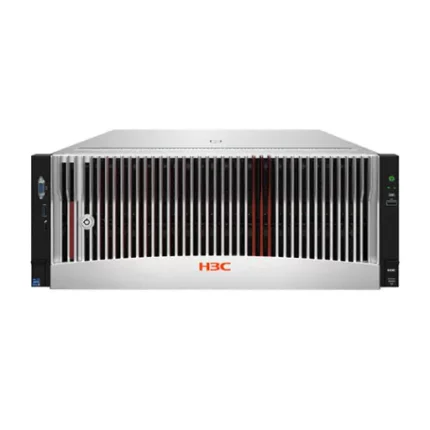
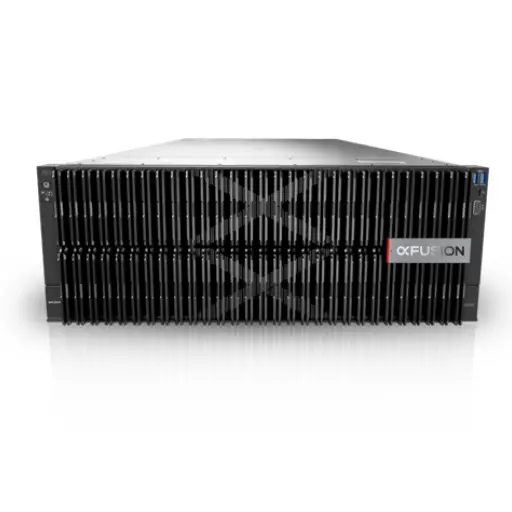
Description
Introduction: Redefining AI Infrastructure with xFusion’s Advanced GPU Server Platform
In the rapidly evolving landscape of artificial intelligence, machine learning, and high-performance computing, organizations demand infrastructure solutions that deliver exceptional computational density, flexible GPU configuration options, robust reliability features, and cost-effective total cost of ownership without compromising performance or scalability. The xFusion FusionServer G5500 V7 represents a breakthrough in enterprise GPU server design, combining cutting-edge 4th and 5th Generation Intel Xeon Scalable processors with support for up to 10 double-width GPU cards in a single 4U chassis, creating an unparalleled platform for AI training, deep learning inference, high-performance computing applications, database acceleration, video analysis pipelines, and scientific research workloads that define the computational demands of modern data centers. This next-generation server platform from xFusion—a leading global provider of intelligent computing infrastructure with heritage rooted in advanced technology development—delivers enterprise-grade features including hot-swappable components, redundant power supplies, flexible storage configurations supporting both traditional drives and ultra-fast NVMe SSDs, comprehensive network expansion capabilities with OCP 3.0 support, and ENERGY STAR certification demonstrating commitment to environmental sustainability and operational efficiency.
The FusionServer G5500 V7 addresses fundamental challenges facing organizations deploying GPU-accelerated infrastructure: How to maximize GPU density per rack unit while maintaining thermal efficiency? The server’s advanced thermal management system with optimized airflow paths and intelligent fan control maintains optimal operating temperatures even under sustained maximum computational loads. How to provide flexible configuration options accommodating diverse workload requirements? The platform supports configurations ranging from 4 high-power dual-width GPUs for maximum per-accelerator performance through 10 single-width GPUs for workloads benefiting from increased parallelism and model replication strategies. How to ensure infrastructure investments remain relevant as AI technologies evolve? Dual-socket Intel Xeon Scalable processor support spanning 4th Generation (Sapphire Rapids) and 5th Generation (Emerald Rapids) architectures with TDP ratings up to 385W per processor ensures the server platform accommodates current workload demands while providing architectural headroom for future application requirements and performance scaling needs across multi-year deployment lifecycles.
Organizations evaluating GPU server infrastructure for large language model training scenarios requiring hundreds of billions of parameters and extensive memory capacity, computer vision applications processing high-resolution imagery and video streams at scale, recommender systems powering e-commerce and content platforms serving millions of users, financial modeling applications executing complex Monte Carlo simulations and risk analysis calculations, scientific research programs conducting molecular dynamics simulations and climate modeling studies, or database acceleration workloads enhancing query performance and analytics throughput will find the FusionServer G5500 V7 delivers an optimal balance of computational density, configuration flexibility, enterprise reliability, and cost-effectiveness. This comprehensive guide examines the G5500 V7’s technical specifications, performance characteristics across representative workloads, deployment considerations including power and cooling requirements, total cost of ownership analysis, and strategic recommendations guiding infrastructure investment decisions for organizations building next-generation AI and HPC infrastructure.
Explore AI Computing Solutions at ITCT Shop
Technical Architecture: Engineering Excellence in High-Density GPU Computing

The FusionServer G5500 V7’s architectural foundation rests on a dual-socket Intel Xeon Scalable processor platform supporting both 4th Generation (Sapphire Rapids with Golden Cove cores) and 5th Generation (Emerald Rapids with enhanced performance characteristics) CPUs with thermal design power ratings reaching 385W per socket—specifications enabling deployment of high-core-count processors delivering substantial computational throughput for workloads requiring significant CPU-side processing including dataset preprocessing, feature engineering pipelines, model compilation operations, and distributed training coordination logic that executes on host processors rather than GPU accelerators. The Emmitsburg Platform Controller Hub (PCH) chipset provides comprehensive I/O capabilities including PCIe Gen 5.0 connectivity delivering doubled bandwidth compared to previous-generation PCIe 4.0 implementations, advanced power management features enabling dynamic voltage and frequency scaling that optimizes energy efficiency under variable workload conditions, and integrated security features protecting sensitive data and computational operations through hardware-based encryption and secure boot mechanisms.
Memory subsystem architecture incorporates 32 DDR5 DIMM slots supporting module capacities up to 256GB per DIMM—enabling theoretical maximum system memory configurations reaching 8TB (32 × 256GB) with DDR5 technology operating at speeds up to 5600 MT/s delivering substantially higher memory bandwidth compared to previous-generation DDR4 implementations. This massive memory capacity proves particularly valuable for AI training workloads with large batch sizes that stage extensive datasets in system memory before GPU transfer, in-memory database applications requiring ultra-fast data access for complex query operations, scientific computing applications with enormous working sets that benefit from minimizing slower storage-tier access, and virtualization scenarios consolidating multiple GPU-accelerated virtual machines on shared physical infrastructure. The server’s support for error-correcting code (ECC) memory ensures data integrity through automatic detection and correction of memory bit errors—reliability features essential for mission-critical production deployments where silent data corruption could compromise training results, inference accuracy, or financial calculations with potentially severe business consequences.
GPU Configuration Flexibility and Expansion Capabilities
The FusionServer G5500 V7’s most distinctive architectural characteristic is its exceptional GPU configuration flexibility supporting up to 10 double-width GPU cards within a single 4U chassis—density specifications rarely achieved in air-cooled server form factors and enabling organizations to deploy computational capabilities equivalent to multiple traditional GPU servers within consolidated, space-efficient configurations that reduce data center footprint requirements and simplify infrastructure management. The server accommodates diverse GPU types including NVIDIA A100, H100, H200, L40S, RTX 6000 Ada for AI and HPC workloads, AMD Instinct MI200/MI300 series for organizations pursuing multi-vendor GPU strategies, and specialized accelerators for specific application domains including video transcoding, cryptographic operations, or network packet processing. GPU selection flexibility enables organizations to optimize configurations based on specific workload characteristics: deploying 8-10 mid-range GPUs for workloads benefiting from maximum parallelism and model replication across accelerators, or alternatively configuring 4-6 high-end GPUs with maximum memory capacity and computational throughput for training massive models requiring substantial per-GPU resources.
Beyond primary GPU slots, the G5500 V7 provides 4 standard PCIe expansion slots accommodating network interface cards (100GbE/200GbE Ethernet or InfiniBand adapters for distributed training clusters), RAID controllers enhancing storage performance and reliability, specialized co-processors for specific computational tasks, or additional connectivity options extending server capabilities to meet unique deployment requirements. Three OCP (Open Compute Project) 3.0 network interface module slots deliver additional networking flexibility enabling organizations to deploy redundant high-bandwidth network connections, separate management and data plane traffic across dedicated interfaces, or implement advanced networking architectures including RDMA over Converged Ethernet (RoCE) for low-latency GPU-to-GPU communication in multi-server training scenarios. This comprehensive expansion capability ensures the G5500 V7 adapts to evolving infrastructure requirements without necessitating premature server replacement or costly infrastructure refresh cycles.
Storage Architecture: Balancing Capacity, Performance, and Flexibility
The FusionServer G5500 V7 implements a flexible storage subsystem accommodating diverse capacity and performance requirements through support for both traditional 3.5-inch drives and high-performance 2.5-inch form factors including NVMe SSDs. Organizations can configure the server with 24 hot-swappable 3.5-inch drive bays supporting SATA or SAS HDDs delivering cost-effective capacity for archival storage, dataset repositories, and backup operations where storage density and cost per terabyte represent primary optimization criteria. Alternatively, configurations supporting 12 hot-swappable 2.5-inch NVMe SSD bays provide exceptional random I/O performance and sequential throughput reaching multiple gigabytes per second—storage characteristics critical for AI training workloads with high-frequency checkpoint operations, database applications requiring ultra-low-latency transaction processing, or video analysis pipelines processing high-resolution imagery at scale where storage bandwidth directly impacts overall application throughput.
The server’s hot-swappable drive design enables maintenance operations including failed drive replacement, capacity expansion through additional drive installation, or storage technology migration from HDD to SSD without requiring server shutdown or workload interruption—operational flexibility particularly valuable in production environments where downtime translates directly into lost revenue, missed service-level agreements, or degraded user experiences. Organizations can implement RAID configurations (RAID 0, 1, 5, 6, 10, 50, 60) balancing performance, capacity, and fault tolerance based on specific application requirements: deploying RAID 0 striping for maximum performance in non-critical development environments, RAID 5/6 for capacity-efficient protection against single or dual drive failures in production deployments, or RAID 10 mirroring for applications requiring both high performance and maximum fault tolerance with ability to sustain multiple simultaneous drive failures without data loss.
Modern AI training workflows increasingly leverage tiered storage architectures combining local NVMe SSDs for frequently-accessed training datasets and model checkpoints with network-attached storage for larger dataset repositories and archival retention. The G5500 V7’s flexible storage configuration supports these architectures through local high-performance NVMe capacity (12× 7.68TB SSDs = 92TB local storage typical) supplemented by high-bandwidth network connectivity to shared storage systems. Organizations should carefully evaluate storage requirements during initial server configuration: small to medium training datasets (<10TB) benefit from local NVMe storage eliminating network bandwidth constraints and simplifying deployment architecture, while massive dataset collections (>50TB) may necessitate network storage with local NVMe functioning as high-speed cache tier improving training performance through intelligent data placement and prefetching strategies.
Complete Technical Specifications Table
| Component | Specification | Details |
|---|---|---|
| Model | xFusion FusionServer G5500 V7 | Next-generation AI server |
| Form Factor | 4U rackmount | Standard 19-inch rack compatible |
| Processor | Dual-socket Intel Xeon Scalable | 4th/5th Generation support |
| CPU TDP | Up to 385W per socket | High-performance processors |
| Chipset | Intel Emmitsburg PCH | Advanced I/O capabilities |
| Memory Slots | 32× DDR5 DIMM slots | Dual-socket configuration |
| Maximum Memory | 8TB (32× 256GB DIMMs) | DDR5-5600 MT/s |
| Memory Type | DDR5 ECC RDIMM | Error-correcting code |
| GPU Support | Up to 10× double-width GPUs | Flexible configuration |
| GPU Compatibility | NVIDIA A100, H100, H200, L40S, AMD MI200/MI300 | Multi-vendor support |
| Recommended GPU Config | 4-8 GPUs optimal | Thermal management |
| PCIe Expansion Slots | 4× standard PCIe slots | Gen 5.0 support |
| OCP Network Slots | 3× OCP 3.0 NIC slots | Flexible networking |
| Storage Options | 24× 3.5″ or 12× 2.5″ NVMe | Hot-swappable |
| Storage Interface | SATA/SAS/NVMe | Multiple protocols |
| RAID Support | 0, 1, 5, 6, 10, 50, 60 | Hardware RAID |
| Power Supply | Redundant hot-swap PSUs | N+1 or N+N redundancy |
| Power Efficiency | ENERGY STAR certified | Environmental compliance |
| Cooling | Advanced thermal management | Optimized airflow design |
| Management | BMC with IPMI 2.0 | Remote management |
| Operating Systems | Windows Server, Linux (RHEL, Ubuntu, SLES) | Broad OS support |
| Dimensions (HxWxD) | 175mm × 447mm × 748mm (approx) | Standard 4U height |
| Weight | Approximately 50-70 kg | Configuration dependent |
| Certifications | ENERGY STAR, CE, FCC | Global compliance |
| Warranty | Vendor-dependent | Typically 3-5 years |
Performance Optimization: AI Training and Inference Workloads
The FusionServer G5500 V7 excels across diverse AI workload categories with architectural characteristics specifically optimized for modern neural network training and inference scenarios. Large language model training applications including transformer architectures (GPT, BERT, T5, LLaMA variants) benefit substantially from the server’s ability to accommodate 8-10 GPUs with high-bandwidth NVLink or PCIe interconnects enabling efficient gradient synchronization during distributed data-parallel training operations. Organizations training models with 10-70 billion parameters find that 8-GPU G5500 V7 configurations deliver training throughput comparable to specialized AI appliances while offering superior price-performance ratios and greater deployment flexibility. The server’s substantial DDR5 memory capacity (up to 8TB) proves particularly valuable for staging large training batches, accommodating extensive model parameters during training, and supporting sophisticated data augmentation pipelines executing on host processors before GPU transfer—capabilities collectively reducing training time and improving GPU utilization efficiency.
Computer vision applications including object detection, image segmentation, facial recognition, and video analysis leverage the G5500 V7’s flexible GPU configuration to match specific workload characteristics with optimal accelerator deployment. Real-time video analytics processing multiple camera feeds simultaneously benefits from 8-10 mid-range GPUs (NVIDIA L40S, RTX 6000 Ada) each handling dedicated video streams with independent inference pipelines, while ultra-high-resolution medical imaging analysis requiring massive memory capacity per inference operation may deploy 4-6 high-capacity GPUs (NVIDIA H200 with 141GB memory) enabling processing of gigapixel-scale pathology images without memory constraints. The server’s PCIe Gen 5.0 connectivity delivers doubled bandwidth compared to previous-generation implementations, substantially reducing data transfer overhead between host memory and GPU memory—performance improvement particularly impactful for computer vision workloads with large image datasets requiring frequent host-to-GPU transfers throughout training epochs.
Recommender system training and inference powering e-commerce platforms, streaming services, and social media applications benefit from the G5500 V7’s combination of substantial CPU resources (dual high-core-count Xeon processors), massive system memory (8TB DDR5 capacity), and flexible GPU deployment accommodating both training workloads requiring multi-GPU parallelism and inference serving scenarios where multiple GPUs enable higher request throughput and improved latency characteristics. Organizations deploying deep learning recommendation models with billions of parameters across hundreds of millions of users find that G5500 V7-based infrastructure delivers cost-effective scaling supporting growing user bases and increasingly sophisticated personalization algorithms without requiring frequent infrastructure refresh cycles or complex distributed system architectures.
Compare with NVIDIA HGX H200 Server Solutions
High-Performance Computing and Scientific Applications
Beyond AI and machine learning workloads, the FusionServer G5500 V7 serves as an exceptional platform for traditional high-performance computing applications requiring substantial GPU acceleration. Computational fluid dynamics (CFD) simulations modeling airflow across aircraft wings, combustion processes in engines, or weather patterns in climate models leverage GPU acceleration to reduce simulation times from days to hours, enabling engineers and researchers to explore larger parameter spaces, conduct more comprehensive sensitivity analyses, and achieve faster design iteration cycles. The G5500 V7’s support for high-TDP processors (up to 385W per socket) ensures CPU-intensive portions of CFD workflows—mesh generation, boundary condition application, solver initialization—execute efficiently without creating bottlenecks that would reduce overall GPU utilization and extend total simulation time.
Molecular dynamics simulations investigating protein folding, drug-receptor interactions, or materials science phenomena at atomic scale benefit from the server’s flexible GPU configuration enabling researchers to select accelerators optimized for double-precision floating-point operations (FP64) required for accurate force calculations and numerical stability across million-timestep simulation trajectories. Organizations conducting pharmaceutical research exploring potential drug candidates through computational screening deploy G5500 V7 servers configured with GPUs offering strong FP64 performance (NVIDIA A100, AMD Instinct MI200 series) accelerating molecular dynamics codes including GROMACS, NAMD, and AMBER by 10-50× compared to CPU-only implementations—speedups directly translating into accelerated drug discovery timelines and expanded chemical space exploration within fixed research budgets.
Financial services applications including option pricing using Monte Carlo methods, risk analysis calculating value-at-risk (VaR) across massive portfolio holdings, and algorithmic trading strategies backtesting performance across historical market data leverage GPU acceleration to reduce computation time from hours to minutes—performance improvements enabling more sophisticated financial models, higher-frequency strategy adjustments responding to market conditions, and real-time risk assessment supporting trading decisions. The G5500 V7’s enterprise reliability features including ECC memory, redundant power supplies, and hot-swappable components prove essential in financial sector deployments where system failures during critical trading periods or risk calculation windows could result in substantial financial losses or regulatory compliance violations.
Deployment Considerations: Infrastructure Requirements and Best Practices
Successful deployment of FusionServer G5500 V7 infrastructure requires careful planning addressing electrical power provisioning, cooling infrastructure capacity, network architecture design, and operational procedures ensuring reliable long-term operation supporting mission-critical workloads. Power requirements vary substantially based on specific configuration: servers populated with 4 high-efficiency GPUs (350W TDP each) plus dual moderate-TDP processors (270W each) may consume 2,000-2,500 watts under typical operating conditions, while maximum-density configurations with 10 GPUs and dual 385W processors can approach 5,000-6,000 watts under sustained full computational load. Organizations should provision electrical infrastructure with adequate capacity and appropriate redundancy: dual 30A 208V circuits per server enable N+N power supply redundancy ensuring continued operation if one circuit fails, while also providing sufficient capacity for maximum-configuration power consumption scenarios.
Cooling infrastructure represents another critical consideration, as high-density GPU configurations generate substantial heat requiring effective thermal management to maintain reliability and performance. The G5500 V7’s advanced thermal design incorporates optimized airflow paths, high-velocity fans, and intelligent thermal monitoring enabling operation within standard data center environments providing 18-22°C cold aisle supply air temperature. However, maximum-density 10-GPU configurations may benefit from enhanced cooling approaches including: high-velocity cold aisle containment systems concentrating cooling capacity where needed most; rear-door heat exchangers mounting directly on server racks to intercept and remove heat before it enters general data center airspace; or row-based precision cooling units delivering targeted cold air to high-density equipment concentrations. Organizations deploying multiple G5500 V7 servers in close proximity should conduct thermal modeling validating that facility cooling capacity accommodates aggregate heat load without approaching design limits that could compromise reliability during peak utilization periods or cooling system maintenance windows.
Network architecture design proves increasingly important as organizations scale GPU infrastructure beyond standalone servers toward multi-node clusters supporting distributed training, parallel inference serving, or federated learning scenarios. High-bandwidth, low-latency networking becomes essential when gradient synchronization traffic, distributed parameter updates, or multi-GPU inference request coordination consume significant bandwidth and sensitivity to network latency directly impacts overall application performance. Organizations building GPU clusters with G5500 V7 servers should evaluate: 100GbE or 200GbE Ethernet with RoCE (RDMA over Converged Ethernet) for cost-effective high-bandwidth connectivity suitable for many training scenarios; InfiniBand (200Gb/s NDR or 400Gb/s NDR400) for absolute maximum performance and lowest latency critical in large-scale distributed training across 16+ servers; or hybrid approaches combining high-bandwidth Ethernet for management and storage traffic with specialized InfiniBand connections for GPU-to-GPU communication in training workloads.
Explore GPU Computing Infrastructure Solutions
Total Cost of Ownership and Economic Analysis
The FusionServer G5500 V7 delivers compelling total cost of ownership (TCO) economics compared to specialized AI appliances or alternative GPU server platforms through combination of competitive acquisition pricing, flexible configuration options enabling right-sizing infrastructure to specific requirements, energy-efficient design with ENERGY STAR certification reducing operational costs, and enterprise reliability features minimizing unplanned downtime and associated revenue impacts. Capital expenditure for G5500 V7 servers varies substantially based on specific configuration: entry-level systems with 4 mid-range GPUs, moderate processor specifications, and standard storage capacity typically range $50,000-$80,000, while maximum-density configurations with 10 high-end GPUs, premium processors, 8TB memory, and extensive NVMe storage can exceed $300,000-$400,000. However, this pricing flexibility enables organizations to deploy infrastructure matching actual requirements rather than accepting fixed-configuration appliances that may include unnecessary capabilities or insufficient resources for specific workload profiles.
Operational expenditure considerations including electrical power consumption, cooling costs, and facility space utilization compound across multi-year deployment lifecycles into substantial cumulative expenses often exceeding initial hardware acquisition costs. The G5500 V7’s ENERGY STAR certification indicates compliance with rigorous energy efficiency standards including dynamic voltage and frequency scaling (DVFS) reducing processor power consumption during light computational loads, intelligent fan control adjusting cooling system operation based on actual thermal conditions rather than operating continuously at maximum speed, and power supply efficiency ratings (typically 80 PLUS Platinum or Titanium) minimizing electrical conversion losses. Organizations operating GPU infrastructure at moderate to high utilization rates (50-80% average) find that energy-efficient server designs reduce annual electricity costs by 15-30% compared to less efficient alternatives—savings accumulating to tens of thousands of dollars per server across typical 3-5 year deployment periods.
Maintenance and support costs represent another TCO component where the G5500 V7’s enterprise design delivers economic advantages. Hot-swappable components including power supplies, cooling fans, and storage drives enable replacement without server shutdown or workload disruption, minimizing downtime costs and reducing urgency surrounding component failures that would otherwise trigger expensive emergency service calls. Organizations can maintain spare component inventory for common failure items (power supplies, fans, drives) enabling in-house repairs without dependency on vendor field service availability, further reducing operational costs and improving mean time to repair (MTTR) metrics critical for maintaining high infrastructure availability levels supporting production AI workloads and business-critical applications.
Frequently Asked Questions (FAQ)
1. What is the maximum number of GPUs supported by the xFusion FusionServer G5500 V7?
The FusionServer G5500 V7 officially supports up to 10 double-width GPU cards in maximum-density configurations, though xFusion recommends 4-8 GPUs as optimal configurations balancing computational density with thermal management efficiency and power supply capacity. The actual maximum GPU count deployable depends on several factors: specific GPU thermal design power (TDP) ratings with lower-power GPUs (250-350W) enabling higher GPU counts compared to high-power accelerators (500-700W); cooling infrastructure capacity with enhanced data center cooling potentially supporting higher-density configurations; and power supply specifications with redundant high-capacity PSUs required for maximum GPU deployments. Organizations planning high-density GPU deployments should consult with xFusion certified partners or technical support teams during configuration planning to ensure selected GPU models, quantities, and ancillary components operate reliably within thermal and electrical design parameters.
2. Which GPU models are compatible with the G5500 V7 server?
The G5500 V7 supports comprehensive GPU compatibility spanning NVIDIA and AMD accelerator families, enabling organizations to select GPUs optimized for specific workload requirements, performance characteristics, and budget constraints. NVIDIA GPUs validated for G5500 V7 deployment include: A100 SXM4/PCIe (80GB HBM2e for AI training), H100 SXM5/PCIe (80GB HBM3 for latest-generation performance), H200 (141GB HBM3e for memory-intensive workloads), L40 (48GB GDDR6 for mixed AI and graphics), L40S (48GB GDDR6 with enhanced AI performance), RTX 6000 Ada Generation (48GB GDDR6 for professional visualization and AI), and A30 (24GB HBM2 for inference and entry-level training). AMD Instinct GPUs including MI210 (64GB HBM2e), MI250X (128GB HBM2e across dual-GPU module), and MI300X (192GB HBM3 for next-generation workloads) provide alternative options for organizations pursuing multi-vendor GPU strategies or seeking specific architectural features. Organizations should verify specific GPU model compatibility with intended software frameworks, driver versions, and operating system configurations before finalizing procurement decisions.
3. What are the power and cooling requirements for the FusionServer G5500 V7?
Power and cooling requirements scale dramatically based on specific server configuration, particularly GPU count and model selection. Power consumption estimates: Entry-level configurations with 4× 250W GPUs plus dual 270W processors consume approximately 2,000-2,500W under typical workload conditions (50-70% sustained utilization), requiring dual 15A 208V circuits or single 30A circuit with appropriate derating. High-density configurations with 8× 350W GPUs plus dual 385W processors approach 4,000-5,000W under heavy computational loads, necessitating dual 30A 208V circuits providing adequate capacity with N+1 redundancy. Maximum-theoretical configurations with 10 high-power GPUs may exceed 6,000W, requiring careful electrical infrastructure planning and potentially specialized power distribution approaches. Cooling requirements: The server requires data center environmental conditions providing 18-22°C cold aisle supply air temperature with adequate volumetric airflow (typically 200-400 CFM per server depending on configuration) supporting heat rejection of 7,000-20,000 BTU/hr depending on GPU count and utilization levels. Organizations deploying high-density configurations should implement hot-aisle containment strategies and may require supplemental cooling solutions including rear-door heat exchangers or row-based precision cooling units.
4. Can the G5500 V7 support both training and inference workloads simultaneously?
Yes, the FusionServer G5500 V7’s flexible architecture supports diverse deployment scenarios including: dedicated training servers where all GPUs focus exclusively on model training operations maximizing training throughput; dedicated inference servers where multiple GPUs handle concurrent inference requests with workload distribution across accelerators improving throughput and latency characteristics; or mixed workload deployments where GPU resources dynamically allocate between training and inference tasks based on current priorities and resource availability. Modern container orchestration platforms (Kubernetes with GPU operator, NVIDIA GPU Cloud) enable sophisticated resource management policies allocating specific GPUs to designated workloads, implementing time-sharing where individual GPUs alternate between training and inference duties based on scheduling policies, or reserving computational capacity ensuring critical inference workloads maintain required performance levels even during intensive training operations. Organizations should carefully design resource allocation strategies preventing training workloads from starving inference serving of necessary computational resources, potentially causing service-level agreement violations or degraded user experiences in production applications.
5. What storage configuration is recommended for AI training workloads?
Optimal storage configuration depends heavily on specific training workflow characteristics including dataset sizes, checkpoint frequency, and data preprocessing requirements. General recommendations: Training datasets under 5TB benefit from local NVMe SSD storage (12× 2.5″ NVMe configuration providing ~90TB raw capacity with 12× 7.68TB drives) eliminating network storage dependencies and simplifying deployment architecture. The high random I/O performance and sequential throughput (potentially exceeding 20GB/s aggregate) of NVMe arrays substantially reduces data loading bottlenecks common in computer vision training with large image datasets requiring frequent random access patterns. RAID 0 (striping) across multiple NVMe drives maximizes performance for training environments where data loss risks are acceptable given dataset availability from source repositories and checkpoint retention. RAID 5/6 configurations provide fault tolerance at modest performance cost (~15-25% throughput reduction) suitable for production environments or scenarios where dataset regeneration would require substantial time or computational expense. For massive training datasets exceeding local storage capacity (>100TB), organizations should implement hybrid approaches combining local NVMe cache tier for actively training data with network-attached storage for complete dataset repositories, employing intelligent data staging and prefetching strategies ensuring training pipeline performance doesn’t degrade due to network storage bandwidth limitations.
6. How does the G5500 V7 compare to specialized AI appliances like NVIDIA DGX systems?
The FusionServer G5500 V7 and NVIDIA DGX systems represent different approaches to GPU infrastructure with distinct advantages and tradeoffs. DGX advantages: Fully integrated turnkey solution with pre-validated hardware/software configurations, comprehensive NVIDIA support including software updates and troubleshooting assistance, optimized NVLink interconnect in DGX H100/H200 providing higher GPU-to-GPU bandwidth than PCIe-based alternatives, and bundled software stack including NVIDIA AI Enterprise reducing deployment complexity. G5500 V7 advantages: Substantially lower acquisition cost (typically 30-50% less expensive for comparable GPU counts), flexible configuration options enabling customization for specific workload requirements rather than fixed DGX configurations, multi-vendor GPU support allowing AMD Instinct deployment or mixed GPU strategies, and broader OEM ecosystem enabling multi-source procurement reducing vendor lock-in risks. Organizations prioritizing absolute maximum performance, unified vendor support, and simplified procurement typically prefer DGX systems, while those emphasizing cost-effectiveness, configuration flexibility, and multi-vendor GPU strategies find G5500 V7 delivers superior value. Performance differences in real-world AI training workloads typically remain within 5-15% between well-configured G5500 V7 and comparable DGX systems, with most performance gap attributable to NVLink bandwidth advantages in DGX rather than fundamental computational capability differences.
7. What operating systems and software frameworks are supported?
The FusionServer G5500 V7 supports comprehensive operating system compatibility spanning: Linux distributions including Red Hat Enterprise Linux (RHEL) 7.x/8.x/9.x, Ubuntu Server 20.04/22.04/24.04 LTS, SUSE Linux Enterprise Server (SLES) 12/15, and CentOS providing broad ecosystem support for AI and HPC software stacks; Windows Server 2019/2022 editions enabling Windows-based AI development environments and enterprise application integration; and VMware vSphere/ESXi supporting GPU virtualization scenarios including vGPU (virtual GPU) deployments enabling multiple virtual machines to share physical GPU resources. AI framework support includes PyTorch, TensorFlow, JAX, MXNet, PaddlePaddle, and other popular machine learning frameworks through CUDA/ROCm driver stacks providing GPU acceleration. Organizations should verify specific operating system version compatibility with intended GPU models and driver versions, as newer GPU architectures may require recent OS releases with updated kernel support and driver frameworks. xFusion provides comprehensive documentation, driver packages, and configuration guides supporting common deployment scenarios through official support channels and partner ecosystem.
8. Can the server be deployed in edge computing or remote location scenarios?
While the FusionServer G5500 V7 is primarily designed for data center deployment, certain configurations can support edge computing scenarios with appropriate environmental controls and infrastructure support. Edge deployment considerations: The server requires reliable electrical power with appropriate voltage and frequency specifications (typically 200-240V AC, 50/60Hz), adequate cooling infrastructure maintaining ambient temperatures within 10-35°C operating range (potentially requiring HVAC in equipment rooms lacking environmental controls), and secure physical environment protecting equipment from dust, moisture, vibration, or unauthorized access. Recommended edge configurations: Lower-density GPU deployments (4-6 GPUs rather than maximum 10-GPU configurations) reduce power consumption and heat output easing edge infrastructure requirements, ruggedized storage options (SSDs rather than HDDs) improve reliability in environments with potential vibration or physical movement, and redundant network connectivity ensures continued operation if primary communication links experience outages. Organizations planning edge deployments should consult xFusion technical documentation and potentially engage certified partners with edge computing expertise to ensure server configurations and site infrastructure meet reliability and performance requirements for remote operational scenarios where on-site technical support may be limited or delayed compared to centralized data center environments.
9. What are the warranty and support options available?
xFusion offers comprehensive warranty and support options through global partner networks and direct channels, typically including: Standard warranty covering hardware defects and component failures for 3 years from purchase date with next-business-day replacement parts shipment for common failure items (power supplies, fans, drives); Extended warranty options extending coverage to 4-5 years for organizations desiring longer protection periods aligning with typical server lifecycle planning; Premium support tiers providing 24/7 technical assistance via phone/email, faster response times (4-hour or same-day on-site service), dedicated technical account managers for large deployments, and proactive monitoring services alerting to potential issues before they impact production operations. Organizations deploying business-critical applications on G5500 V7 infrastructure should carefully evaluate support requirements during procurement, ensuring selected support levels provide response times, escalation procedures, and technical expertise appropriate for workload criticality and internal IT staff capabilities. Some regions and partners may offer customized support packages including extended hours coverage, spare parts advance replacement, or dedicated field service teams for high-density deployments requiring specialized technical expertise.
10. How does the G5500 V7’s energy efficiency impact long-term operating costs?
The FusionServer G5500 V7’s ENERGY STAR certification and energy-efficient design features deliver measurable operational cost reductions accumulating substantially across multi-year deployment periods. Dynamic voltage and frequency scaling (DVFS) automatically reduces processor power consumption during periods of light computational load, potentially saving 100-200W per processor (200-400W per dual-socket server) during off-peak hours or when training jobs complete and servers await next workload assignment. Assuming 30% of operating time in reduced-power states, this feature saves approximately 0.2-0.4 MWh annually per server—translating to $24-$48 annual savings at $0.12/kWh electricity rates, or $240-$480 across 10-server deployments. Intelligent fan control adjusting cooling system operation based on actual thermal conditions rather than fixed maximum speeds reduces power consumption by 50-150W during moderate load periods when aggressive cooling proves unnecessary, yielding additional annual savings of $10-30 per server. High-efficiency power supplies (80 PLUS Platinum or Titanium rated) minimize conversion losses, with Titanium-rated supplies (94%+ efficiency at typical loads) reducing waste heat and electrical costs by ~$100-300 annually per server compared to basic 80 PLUS certified alternatives. Collectively, energy efficiency features reduce annual operating costs by $150-400 per server compared to less efficient alternatives—cumulative savings of $750-2,000 per server across typical 5-year deployment lifespan, or $7,500-20,000 for 10-server clusters. These savings assume moderate electricity costs and utilization levels; organizations in regions with higher electricity rates or operating servers at sustained high utilization realize proportionally greater economic benefits from energy-efficient infrastructure investments.
Last update at December 2025
Reviews
There are no reviews yet.