
NVIDIA/Mellanox MMA4Z00-NS400 Compatible 400GBASE-SR4 OSFP Flat Top PAM4 850nm 50m DOM MPO-12/APC MMF InfiniBand NDR Optical Transceiver Module for ConnectX-7 HCA
| Specification Category | Parameter | Value |
|---|---|---|
| Data Rate | Maximum Throughput | 400 Gbps |
| Form Factor | Module Type | OSFP (Octal Small Form Factor Pluggable) |
| Housing Design | Flat Top for ConnectX-7 HCA | |
| Optical Interface | Wavelength | 850nm VCSEL |
| Modulation Format | PAM4 (4-Level Pulse Amplitude Modulation) | |
| Fiber Type | Multimode Fiber (MMF) | |
| Connector Type | MPO-12/APC (12-fiber MTP with Angled Polish) | |
| Transmission Distance | OM3 Fiber | Up to 30 meters |
| OM4 Fiber | Up to 50 meters | |
| Electrical Interface | Signaling Rate per Lane | 53.125 GBd |
| Number of Channels | 4 channels (4x100G) | |
| Host Interface | PCIe 5.0 x16 compatible |
Price:
USD1,665
Description
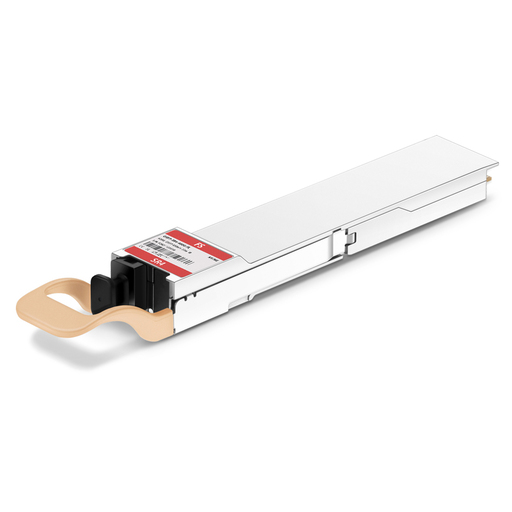
NVIDIA/Mellanox MMA4Z00-NS400 Compatible 400GBASE-SR4 OSFP Flat Top PAM4 850nm 50m DOM MPO-12/APC MMF InfiniBand NDR Optical Transceiver Module for ConnectX-7 HCA
Overview: Next-Generation 400G Connectivity for Enterprise AI Infrastructure
The NVIDIA/Mellanox MMA4Z00-NS400 Compatible 400GBASE-SR4 OSFP Flat Top optical transceiver module represents a breakthrough in high-performance computing connectivity, specifically engineered for demanding AI workloads and data center environments. This enterprise-grade transceiver delivers exceptional 400 Gigabit per second throughput utilizing advanced PAM4 (Pulse Amplitude Modulation 4-level) technology at 850nm wavelength, supporting reliable multimode fiber transmission up to 50 meters on OM4 fiber or 30 meters on OM3 fiber infrastructure.
Designed with ITCT Shop’s commitment to professional AI hardware solutions, this transceiver module seamlessly integrates with NVIDIA ConnectX-7 Host Channel Adapter (HCA) network cards and InfiniBand NDR (Next Data Rate) architectures. The flat-top OSFP (Octal Small Form Factor Pluggable) form factor features an innovative thermal management design that enables optimal heat dissipation in dense data center deployments, making it the ideal choice for AI computing systems and GPU server configurations.
The transceiver’s compatibility with both InfiniBand NDR and 400 Gigabit Ethernet protocols ensures versatile deployment options across modern network infrastructures. Digital Optical Monitoring (DOM) capabilities provide real-time diagnostics and performance monitoring, enabling proactive network management and minimizing downtime in mission-critical applications. This makes the module essential for organizations building scalable AI infrastructure, whether for deep learning training clusters, high-frequency trading platforms, or large-scale data analytics environments.
Technical Specifications
Complete Product Specifications Table
| Specification Category | Parameter | Value |
|---|---|---|
| Data Rate | Maximum Throughput | 400 Gbps |
| Form Factor | Module Type | OSFP (Octal Small Form Factor Pluggable) |
| Housing Design | Flat Top for ConnectX-7 HCA | |
| Optical Interface | Wavelength | 850nm VCSEL |
| Modulation Format | PAM4 (4-Level Pulse Amplitude Modulation) | |
| Fiber Type | Multimode Fiber (MMF) | |
| Connector Type | MPO-12/APC (12-fiber MTP with Angled Polish) | |
| Transmission Distance | OM3 Fiber | Up to 30 meters |
| OM4 Fiber | Up to 50 meters | |
| Electrical Interface | Signaling Rate per Lane | 53.125 GBd |
| Number of Channels | 4 channels (4x100G) | |
| Host Interface | PCIe 5.0 x16 compatible | |
| Power Specifications | Maximum Power Consumption | 8.5W (400G mode) |
| Low Power Mode | 2W maximum | |
| Supply Voltage | 3.3V (3.135V – 3.465V) | |
| Instantaneous Peak Current | 3600 mA | |
| Operating Conditions | Operating Case Temperature | 0°C to 70°C |
| Storage Temperature | -40°C to 85°C | |
| Relative Humidity | 5% to 95% (non-condensing) | |
| Protocols Supported | InfiniBand | NDR (Next Data Rate) 400Gb/s |
| Ethernet | 400GBASE-SR4 | |
| Monitoring Features | Digital Diagnostics | DOM (Digital Optical Monitoring) |
| Interface Standard | CMIS 5.0 compliant | |
| Compliance Standards | MSA Compliance | OSFP MSA |
| Safety Certifications | IEC 62368, UL 62368, FDA/CDRH 21 CFR 1040 | |
| Laser Safety Class | Class 1M | |
| Compatibility | Primary Application | NVIDIA ConnectX-7 HCA |
| Compatible Devices | InfiniBand NDR switches, 400G Ethernet switches | |
| Physical Dimensions | Length | Extended OSFP profile |
| Weight | Lightweight construction | |
| Warranty | Standard Coverage | 3-year limited warranty |
Optical Performance Specifications
| Parameter | Minimum | Typical | Maximum | Unit | Notes |
|---|---|---|---|---|---|
| Transmitter Optical Characteristics | |||||
| Average Launch Power (per lane) | -4.6 | – | 4.0 | dBm | Each of 4 lanes |
| Outer Optical Modulation Amplitude (OMAouter) | -2.6 | – | 3.5 | dBm | Minimum per lane |
| TDECQ (Transmitter Eye Closure) | – | – | 4.4 | dB | IEEE 802.3 compliant |
| Extinction Ratio | – | 2.5 | – | dB | Signal quality metric |
| Receiver Optical Characteristics | |||||
| Average Receive Power (per lane) | -6.3 | – | 4.0 | dBm | Operating range |
| Receiver Sensitivity (OMAouter) | – | – | -4.4 | dBm | Maximum sensitivity |
| Stressed Receiver Sensitivity | – | – | -1.8 | dBm | With SECQ = 4.4 dB |
| Damage Threshold | 5 | – | – | dBm | Absolute maximum |
Key Features and Benefits
Revolutionary PAM4 Modulation Technology
The MMA4Z00-NS400 compatible transceiver leverages cutting-edge PAM4 (4-level Pulse Amplitude Modulation) technology to achieve unprecedented data transmission efficiency. Unlike traditional NRZ (Non-Return-to-Zero) modulation that encodes one bit per symbol, PAM4 encodes two bits per symbol by utilizing four distinct amplitude levels. This innovative approach effectively doubles the data rate without requiring increased bandwidth or faster electronics, making it the cornerstone technology for 400G and beyond optical communications.
The implementation of PAM4 modulation at 53.125 Gbaud per lane enables each of the four optical channels to deliver 100 Gbps, aggregating to a total throughput of 400 Gbps. This modulation scheme significantly reduces the cost per bit while maintaining compatibility with existing multimode fiber infrastructure, eliminating the need for costly fiber replacements when upgrading from 100G or 200G networks. Organizations investing in enterprise GPU servers will find this technology essential for interconnecting distributed AI training systems.
Flat-Top OSFP Design for Superior Thermal Management
The flat-top OSFP form factor represents a significant advancement in transceiver thermal architecture, specifically optimized for NVIDIA ConnectX-7 HCA installations. Traditional finned-top transceiver designs incorporate integrated heat sinks, but the flat-top configuration transfers thermal management responsibilities to the host adapter’s connector cage cooling system. This design philosophy enables more efficient heat dissipation in high-density switch environments where dozens of transceivers operate simultaneously.
The flat-top design reduces the overall module height, allowing for improved airflow across the entire adapter card and adjacent components. In AI network infrastructure deployments where every millimeter of space matters, this compact profile enables higher port density configurations without thermal throttling. The reduced thermal resistance pathway ensures consistent performance even under sustained maximum throughput conditions, critical for 24/7 production AI workloads and real-time data processing applications.
InfiniBand NDR Protocol Support
InfiniBand NDR (Next Data Rate) represents the latest evolution of the InfiniBand standard, delivering 400 Gbps link speeds with ultra-low latency characteristics essential for high-performance computing clusters. The MMA4Z00-NS400 compatible transceiver provides full NDR compliance, enabling sub-microsecond latency communication between compute nodes in distributed AI training environments. This performance level is particularly critical for synchronous parallel processing workloads where communication overhead directly impacts training iteration times.
The transceiver’s InfiniBand NDR support includes advanced features like Remote Direct Memory Access (RDMA) offload capabilities, which allow GPU-to-GPU communication across the network fabric without CPU involvement. This zero-copy data transfer mechanism dramatically reduces latency and frees CPU cycles for computation rather than data movement management. Organizations building multi-GPU training servers will benefit from the seamless integration with NVIDIA’s GPU Direct RDMA technology, enabling direct memory transfers between GPUs across multiple servers.
MPO-12/APC Connector Technology
The transceiver utilizes industry-standard MPO-12/APC (Multi-fiber Push-On with Angled Physical Contact) connector technology, featuring a 12-fiber ribbon cable with four active transmit fibers and four active receive fibers. The APC polished fiber end-faces are angled at 8 degrees, which dramatically reduces back-reflection and return loss compared to flat UPC (Ultra-Physical Contact) connectors. This design minimizes optical signal interference and crosstalk, ensuring superior bit error rate performance even at maximum transmission distances.
The green-colored connector housing distinctly identifies the APC polarity configuration, preventing accidental mating with incompatible UPC connectors that could damage the angled fiber end-faces. The push-pull latch mechanism enables tool-free installation and removal, while precision alignment pins ensure consistent optical coupling between cable and transceiver. For data center managers responsible for maintaining thousands of fiber connections, this robust mechanical design reduces installation time and eliminates alignment-related connectivity issues.
Advanced Digital Optical Monitoring (DOM)
The integrated Digital Optical Monitoring functionality provides comprehensive real-time visibility into transceiver performance metrics through the CMIS (Common Management Interface Specification) 5.0 protocol. Network administrators can monitor critical parameters including optical transmit power per lane, optical receive power per lane, laser bias current, transceiver temperature, and supply voltage. This granular diagnostic capability enables predictive maintenance strategies that identify degrading transceivers before they cause link failures.
DOM data access through industry-standard management interfaces allows seamless integration with network monitoring systems and SNMP (Simple Network Management Protocol) platforms. Historical trend analysis of optical power levels can reveal fiber degradation, dirty connectors, or impending component failures, enabling proactive replacement during scheduled maintenance windows rather than emergency outages. This monitoring capability is particularly valuable in AI storage systems where data integrity and continuous availability are paramount.
Application Scenarios
High-Performance Computing (HPC) Clusters
In modern HPC environments running distributed AI training workloads, the MMA4Z00-NS400 compatible transceiver serves as the critical interconnect fabric between compute nodes equipped with NVIDIA H200 or NVIDIA L40S GPUs. The 400 Gbps bandwidth and sub-microsecond latency characteristics enable efficient implementation of data parallel and model parallel training strategies for large language models and computer vision applications. The InfiniBand NDR support ensures optimal scaling efficiency as cluster sizes grow from dozens to hundreds of compute nodes.
Data Center Spine-Leaf Network Architecture
Modern data center network designs increasingly adopt spine-leaf topologies to eliminate oversubscription and provide predictable latency characteristics. The 400GBASE-SR4 transceiver enables high-radix leaf switches to aggregate multiple 100G server connections and uplink to spine switches at 400G speeds, maintaining a non-blocking architecture. This design pattern is particularly effective in AI inference farms where thousands of concurrent requests must be distributed across GPU-accelerated servers with minimal queueing delay.
Edge AI and Distributed Learning Infrastructure
Organizations deploying edge computing architectures for real-time AI inference can utilize these transceivers to establish high-bandwidth backhaul connections between edge sites and centralized training facilities. The 50-meter reach on OM4 fiber is sufficient for connecting equipment rooms within large campus environments or across adjacent buildings in enterprise data center parks. This enables continuous model updates and federated learning implementations where edge devices contribute training data while maintaining low-latency inference capabilities.
Storage Area Network (SAN) Acceleration
All-flash storage arrays designed for AI workloads generate massive amounts of read and write traffic that can overwhelm traditional 100G storage networks. Upgrading to 400G connectivity between storage controllers and network infrastructure eliminates storage I/O bottlenecks that constrain GPU utilization during data loading phases of training pipelines. The low latency characteristics of InfiniBand NDR ensure that storage access times remain predictable even under heavy concurrent workloads from multiple training jobs.
Compatibility and Integration
NVIDIA ConnectX-7 HCA Compatibility
The transceiver is specifically engineered and validated for use with NVIDIA ConnectX-7 Host Channel Adapter cards, which represent the flagship InfiniBand NDR network interface solution for modern AI infrastructure. The ConnectX-7 HCA delivers 400 Gbps throughput per port with advanced features including in-network computing engines, hardware-accelerated collective operations, and adaptive routing capabilities. The flat-top OSFP design precisely matches the thermal interface specifications of ConnectX-7 cage assemblies, ensuring optimal heat transfer from transceiver to heatsink.
ConnectX-7 cards are available in both single-port and dual-port configurations, enabling flexible network topology designs. Single-port adapters maximize GPU-to-GPU bandwidth within a server by dedicating PCIe lanes to GPU connectivity, while dual-port configurations provide redundant network paths and increased aggregate bandwidth for storage-intensive workloads. The transceiver’s full compliance with NVIDIA’s optical specifications ensures seamless plug-and-play operation without requiring firmware updates or special configuration procedures.
Network Switch Platform Compatibility
The OSFP-400G-SR4 transceiver maintains broad compatibility with 400 Gigabit Ethernet switches from major networking vendors including Cisco, Arista, Juniper, and Mellanox Spectrum platforms. The standard-compliant 400GBASE-SR4 optical interface ensures interoperability across multi-vendor network environments, eliminating vendor lock-in concerns. Organizations can confidently deploy these transceivers in heterogeneous networks where different switch generations and brands coexist, knowing that the IEEE 802.3cm standard compliance guarantees seamless operation.
For organizations building InfiniBand fabrics, compatibility extends to NVIDIA Quantum-2 NDR switches which support up to 64 ports of 400 Gbps connectivity in a single switch chassis. The consistent low-latency characteristics across all switch ports enable predictable performance scaling as fabric sizes grow, essential for maintaining training efficiency in large-scale GPU clusters. The transceiver’s hot-pluggable design allows for online insertion and removal without powering down switch chassis, minimizing disruption during maintenance operations.
Fiber Infrastructure Requirements
Optimal performance requires OM4 multimode fiber infrastructure rated for 850nm wavelength transmission, which is standard in modern data center installations. OM4 fiber’s 4700 MHz-km modal bandwidth at 850nm enables the full 50-meter reach specification with minimal chromatic dispersion and modal noise. Existing OM3 fiber installations can also support these transceivers at reduced 30-meter distances, providing a cost-effective upgrade path for facilities with legacy cabling infrastructure.
The MPO-12 fiber cable should be Type B crossover configuration, which correctly aligns transmit fibers from one transceiver to receive fibers on the opposite end. Fiber cable polarity must be verified during installation to ensure proper lane mapping, as incorrect polarity will prevent link establishment. Cleaning both transceiver receptacles and cable connector end-faces before installation is critical, as contamination is the leading cause of optical link failures in data center environments.
Installation and Configuration
Pre-Installation Requirements
Before installing the MMA4Z00-NS400 compatible transceiver module, verify that the host NVIDIA ConnectX-7 HCA card is properly seated in a PCIe 5.0 x16 slot with adequate cooling. The server or switch chassis must provide sufficient airflow to maintain the transceiver’s operating case temperature below 70°C under full load conditions. Review the chassis airflow direction and ensure that exhaust paths are unobstructed, as thermal throttling will reduce link performance if temperature limits are exceeded.
Inspect the transceiver’s optical connector for the protective dust cap and ensure it remains in place until immediately before cable insertion. Similarly, verify that fiber cable connectors have their protective caps installed to prevent contamination during handling. Prepare appropriate cleaning supplies including lint-free optical cleaning wipes and compressed air for final contamination removal before mating connectors.
Physical Installation Procedure
To install the transceiver module, first ensure that the host system or switch is powered off or that the target port supports hot-plug insertion if remaining online. Remove the transceiver from its protective anti-static packaging and carefully inspect the optical connector for any visible damage or contamination. Remove the protective dust cap from the transceiver’s optical port and store it in a clean location for potential future use.
Align the transceiver with the OSFP cage opening on the ConnectX-7 HCA, ensuring that the key notch on the transceiver body matches the cage orientation. Gently slide the transceiver into the cage until resistance is felt, then apply firm even pressure until the module fully seats with an audible click. The transceiver should be flush with the front panel of the card, and the release latch should engage in the locked position.
Fiber Cable Connection
Before connecting the fiber cable, clean the MPO-12 connector on the cable end using a dry optical cleaning wipe, followed by compressed air to remove any remaining particles. Align the cable connector with the transceiver’s MPO-12 port, ensuring that the key orientation matches (key up on both connector and transceiver). Push the connector firmly into the port until it locks into place with the latch mechanism engaging.
After the initial connection, allow several seconds for the optical transceivers on both ends of the link to complete their initialization sequence and establish synchronization. Most systems will indicate link establishment through LED indicators on the front panel or through software management interfaces. If the link does not establish within 30 seconds, disconnect and reconnect the fiber cable while verifying that both transceivers show proper status indicators.
Software Configuration and Verification
Once physical installation is complete, use appropriate network management software to verify transceiver detection and link status. For ConnectX-7 HCAs, NVIDIA’s MLNX_OFED (OpenFabrics Enterprise Distribution) driver stack provides comprehensive management utilities. The ibstat command in Linux environments will display InfiniBand port status, including link speed, physical state, and active firmware version.
Access DOM diagnostic data through standard interfaces such as the ethtool -m command for Ethernet modes or ibdiagnet for InfiniBand configurations. Verify that optical power levels fall within the specified operating ranges, with transmit power typically between -4 and 0 dBm and receive power above -5 dBm for healthy links. Temperature readings should remain below 60°C during normal operation, with elevated temperatures indicating potential cooling issues that require investigation.
Performance Optimization
Link Quality Monitoring
Maintaining optimal link performance requires continuous monitoring of bit error rate (BER) and forward error correction (FEC) statistics. Modern 400G transceivers implement powerful Reed-Solomon FEC algorithms that can correct burst errors introduced by fiber impairments or optical component degradation. While FEC enables error-free operation under challenging conditions, high correction rates indicate underlying link quality issues that should be addressed.
Network management systems should be configured to alert administrators when FEC correction rates exceed baseline thresholds or when uncorrectable errors begin occurring. These indicators often precede complete link failures and provide advance warning for proactive maintenance. Regular monthly reviews of DOM data trends can identify gradual optical power degradation that suggests fiber cleaning or transceiver replacement is needed before service impacts occur.
Thermal Management Best Practices
The 8.5W maximum power dissipation of the MMA4Z00-NS400 transceiver requires adequate cooling to maintain reliability and prevent thermal throttling. In server deployments, ensure that chassis fans are operating at speeds sufficient to maintain internal temperatures below 35°C, providing sufficient thermal headroom for transceiver operation. Switch environments with high port density may require increased fan speeds or supplemental cooling to prevent hotspot formation.
For installations in environmentally controlled data centers, maintain ambient temperatures between 18°C and 27°C with humidity levels between 40% and 60% relative humidity. Higher ambient temperatures reduce the available thermal headroom and may trigger automatic power reduction mechanisms that limit transmitter output power to prevent overheating. Regular monitoring of transceiver temperature through DOM interfaces allows administrators to identify cooling issues before they impact performance.
Cable Plant Maintenance
Fiber optic infrastructure requires periodic maintenance to ensure continued optimal performance. Implement a quarterly inspection schedule for fiber cable connections, looking for any signs of physical stress, sharp bends below the minimum bend radius, or damaged cable jackets. Use optical inspection microscopes to examine connector end-faces for contamination or physical damage that could degrade signal quality.
Maintain detailed documentation of the fiber cable plant including cable lengths, fiber types, connector types, and polarity. This documentation streamlines troubleshooting efforts when link issues arise and ensures that replacement cables match the specifications of the original installation. Consider implementing a color-coding or labeling system that identifies cable lengths and types at a glance, reducing the risk of installation errors during maintenance activities.
Troubleshooting Common Issues
Link Fails to Establish
If the optical link does not establish after transceiver installation, begin troubleshooting by verifying that both ends of the connection use compatible transceivers with matching data rates and protocol types. Confirm that the fiber cable is a proper Type B crossover configuration for direct transceiver-to-transceiver connections. Inspect the fiber connector end-faces using an optical inspection scope to identify contamination or damage that could prevent optical coupling.
Use DOM diagnostic capabilities to check whether transmit laser diodes are powered on and generating optical power within specification ranges. If transmit power is absent or significantly below specification, the transceiver may have entered a protective shutdown state due to overtemperature or supply voltage issues. Verify that the host system is providing clean 3.3V power within the required tolerance range and that the cooling system is functioning properly.
Intermittent Link Flapping
Link instability manifested as repeated up/down transitions often indicates borderline optical power levels or excessive bit errors. Review DOM statistics to confirm that receive power levels remain above the receiver sensitivity threshold with adequate margin. Degraded optical power can result from dirty fiber connectors, fiber damage, or failing transceiver components. Clean all optical interfaces and monitor whether the issue resolves.
Examine FEC statistics to determine whether correctable errors are occurring at elevated rates. High FEC activity suggests that the link is operating near its error correction capacity, and any additional degradation will result in uncorrectable errors and link failures. Consider replacing the fiber cable or transceivers if optical power levels cannot be improved through cleaning, as marginal links will continue to degrade and cause operational issues.
Reduced Throughput Performance
When installed links establish successfully but fail to deliver expected throughput, investigate potential bandwidth constraints elsewhere in the data path. Verify that the ConnectX-7 HCA is installed in a PCIe 5.0 x16 slot capable of providing the full 128 GB/s bidirectional bandwidth required for 400 Gbps operation. PCIe slot configuration errors or Gen4/Gen3 fallback can severely limit achievable throughput despite having optical connectivity.
Application-level factors can also constrain effective throughput utilization. For InfiniBand deployments, ensure that RDMA operations are properly configured and that applications are using appropriate verb calls to leverage hardware acceleration features. Ethernet deployments should verify that jumbo frames are enabled throughout the network path and that TCP tuning parameters are optimized for high-bandwidth delay product links.
Maintenance and Lifecycle Management
Preventive Maintenance Schedule
Implement a structured preventive maintenance program to maximize transceiver reliability and service life. Monthly activities should include downloading and archiving DOM diagnostic data for trend analysis, visual inspection of fiber cable connections for signs of stress or damage, and verification that chassis cooling systems are maintaining acceptable operating temperatures. These routine checks identify emerging issues before they cause service interruptions.
Quarterly maintenance should include detailed inspection of fiber connector end-faces using portable microscopes, cleaning of any contaminated connectors, and verification of cable management system integrity. Annual maintenance cycles should incorporate comprehensive testing of all optical links using BERT (Bit Error Rate Tester) equipment to identify links with elevated error rates that may require cable replacement or transceiver swapping.
Firmware and Software Updates
NVIDIA periodically releases firmware updates for ConnectX-7 HCAs that may include improved transceiver compatibility, enhanced monitoring features, or performance optimizations. Subscribe to NVIDIA’s technical notification service to receive alerts about new firmware releases relevant to your deployed hardware. Review release notes carefully before applying updates, as some firmware changes may require specific transceiver firmware versions for full functionality.
Apply firmware updates during scheduled maintenance windows using appropriate procedures to minimize downtime risk. Most ConnectX-7 firmware updates can be performed online without requiring server reboots, though link disruptions will occur during the update process. Test firmware updates in non-production environments before deploying to production systems when possible, particularly for mission-critical applications where unexpected behavior could have significant business impact.
End-of-Life Planning
Optical transceivers typically provide 10+ years of reliable service when operated within specification limits, but organizations should develop lifecycle management plans for eventual replacement. Track transceiver deployment dates and accumulated operating hours through asset management systems. Establish replacement triggers based on criteria such as elevated operating temperatures, increasing FEC activity, or declining optical power levels that suggest component degradation.
Maintain adequate spare transceiver inventory to support rapid replacement of failed units without delaying network repairs. A general guideline recommends keeping spare units equal to 5-10% of deployed transceiver population, with higher percentages for mission-critical applications where rapid restoration is essential. Source compatible transceivers from reputable vendors like ITCT Shop that provide proper testing, certification, and warranty support to ensure replacement units meet quality standards.
Comparison with Alternative Solutions
OSFP vs QSFP-DD Form Factors
The OSFP form factor used by this transceiver offers distinct advantages over the alternative QSFP-DD (Quad Small Form-Factor Pluggable Double Density) standard for 400G applications. OSFP’s larger physical dimensions provide superior thermal headroom, enabling higher power modules without requiring active cooling or specialized thermal interfaces. The additional space also accommodates more sophisticated electronic components, supporting advanced features like improved FEC algorithms and enhanced diagnostic capabilities.
However, QSFP-DD benefits from backward compatibility with legacy QSFP28 and QSFP+ modules, providing a simpler migration path for organizations with existing QSFP-based infrastructure. Switch platforms supporting QSFP-DD can often accommodate both 400G and older 100G transceivers in the same ports, whereas OSFP ports are dedicated to 400G and higher speeds. Organizations designing greenfield networks optimized for 400G and future 800G speeds should strongly consider OSFP platforms like ConnectX-7, while those maintaining mixed-generation deployments may prefer QSFP-DD’s flexibility.
SR4 vs DR4 Optical Interfaces
The SR4 (Short Reach 4-lane) optical interface implemented in this transceiver utilizes four parallel optical lanes over multimode fiber, contrasting with DR4 (Dual Rate 4-lane) alternatives that use four parallel lanes over single-mode fiber. SR4’s multimode fiber infrastructure is significantly less expensive than single-mode alternatives and supports simpler installation with relaxed connector tolerances. The lower cost per connection makes SR4 ideal for intra-data-center connectivity where reach requirements remain under 50-100 meters.
DR4 transceivers extend reach to 500 meters over single-mode fiber, making them more suitable for campus network applications or connections between adjacent data center buildings. However, the added reach comes at higher component costs and more complex installation requirements. For typical AI workstation and server interconnect applications within a single data center facility, SR4 provides the optimal balance of performance, cost, and deployment simplicity.
PAM4 vs Coherent Optical Technologies
Coherent optical transmission systems represent an alternative technology for achieving 400G and higher data rates, utilizing sophisticated digital signal processing and advanced modulation formats like 16-QAM (Quadrature Amplitude Modulation). Coherent transceivers excel in long-reach applications spanning 10-80+ kilometers and can compensate for significant fiber impairments through DSP-based equalization. These characteristics make coherent optics essential for metro and long-haul network applications.
For data center interconnect distances under 100 meters, the simpler PAM4-based direct detection approach used in SR4 transceivers provides superior cost-effectiveness and lower power consumption. PAM4 transceivers avoid the complexity and expense of coherent receivers’ local oscillator lasers and high-speed ADCs, reducing module costs by 50-70% compared to equivalent coherent alternatives. Organizations should reserve coherent technologies for applications genuinely requiring extended reach, while using PAM4 SR4 modules for the majority of intra-facility connections.
Why Choose ITCT Shop
ITCT Shop stands as a premier provider of enterprise AI hardware solutions, delivering professional-grade components backed by comprehensive technical support and competitive pricing. Our team possesses deep expertise in high-performance computing infrastructure, enabling us to provide expert guidance on component selection, system design, and deployment best practices. When you purchase the MMA4Z00-NS400 compatible transceiver from ITCT Shop, you benefit from rigorous quality testing, full certification documentation, and responsive warranty support.
Our extensive product portfolio encompasses complete AI infrastructure solutions from GPU accelerator cards to AI edge computing platforms, enabling customers to source entire system builds from a single trusted supplier. This integrated approach streamlines procurement, ensures component compatibility, and provides a single point of contact for technical support across your entire infrastructure stack. ITCT Shop maintains ready-to-ship inventory of critical components, minimizing lead times and eliminating supply chain delays that could impact project timelines.
We provide comprehensive technical resources and guides covering everything from enterprise GPU server configuration to network design best practices, helping customers make informed decisions about their infrastructure investments. Our commitment to customer success extends beyond product delivery, with ongoing technical consultation available to optimize performance and troubleshoot issues throughout the product lifecycle.
Frequently Asked Questions
Q: Is this transceiver compatible with non-NVIDIA network equipment?
A: Yes, the MMA4Z00-NS400 compatible transceiver implements standard IEEE 802.3cm 400GBASE-SR4 specifications, ensuring compatibility with 400 Gigabit Ethernet switches from major vendors including Cisco, Arista, Juniper, and Dell. The standard-compliant optical interface and electrical characteristics enable interoperability across multi-vendor network environments. However, the flat-top OSFP form factor is specifically optimized for NVIDIA ConnectX-7 HCA thermal interfaces. When used in switch applications, verify that the switch OSFP cage provides adequate heat sinking for flat-top modules, as some platforms may require finned-top variants for proper cooling.
Q: What is the difference between this flat-top model and finned-top OSFP transceivers?
A: The primary distinction lies in thermal management architecture. Flat-top OSFP modules like the MMA4Z00-NS400 compatible transceiver transfer heat to an external heat sink integrated into the host adapter’s connector cage assembly, making them ideal for ConnectX-7 HCAs with purpose-designed thermal interfaces. Finned-top OSFP variants incorporate integrated heat sinks directly on the transceiver module, making them suitable for switch platforms without specialized cage cooling. Flat-top designs enable more compact module profiles and improved airflow in dense installations, while finned-top modules provide thermal independence from the host platform. Choose flat-top for ConnectX-7 deployments and finned-top for most switch applications unless the switch vendor specifically recommends flat-top modules.
Q: Can I use OM3 fiber instead of OM4 fiber with this transceiver?
A: Yes, the transceiver supports operation over both OM3 and OM4 multimode fiber types, though with different maximum reach specifications. OM4 fiber provides up to 50 meters reach at 400 Gbps, while OM3 fiber is limited to 30 meters. This reduced distance on OM3 results from its lower modal bandwidth specification of 2000 MHz-km at 850nm compared to OM4’s 4700 MHz-km. For new installations, we recommend OM4 fiber to maximize flexibility and future upgrade potential. Existing OM3 installations can successfully support these transceivers if cable runs remain within the 30-meter limit. Both fiber types should use MPO-12/APC connectors with Type B crossover polarity for direct transceiver-to-transceiver connections.
Q: How do I monitor transceiver health and performance?
A: The transceiver implements comprehensive Digital Optical Monitoring (DOM) capabilities accessible through CMIS (Common Management Interface Specification) 5.0 compliant management interfaces. For ConnectX-7 HCAs running Linux, use the ethtool -m command to read current transceiver diagnostics including temperature, supply voltage, laser bias current, transmit optical power per lane, and receive optical power per lane. InfiniBand configurations can access similar data through the ibdiagnet utility included with MLNX_OFED drivers. Most network management platforms including SNMP-based monitoring systems can also poll transceiver diagnostic data through standard MIBs. Regular monitoring of optical power levels and temperature trends enables predictive maintenance strategies that identify degrading components before failures occur.
Q: What is the expected service life of this transceiver?
A: When operated within specified environmental and electrical parameters, optical transceivers typically provide 10-15 years of reliable service. The laser diodes used in 850nm VCSEL arrays demonstrate excellent long-term reliability with minimal output power degradation over operational lifetimes. Primary failure modes include laser diode wear-out, receiver photodiode degradation, and electronic component failures, all of which progress gradually and can be detected through DOM monitoring. Factors that reduce service life include operation at elevated temperatures above 60°C, exposure to voltage transients or power supply noise, and physical shock or vibration. Maintaining clean fiber connections and implementing proper thermal management maximizes transceiver longevity. ITCT Shop provides a 3-year warranty covering manufacturing defects and premature component failures.
Q: Is this transceiver suitable for outdoor or harsh environment installations?
A: No, the MMA4Z00-NS400 compatible transceiver is designed for controlled data center and computer room environments with temperature regulation, humidity control, and protection from contaminants. The specified operating temperature range of 0°C to 70°C and relative humidity of 5-95% assumes climate-controlled indoor conditions. Outdoor installations expose transceivers to temperature extremes, condensation, dust, and corrosive atmospheric conditions that will cause premature failure and void warranty coverage. For outdoor or industrial environment applications, consider ruggedized transceiver variants specifically rated for extended temperature ranges and sealed against environmental contaminants. Standard data center modules should never be deployed in uncontrolled environments despite potential cost savings, as reliability issues will far outweigh initial purchase price differences.
Q: Can I use this transceiver for 100G or 200G applications?
A: While the MMA4Z00-NS400 compatible transceiver is primarily designed for 400 Gbps operation, many 400G-capable transceivers support automatic rate negotiation and can operate at reduced speeds of 200G or 100G when connected to lower-speed equipment. However, this capability depends on specific firmware implementations and may not be universally available across all compatible transceivers. For dedicated 100G or 200G applications, we recommend using transceivers specifically designed for those data rates (QSFP28 for 100G, QSFP56 for 200G) rather than over-provisioning with 400G modules. Purpose-built transceivers provide optimized cost-performance characteristics and avoid potential compatibility issues with automatic rate negotiation. Contact ITCT Shop’s technical team for guidance on selecting appropriate transceiver models for mixed-speed network deployments.
Q: What cable types are compatible with this transceiver?
A: The transceiver requires MPO-12/APC fiber optic cables with green connector housings indicating APC (Angled Physical Contact) polarity. For direct transceiver-to-transceiver connections, use Type B crossover cables that swap transmit and receive fibers between ends. Cable lengths should not exceed 50 meters on OM4 fiber or 30 meters on OM3 fiber to maintain specification compliance. The APC connector angling is incompatible with UPC (Ultra-Physical Contact) connectors identified by blue or aqua housing colors – mixing APC and UPC connectors will cause poor optical coupling and may damage connector end-faces. For breakout applications connecting to 4x100G QSFP28 modules, specialized MPO-12 to 4xLC breakout cables are available. Always verify cable polarity matches your application requirements, as incorrect polarity prevents link establishment.
Q: Does this transceiver require special handling or storage procedures?
A: Like all optical components, the transceiver requires careful handling to prevent damage and contamination. Always wear anti-static wrist straps when handling modules outside their anti-static packaging to prevent electrostatic discharge damage to sensitive electronic components. Store unused transceivers in their original packaging in a climate-controlled environment with temperature between 5°C and 35°C and relative humidity below 85%. Never touch optical connector end-faces with fingers, as skin oils create difficult-to-remove contamination that degrades optical performance. Keep protective dust caps installed on optical ports whenever cables are not connected to prevent airborne particulate contamination. If dust caps are lost or damaged, replace them before storing modules to maintain cleanliness. Proper handling procedures significantly extend transceiver service life and prevent contamination-related link quality issues during installation.
Q: What warranty and support does ITCT Shop provide with this product?
A: ITCT Shop provides a comprehensive 3-year limited warranty covering manufacturing defects and component failures under normal operating conditions. Warranty coverage includes advance replacement service to minimize downtime in mission-critical applications, with replacement units shipped within 2 business days of confirmed failure diagnosis. Our technical support team provides unlimited consultation throughout the warranty period, assisting with installation guidance, troubleshooting support, and performance optimization recommendations. Warranty exclusions include damage from improper installation, operation outside specified environmental parameters, physical abuse, and unauthorized modifications. Extended warranty options and overnight replacement services are available for customers requiring enhanced service levels. All warranty claims are processed through our dedicated support portal, ensuring rapid response and resolution. ITCT Shop’s commitment to customer success extends beyond warranty periods, with continued technical resources and competitive pricing on replacement components throughout the product lifecycle.
Ordering Information and Support
Product Ordering Details
Product Code: OSFP-400G-SR4-FLT-NS400 Manufacturer Compatibility: NVIDIA/Mellanox MMA4Z00-NS400 Compatible Lead Time: Ships within 2-3 business days for stock orders Minimum Order Quantity: 1 unit (bulk pricing available for 10+ units)
Technical Support Resources
ITCT Shop provides comprehensive technical support resources to ensure successful deployment and operation of your optical transceivers:
- Technical Documentation: Complete datasheets, installation guides, and configuration manuals available for download
- Video Tutorials: Installation and troubleshooting video guides accessible through our knowledge base
- Direct Engineering Support: Email and phone consultation with experienced network engineers
- RMA Process: Streamlined return merchandise authorization process with advance replacement options
Contact Information
For product inquiries, technical questions, or to place an order:
Website: https://itctshop.com Email: Contact form available on website International Shipping: Available to most locations worldwide
Conclusion
The NVIDIA/Mellanox MMA4Z00-NS400 Compatible 400GBASE-SR4 OSFP Flat Top PAM4 850nm 50m DOM MPO-12/APC MMF InfiniBand NDR Optical Transceiver Module represents a critical enabling technology for next-generation AI infrastructure and high-performance computing environments. Its combination of 400 Gbps throughput, ultra-low latency characteristics, and purpose-designed thermal management makes it the optimal interconnect solution for NVIDIA ConnectX-7 based systems requiring maximum performance and reliability.
Organizations investing in AI infrastructure benefit from this transceiver’s standards-compliant implementation, which ensures broad interoperability while providing the specialized features necessary for demanding HPC workloads. The comprehensive DOM capabilities enable proactive maintenance strategies that maximize uptime, while the robust MPO-12/APC connector technology provides reliable optical coupling in dense data center deployments. When paired with ITCT Shop’s expertise in AI hardware solutions and commitment to customer success, this transceiver delivers the foundation for scalable, high-performance computing infrastructure capable of addressing the most challenging AI workloads.
For organizations evaluating 400G connectivity solutions, the combination of proven InfiniBand NDR technology, cost-effective multimode fiber support, and compatibility with industry-leading ConnectX-7 adapters makes this transceiver module an compelling choice. Learn more about integrating this transceiver into your AI infrastructure by exploring our complete range of AI network solutions and enterprise computing platforms at ITCT Shop.
Last update at December 2025
Reviews
There are no reviews yet.