Description
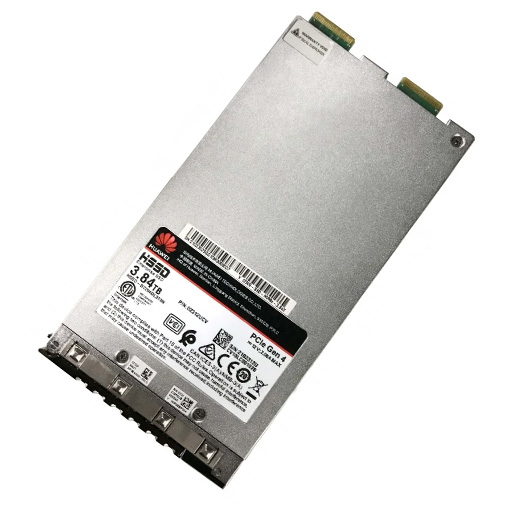
The 3.84TB SSD NVMe Palm Disk Unit represents a breakthrough in enterprise storage engineering, combining massive capacity with an innovative palm-sized form factor. Designed specifically for next-generation all-flash storage systems, this compact NVMe solid-state drive delivers exceptional performance density that transforms data center infrastructure economics. With its 7-inch form factor measuring just 9.5mm in thickness, the palm disk unit provides 44 percent higher capacity density compared to traditional 2.5-inch enterprise SSDs while maintaining enterprise-grade reliability and performance.
Understanding Palm Disk Technology
Palm disk units represent a revolutionary approach to enterprise storage design pioneered for high-density all-flash arrays. Unlike conventional 2.5-inch or 3.5-inch drive form factors that waste valuable rack space, palm-sized SSDs maximize storage capacity per rack unit through intelligent mechanical engineering and advanced thermal management.
The 3.84TB capacity point strikes an optimal balance between cost-per-terabyte and performance density for mainstream enterprise workloads. This configuration enables organizations to build petabyte-scale storage infrastructures in remarkably compact footprints, reducing data center real estate requirements while delivering the low-latency performance modern applications demand.
Built on cutting-edge NVMe protocol and PCIe interface technology, palm disk units eliminate the bottlenecks inherent in legacy SATA and SAS interfaces. The direct PCIe connection enables significantly higher bandwidth and lower latency, making these drives ideal for latency-sensitive applications including real-time analytics, high-frequency trading, and AI inference workloads.
Technical Specifications: Engineering Excellence
Core Technical Details
| Specification | Details |
|---|---|
| Capacity | 3.84 TB (Terabytes) |
| Form Factor | Palm Disk Unit (7-inch, 9.5mm thickness) |
| Interface | NVMe (Non-Volatile Memory Express) |
| Bus Type | PCIe (PCI Express) |
| NAND Technology | 3D TLC/QLC NAND Flash |
| Sequential Read | Up to 6,900 MB/s (varies by configuration) |
| Sequential Write | Up to 4,100 MB/s (varies by configuration) |
| Random Read IOPS | Up to 1,000,000 IOPS |
| Random Write IOPS | Up to 180,000 IOPS |
| Latency | Ultra-low (sub-millisecond) |
| Endurance Rating | 1.0 DWPD (Drive Writes Per Day) for 5 years |
| Power Consumption | Optimized for data center efficiency |
| Operating Temperature | 0°C to 70°C (enterprise grade) |
| Reliability (MTBF) | 2,000,000+ hours |
| Data Protection | End-to-end data protection, power-loss protection |
| Encryption Support | AES 256-bit (Self-Encrypting Drive options) |
Performance Characteristics
The 3.84TB NVMe palm disk unit delivers exceptional performance metrics critical for enterprise workloads:
Sequential Performance:
- Read throughput: Sustained sequential reads reaching 6,900 MB/s enable rapid data streaming for analytics and content delivery applications
- Write throughput: Sequential write performance of 4,100 MB/s supports high-volume data ingestion scenarios
- Bandwidth utilization: Full PCIe bus bandwidth exploitation maximizes throughput
Random Performance:
- Read IOPS: One million random read IOPS deliver exceptional database query performance
- Write IOPS: 180,000 random write IOPS handle transactional workloads efficiently
- Mixed workloads: Balanced read/write performance for real-world application profiles
Latency Profile:
- Read latency: Sub-100 microsecond typical read latency
- Write latency: Consistent write response times for predictable application performance
- QoS consistency: Enterprise-grade quality of service across varying workload intensities
NVMe Protocol: The Performance Foundation
The NVMe (Non-Volatile Memory Express) protocol fundamentally transforms how storage systems communicate with solid-state drives. Designed specifically for flash storage rather than adapted from mechanical disk protocols, NVMe technology delivers transformative performance advantages.
NVMe Architecture Benefits
Parallel Command Processing:
- 65,535 command queues: Versus 1 queue for SATA/SAS interfaces
- 64,000 commands per queue: Enables massive parallelism for concurrent operations
- Reduced CPU overhead: Streamlined command set minimizes processor cycles
Direct PCIe Connection:
- Four PCIe lanes: Typical NVMe SSDs utilize x4 PCIe configuration
- High bandwidth: PCIe 3.0 x4 provides 3,938 MB/s theoretical bandwidth
- Low latency: Direct CPU-to-storage communication path eliminates controller bottlenecks
Optimized for Flash:
- Flash-aware algorithms: Native support for NAND flash characteristics
- Efficient error handling: Sophisticated ECC and wear-leveling algorithms
- Power management: Advanced power states optimize energy consumption
NVMe vs. Legacy Interfaces
The performance advantages of NVMe over SATA become apparent in enterprise workloads:
| Interface | Max Bandwidth | Command Queue Depth | CPU Overhead | Latency |
|---|---|---|---|---|
| SATA III | 600 MB/s | 32 commands | High | Higher |
| SAS-3 | 1,200 MB/s | 256 commands | Moderate | Moderate |
| NVMe PCIe 3.0 x4 | 3,938 MB/s | 65,535 queues | Low | Ultra-low |
This 25x performance multiplication over SATA enables new application architectures previously constrained by storage bottlenecks.
Palm-Sized Form Factor: Density Innovation
The 7-inch palm disk form factor represents a paradigm shift in storage system architecture, optimizing every dimension for maximum capacity density.
Physical Design Advantages
Compact Dimensions:
- Length: Approximately 180mm (7 inches)
- Width: Optimized for dense array packaging
- Thickness: 9.5mm compared to 14.8mm traditional enterprise SSDs
- Weight: Reduced mass improves rack weight distribution
Density Improvements:
- 36 drives per 2U enclosure: Versus 24 traditional 2.5-inch drives
- 44% higher capacity density: More terabytes per rack unit
- 138TB raw capacity per 2U: With 3.84TB drives at 36 per enclosure
Thermal Management:
- Biplanar orthogonal backplane: Innovative cooling architecture
- 25% improved heat dissipation: Compared to conventional designs
- Optimized airflow: Engineered thermal paths maintain drive temperatures
- Reduced cooling costs: Better heat management lowers HVAC requirements
Data Center Impact
The palm disk form factor transformation data center economics significantly:
Space Savings: Organizations deploying multi-petabyte storage infrastructures can reduce rack count by 30-40 percent compared to traditional SSD form factors, directly lowering real estate costs in expensive colocation facilities.
Power Efficiency: Higher density means fewer supporting components (enclosures, controllers, network switches), reducing overall infrastructure power consumption per terabyte of storage.
Simplified Management: Fewer physical devices to manage, monitor, and maintain reduces operational complexity and staffing requirements for large-scale deployments.

Enterprise-Grade Reliability and Endurance
The 3.84TB palm disk unit incorporates comprehensive reliability features essential for mission-critical enterprise applications.
Endurance and Longevity
Drive Writes Per Day (DWPD):
- 1.0 DWPD rating: Support for full drive capacity write daily for 5 years
- Total bytes written: Approximately 7 petabytes over drive lifetime
- Read-intensive optimization: Ideal for workloads with high read-to-write ratios
Wear Leveling:
- Advanced algorithms: Distribute writes evenly across all NAND blocks
- Over-provisioning: Reserved capacity for wear management and performance consistency
- Bad block management: Automatic remapping of failed cells maintains capacity
Mean Time Between Failures (MTBF):
- 2,000,000+ hours: Industry-leading reliability ratings
- Annual Failure Rate (AFR): Typically below 0.5 percent in enterprise environments
- Field-proven durability: Extensive testing and validation before deployment
Data Protection Mechanisms
Error Correction:
- Multi-level ECC: Sophisticated error correction code algorithms
- LDPC encoding: Low-Density Parity Check codes for robust error detection
- RAID integration: Compatible with hardware RAID controllers and software-defined storage
Power-Loss Protection:
- Capacitor-backed write buffer: Ensures in-flight data commits during power interruption
- Metadata protection: Critical file system and mapping table preservation
- Graceful shutdown: Orderly drive state saving prevents corruption
End-to-End Data Protection:
- T10 DIF/DIX: Data Integrity Field support for corruption detection
- Path protection: Data validation throughout the entire I/O pathway
- Silent corruption prevention: Continuous integrity verification
Compatibility and System Integration
The 3.84TB palm disk unit integrates seamlessly with modern all-flash storage architectures, particularly Huawei OceanStor Dorado series systems.
Huawei OceanStor Dorado Compatibility
Supported Models:
- OceanStor Dorado 3000 V6: Entry-level all-flash for SMEs
- OceanStor Dorado 5000 V6: Mid-range performance for growing enterprises
- OceanStor Dorado 6000 V6: High-performance for demanding workloads
- OceanStor Dorado 8000 V6: Mission-critical applications
- OceanStor Dorado 18000 V6: Extreme performance for tier-1 workloads
System Scalability: Different Dorado models support varying quantities of palm disk units:
- Dorado 3000 V6: Up to 1,200 SSDs
- Dorado 5000/6000 V6: Up to 3,200-4,800 SSDs
- Dorado 8000/18000 V6: Up to 6,400 SSDs
This scalability enables organizations to start with appropriate capacity and expand seamlessly as data growth demands.
FlashLink Intelligent Algorithms
Palm disk units benefit from Huawei’s proprietary FlashLink technology:
Performance Optimization:
- SmartCache: Intelligent caching algorithms predict hot data
- SmartTier: Automated data placement across performance tiers
- SmartThin: Space-efficient provisioning and reclamation
Reliability Enhancement:
- SmartErase: Secure data sanitization for compliance requirements
- SmartMatrix: Advanced RAID algorithms optimized for flash characteristics
- SmartMotion: Non-disruptive data migration during maintenance
Efficiency Features:
- Inline deduplication: Real-time duplicate data elimination
- Inline compression: Transparent data compression increases effective capacity
- Snapshot and cloning: Space-efficient data protection and development workflows
Use Cases and Application Workloads
The 3.84TB palm disk unit excels across diverse enterprise application scenarios where performance, density, and reliability intersect.
Database and Transaction Processing
OLTP (Online Transaction Processing):
- High random IOPS capability handles thousands of concurrent database transactions
- Low latency ensures responsive user experience for customer-facing applications
- Consistent performance maintains service level agreements during peak loads
OLAP (Online Analytical Processing):
- High sequential throughput accelerates complex queries across massive datasets
- Large capacity accommodates growing data warehouses
- Parallel processing support enables faster business intelligence insights
In-Memory Database Support:
- Ultra-low latency complements in-memory database architectures
- Persistent storage for database checkpoints and recovery
- Sufficient capacity for large memory footprint databases
Virtualization and Cloud Infrastructure
Virtual Desktop Infrastructure (VDI):
- Handle boot storms when hundreds of users log in simultaneously
- Support diverse workload profiles from task workers to power users
- Consistent performance prevents desktop slowdowns during peak usage
Virtual Machine Density:
- High IOPS capacity enables greater VM consolidation ratios
- Low latency maintains application responsiveness across VMs
- Capacity density reduces storage footprint for large VM farms
Container and Kubernetes Workloads:
- Fast provisioning for dynamically scaling containerized applications
- Persistent volume support for stateful applications
- High performance for microservices architectures
Content Delivery and Media Streaming
Content Distribution Networks (CDN):
- High sequential read performance for video and large file streaming
- Large capacity stores popular content close to end users
- Consistent performance during traffic spikes
Media Production Workflows:
- Fast sequential access for 4K/8K video editing
- Large capacity accommodates uncompressed media files
- Reliable performance for deadline-driven production environments
Streaming Services:
- Low latency ensures buffer-free playback experience
- High throughput supports thousands of concurrent streams
- Capacity for extensive content libraries
Artificial Intelligence and Machine Learning
Training Data Storage:
- Large capacity for massive training datasets
- High sequential throughput feeds data to GPU clusters efficiently
- Parallel access supports distributed training frameworks
Inference Serving:
- Low latency critical for real-time AI inference
- High IOPS handles numerous concurrent inference requests
- Reliable performance for production AI services
Model Repository:
- Store thousands of trained models and versions
- Fast access for A/B testing and model deployment
- Sufficient capacity for model lineage and experimentation
Performance Optimization Strategies
Organizations deploying 3.84TB palm disk units should consider several optimization strategies to maximize value.
Workload Characterization
I/O Pattern Analysis:
- Monitor read/write ratios to validate drive endurance suitability
- Analyze block sizes to optimize file system and application configurations
- Track queue depths to ensure sufficient concurrent operations
Capacity Planning:
- Implement monitoring for capacity utilization trends
- Plan for compression and deduplication effectiveness
- Account for snapshot and replication overhead in capacity calculations
Performance Baselining:
- Establish performance baselines during initial deployment
- Monitor for degradation indicating drive wear or system issues
- Compare actual performance to vendor specifications
File System and OS Tuning
File System Selection:
- Choose file systems optimized for flash storage (XFS, ext4, Btrfs)
- Enable TRIM/UNMAP support for effective garbage collection
- Configure appropriate block sizes matching workload characteristics
Operating System Configuration:
- Adjust I/O scheduler for NVMe (typically “none” or “mq-deadline”)
- Optimize queue depth settings for application workloads
- Configure appropriate readahead values for sequential workloads
Driver and Firmware Updates:
- Maintain current NVMe drivers for bug fixes and performance improvements
- Apply firmware updates following vendor testing and validation
- Monitor vendor advisories for critical updates
Application-Level Optimization
Database Configuration:
- Align database block sizes with storage geometry
- Implement appropriate buffer pool sizing to reduce I/O
- Leverage database-specific flash optimizations
Virtualization Tuning:
- Configure appropriate storage adapters (paravirtual for best performance)
- Optimize I/O queue depths for guest operating systems
- Implement storage policies matching VM workload requirements
Container Storage:
- Select appropriate storage drivers (overlay2, devicemapper)
- Implement volume management best practices
- Consider ephemeral vs. persistent storage requirements
Total Cost of Ownership Considerations
Evaluating the 3.84TB palm disk unit requires understanding both capital and operational cost implications.
Capital Expenditure Analysis
Drive Acquisition Costs:
- Enterprise NVMe pricing: 3.84TB drives typically range $800-1,500 per unit
- Volume discounts: Significant savings available for large deployments
- Compatibility requirements: Ensure compatibility with existing infrastructure
Infrastructure Costs:
- Storage array investment: Dorado or compatible system acquisition
- Network infrastructure: High-speed networking to match storage performance
- Rack and power: Reduced requirements compared to traditional storage
Replacement Planning:
- Lifecycle budgeting: Plan for drive replacement after 5-year warranty
- Spare capacity: Maintain hot spares for rapid failure recovery
- Technology refresh: Consider performance/capacity improvements in next-generation drives
Operational Expenditure Factors
Power and Cooling:
- Energy consumption: Palm disk efficiency reduces per-terabyte power costs
- Cooling requirements: Dense designs with better thermals lower HVAC costs
- Carbon footprint: Reduced power consumption supports sustainability goals
Management and Staffing:
- Simplified administration: Fewer devices reduce management overhead
- Automation opportunities: Modern storage systems enable extensive automation
- Training requirements: Staff education on flash-optimized best practices
Data Center Space:
- Reduced footprint: Higher density decreases rack requirements
- Colocation savings: Less space directly reduces recurring costs
- Expansion flexibility: Easier to grow within existing data center constraints
ROI Calculation Examples
Scenario 1: Database Consolidation Organization consolidating 50TB database from legacy SAN to all-flash:
- Performance improvement: 10x reduction in query times
- Application licensing savings: Fewer database licenses needed with better performance
- Operational efficiency: Database administrators manage more instances
- Payback period: Typically 12-18 months from performance and efficiency gains
Scenario 2: VDI Deployment Enterprise deploying 1,000-seat virtual desktop infrastructure:
- User density improvement: 50% more users per server with flash storage
- Server consolidation: Fewer physical servers required
- Energy savings: Reduced server count lowers power and cooling
- Payback period: 18-24 months including infrastructure and energy savings
Security and Compliance Features
Enterprise storage must address comprehensive security and compliance requirements.
Encryption Capabilities
Self-Encrypting Drives (SED):
- AES 256-bit encryption: Hardware-based encryption at drive level
- Transparent operation: No performance penalty for encrypted storage
- Instant secure erase: Cryptographic erase enables rapid drive repurposing
Key Management:
- External key management: Integration with enterprise key management systems
- KMIP support: Industry-standard Key Management Interoperability Protocol
- Secure key storage: Protected key storage within drive controller
Data-at-Rest Protection:
- Full drive encryption: All user data encrypted automatically
- Metadata protection: Critical drive information secured
- Compliance enablement: Meets regulatory encryption requirements
Compliance and Certifications
Industry Standards:
- FIPS 140-2: Federal Information Processing Standard cryptographic validation
- Common Criteria: International security evaluation standard
- TCG Opal: Trusted Computing Group storage security specification
Regulatory Requirements:
- GDPR compliance: Support for data protection requirements
- HIPAA compatibility: Healthcare data security capabilities
- PCI-DSS: Payment card industry data security standards
Audit and Reporting:
- Access logging: Comprehensive audit trail of storage access
- Compliance reporting: Automated report generation for auditors
- Tamper detection: Monitoring for unauthorized access attempts
Deployment Best Practices
Successful palm disk deployment requires careful planning and execution.
Pre-Deployment Planning
Capacity Assessment:
- Calculate raw capacity requirements including growth projections
- Account for RAID overhead and data reduction effectiveness
- Plan for snapshot, replication, and backup capacity requirements
Performance Requirements:
- Document application IOPS and throughput needs
- Identify latency-sensitive workloads requiring prioritization
- Establish performance monitoring and alerting thresholds
Compatibility Verification:
- Confirm drive compatibility with target storage system
- Validate firmware and driver versions meet requirements
- Test interoperability in lab environment before production
Installation and Configuration
Physical Installation:
- Follow manufacturer guidelines for drive insertion
- Ensure proper seating and connector engagement
- Verify system recognition of newly installed drives
Initial Configuration:
- Update drive firmware to latest validated versions
- Configure RAID groups matching workload requirements
- Enable data reduction features (deduplication, compression)
Performance Validation:
- Run benchmark tests to verify expected performance
- Test failover and recovery scenarios
- Validate monitoring and alerting systems
Ongoing Management
Monitoring and Maintenance:
- Implement comprehensive storage monitoring
- Track drive wear indicators and plan replacements
- Review performance trends to identify optimization opportunities
Capacity Management:
- Monitor capacity utilization and growth rates
- Manage snapshot retention policies to control capacity
- Plan expansion before reaching capacity constraints
Lifecycle Management:
- Maintain inventory of drive deployment dates and warranties
- Plan systematic drive replacement approaching end-of-life
- Implement secure data sanitization before drive retirement
Comparison with Alternative Storage Technologies
Understanding where 3.84TB palm disk units fit within the broader storage landscape helps organizations make informed decisions.
Palm Disk vs. Traditional 2.5-inch SSDs
| Feature | 3.84TB Palm Disk | 3.84TB 2.5-inch SSD |
|---|---|---|
| Form Factor | 7-inch, 9.5mm thick | 2.5-inch, 15mm thick |
| Drives per 2U | 36 drives | 24 drives |
| Capacity Density | 138TB per 2U | 92TB per 2U |
| Thermal Management | Biplanar orthogonal | Traditional backplane |
| Cost per TB | Competitive | Comparable |
| Compatibility | Specific storage arrays | Wide compatibility |
Decision Criteria: Choose palm disk for maximum density in compatible systems; select 2.5-inch for broader compatibility across diverse infrastructure.
Palm Disk vs. M.2 NVMe SSDs
M.2 Advantages:
- Smaller physical footprint for space-constrained servers
- Direct motherboard mounting without drive bays
- Lower cost for client-grade drives
Palm Disk Advantages:
- Hot-swap capability for serviceability
- Enterprise reliability and endurance ratings
- Designed for 24/7 data center operation
- Integrated thermal management in dense arrays
Use Case Differentiation: M.2 SSDs excel in servers with limited drive bays; palm disks optimize dedicated storage arrays.
All-Flash vs. Hybrid Storage
All-Flash Palm Disk Arrays:
- Performance: Consistently high IOPS and low latency
- Simplicity: No tiering complexity or performance unpredictability
- Density: Maximum capacity per rack unit
Hybrid Storage (SSD + HDD):
- Cost: Lower per-terabyte costs for large capacities
- Capacity: Massive storage for archival workloads
- Complexity: Tiering management overhead
Technology Selection: All-flash with palm disks for performance-critical applications; hybrid for cost-sensitive, capacity-focused scenarios.
Future-Proofing Your Investment
Storage technology evolves rapidly; considering future developments ensures long-term value.
Technology Roadmap
Capacity Growth:
- Current generation: 1.92TB to 30.72TB palm disk capacities available
- Near-term evolution: Expect 60TB+ palm disks as NAND densities increase
- Migration path: Systems designed for seamless capacity upgrades
Performance Evolution:
- PCIe 4.0 adoption: Doubling bandwidth compared to PCIe 3.0
- PCIe 5.0 preparation: Future-proofing for next-generation interfaces
- NVMe 1.4/2.0: Enhanced features and performance
Emerging Technologies:
- Storage Class Memory: Intel Optane and similar technologies
- Computational Storage: In-storage processing for specific workloads
- NVMe-oF: Network-attached NVMe for disaggregated architectures
Investment Protection Strategies
Scalable Architecture:
- Choose storage systems supporting wide capacity ranges
- Implement modular expansion for predictable growth
- Select vendors with proven technology roadmaps
Software-Defined Storage:
- Consider solutions abstracting hardware dependencies
- Enable workload mobility across diverse storage tiers
- Implement policy-based management for flexibility
Cloud Integration:
- Hybrid cloud strategies complement on-premises storage
- Tiering policies move cold data to cloud economically
- Consistent management across on-premises and cloud storage
Frequently Asked Questions
What is a palm disk unit and how does it differ from standard SSDs?
A palm disk unit is a compact 7-inch NVMe SSD designed specifically for high-density enterprise storage arrays. Unlike standard 2.5-inch or 3.5-inch SSDs, palm disks measure just 9.5mm thick and pack more drives per rack unit. This innovative form factor provides 44 percent higher capacity density, enabling 36 drives in a 2U enclosure compared to 24 traditional drives. Palm disks integrate seamlessly with modern all-flash arrays like Huawei OceanStor Dorado systems through specialized backplanes optimized for thermal management and connectivity.
Why choose a 3.84TB capacity instead of smaller or larger options?
The 3.84TB capacity represents an optimal sweet spot for mainstream enterprise workloads, balancing cost-per-terabyte economics with performance characteristics. This capacity point offers better value than smaller 1.92TB drives while remaining more affordable than 7.68TB or 15.36TB options. For database servers, virtualization infrastructure, and general-purpose storage, 3.84TB provides sufficient capacity without over-provisioning. Organizations can deploy appropriate quantities to match current needs and expand incrementally as requirements grow.
Can palm disk units be used in standard servers or only dedicated storage arrays?
Palm disk units are specifically engineered for compatible all-flash storage arrays, primarily Huawei OceanStor Dorado series systems. These drives require proprietary backplanes, connectors, and thermal management systems not present in standard servers. For general-purpose servers, traditional 2.5-inch NVMe SSDs or M.2 form factors remain appropriate choices. The palm disk form factor optimizes dedicated storage infrastructure where maximum density and specialized cooling matter most.
How does NVMe improve performance compared to SATA or SAS interfaces?
NVMe (Non-Volatile Memory Express) delivers transformative performance by leveraging the PCIe bus directly rather than routing through legacy SATA or SAS controllers designed for mechanical hard drives. NVMe provides up to 25 times higher bandwidth (3,938 MB/s vs. 600 MB/s for SATA), supports 65,535 command queues compared to one for SATA, and reduces latency through streamlined command sets. This translates to dramatically faster application response times, higher transaction throughput for databases, and improved scalability for virtualization workloads.
What is the expected lifespan and endurance of a 3.84TB palm disk unit?
Enterprise-grade 3.84TB palm disk units typically carry a 1.0 DWPD (Drive Writes Per Day) endurance rating over a 5-year warranty period. This means the drive supports writing its full 3.84TB capacity daily for five years, totaling approximately 7 petabytes of writes over its lifetime. For read-intensive workloads or scenarios with lower write activity, the drive will likely exceed this rated endurance. Mean Time Between Failures (MTBF) ratings typically exceed 2 million hours, with annual failure rates below 0.5 percent in properly managed data center environments.
What security features protect data stored on palm disk units?
Modern palm disk units incorporate multiple security layers including optional Self-Encrypting Drive (SED) capabilities with AES 256-bit hardware encryption. This transparent encryption operates at full performance without CPU overhead. Key management integration supports enterprise key management systems through KMIP standards. End-to-end data protection with T10 DIF/DIX prevents silent data corruption. Power-loss protection with capacitor backing ensures in-flight data commits during power interruptions. Secure erase capabilities enable cryptographic erasure for rapid, compliant drive retirement or repurposing.
How do I determine the right quantity of palm disk units for my needs?
Capacity planning requires assessing several factors: raw data requirements including growth projections, RAID overhead (typically 20-30 percent for RAID 6), data reduction effectiveness (deduplication and compression can provide 2-5x capacity multipliers), snapshot and replication overhead, and performance requirements measured in IOPS and throughput. A general guideline: calculate raw capacity needed, add 30 percent for RAID overhead, divide by expected data reduction ratio, then add 20 percent buffer for snapshots. For performance validation, ensure total drive IOPS exceed application requirements by 50 percent for headroom.
Are palm disk units compatible with existing data center infrastructure?
Palm disk units integrate with compatible all-flash storage arrays rather than directly connecting to existing SAN infrastructure. Organizations typically deploy palm disk-based systems alongside existing storage, migrating workloads progressively. Modern storage arrays provide standard connectivity options including Fibre Channel, iSCSI, and NVMe-oF, ensuring compatibility with existing server and network infrastructure. The storage array handles protocol conversion, presenting standard block storage interfaces to hosts while leveraging palm disk performance internally. Migration tools facilitate non-disruptive data movement from legacy storage to new all-flash arrays.
Where to Buy 3.84TB SSD NVMe Palm Disk Units
Organizations can acquire palm disk units through several channels depending on their deployment model:
Authorized Distributors and Resellers:
- Huawei Enterprise Partners: Certified partners provide palm disk units with OceanStor Dorado systems
- System Integrators: Full solution providers configure complete storage infrastructures
- Regional Distributors: Local partners offer sales, installation, and support services
Configuration Options:
- Pre-configured arrays: Complete storage systems with palm disks pre-installed
- Capacity expansions: Additional drives for expanding existing deployments
- Service bundles: Combined hardware, installation, and support packages
Procurement Considerations:
- Volume pricing: Significant discounts available for large deployments
- Warranty options: Extended warranty and support packages
- Professional services: Implementation, migration, and optimization services
For organizations requiring high-density, high-performance storage infrastructure, consulting with authorized Huawei storage partners ensures optimal configuration for specific workload requirements.
Conclusion: Transforming Data Center Storage Economics
The 3.84TB SSD NVMe Palm Disk Unit exemplifies the next evolution in enterprise storage technology. By radically rethinking form factor design, this innovative storage solution delivers unprecedented density without sacrificing the performance, reliability, or manageability enterprises demand. The palm-sized architecture enables organizations to build petabyte-scale storage infrastructures in remarkably compact footprints, directly addressing the space, power, and cooling constraints that challenge modern data centers.
Combined with NVMe protocol performance, enterprise-grade reliability, and seamless integration with advanced storage platforms, palm disk units provide a compelling foundation for digital transformation initiatives. Whether supporting virtualized infrastructures, accelerating database workloads, enabling AI/ML pipelines, or powering content delivery networks, these compact powerhouses deliver the consistent low-latency performance modern applications require.
For organizations evaluating next-generation storage infrastructure, the 3.84TB palm disk capacity point offers an ideal entry into high-density all-flash architecture. The proven track record in thousands of deployments worldwide, combined with clear technology roadmaps and vendor commitment, ensures this investment will support evolving business requirements for years to come.
Ready to transform your storage infrastructure? Explore the 3.84TB SSD NVMe Palm Disk Unit at ITCTShop.com and discover how compact, high-performance storage can revolutionize your data center.
Last update at December 2025
Reviews
There are no reviews yet.