
Author: ITCT Tech Editorial Unit
Reviewed By: Senior Storage Infrastructure Architect
Last Updated: 2026-01-14
Reading Time: 18 minutes
References:
- Huawei Dorado 6000 V6 Technical Specifications and Data Sheet
- DDN EXAScaler Architecture and Lustre File System Documentation
- NVMe Express (NVMe) & NVMe-over-Fabrics (NVMe-oF) Standards
- T10 DIF/DIX Data Protection Standards
Quick Answer
This guide compares two leading NVMe storage architectures for AI: Huawei Dorado 6000 V6 and DDN EXAScaler. The Huawei Dorado offers a centralized, all-flash scale-up architecture ideal for ultra-low latency (0.05ms) workloads like inference, databases, and mixed enterprise applications, utilizing high-density 15.36TB NVMe drives. The DDN EXAScaler utilizes a scale-out parallel file system (Lustre) designed for massive throughput and linear scalability, making it the preferred choice for large-scale distributed training clusters (1000+ nodes) utilizing 3.84TB drives for maximum parallelism.
Key Decision Factors
Select the Huawei Dorado 6000 V6 if your priority is operational simplicity, consistent low latency for inference, and consolidating mixed workloads within a moderate-scale environment. Choose the DDN EXAScaler if you are building a massive AI training facility requiring linear performance scaling, native Kubernetes integration, and the ability to handle the extreme throughput demands of hundreds of GPUs simultaneously. A hybrid approach using DDN for training and Huawei for production inference is often the optimal strategy.
Understanding Next-Generation Storage Architecture for Artificial Intelligence
The exponential growth of artificial intelligence workloads has fundamentally transformed enterprise storage requirements. Modern AI applications demand unprecedented levels of performance, with training datasets reaching petabyte scale and requiring millisecond-level latency. Traditional storage architectures struggle to meet these demands, making NVMe (Non-Volatile Memory Express) storage solutions essential for organizations deploying AI at scale.
NVMe storage for AI
NVMe technology delivers a quantum leap in storage performance by eliminating legacy protocol bottlenecks. Unlike SATA or SAS interfaces that were designed for spinning hard drives, NVMe was purpose-built for flash storage, utilizing the PCIe bus to enable direct communication between the CPU and storage devices. This architectural advantage translates into dramatically reduced latency, higher IOPS (Input/Output Operations Per Second), and improved parallelism—precisely what AI workloads require.

In the enterprise AI storage market, two prominent solutions have emerged as leaders: Huawei Dorado 6000 V6 and DDN EXAScaler. Both platforms leverage NVMe technology but approach AI storage challenges from different architectural philosophies. Understanding the nuances between these solutions is critical for organizations making infrastructure investments that will power their AI initiatives for years to come.
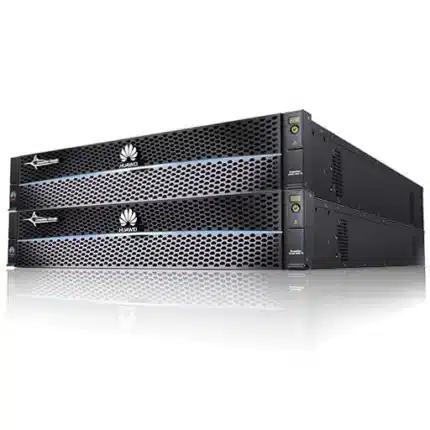
Huawei Dorado 6000 V6: Enterprise-Grade All-Flash Architecture
Technical Foundation and Design Philosophy
The Huawei Dorado 6000 V6 represents a comprehensive all-flash storage platform engineered specifically for mission-critical applications and AI workloads. Built on Huawei’s proprietary FlashLink intelligent acceleration technology, the Dorado 6000 V6 achieves sub-millisecond latency while maintaining enterprise-grade reliability and data protection features.
The architecture employs an active-active controller design that eliminates single points of failure while maximizing performance. Each controller features dual-port 32Gb/s Fibre Channel or 25GbE connectivity options, with support for NVMe-oF (NVMe over Fabrics) protocols including FC-NVMe and NVMe/RoCE. This flexibility allows organizations to integrate the Dorado seamlessly into existing data center infrastructure while preparing for future networking evolution.
Performance Characteristics for AI Training
| Performance Metric | Huawei Dorado 6000 V6 Specification |
|---|---|
| Maximum IOPS | Up to 20 million IOPS |
| Sequential Read Bandwidth | Up to 200 GB/s |
| Sequential Write Bandwidth | Up to 140 GB/s |
| Latency | 0.05ms (50 microseconds) |
| Maximum Capacity | 32 PB effective capacity |
| Data Reduction Ratio | 5:1 typical with inline deduplication |
For AI training workloads, the Dorado 6000 V6 delivers exceptional performance across both sequential and random I/O patterns. Deep learning frameworks like TensorFlow and PyTorch generate mixed workload profiles during training—sequential reads when loading large dataset batches combined with random writes when checkpointing model states. The Dorado’s multi-core storage operating system distributes these operations efficiently across NVMe drives, preventing I/O bottlenecks that can starve GPU computing resources.
15.36TB NVMe SSD Integration
The Dorado 6000 V6 supports high-capacity 15.36TB NVMe SSDs, which serve as the optimal building block for large-scale AI deployments. These enterprise-class drives feature:
- Multi-stream write optimization that aligns with AI framework I/O patterns
- Power-loss protection ensuring data integrity during unexpected power events
- Advanced wear-leveling algorithms extending drive lifespan under write-intensive AI training
- End-to-end data protection with T10 DIF/DIX implementation
The 15.36TB capacity point represents an ideal balance for AI storage architectures. It provides sufficient density to reduce rack space and power consumption while maintaining performance characteristics superior to higher-capacity QLC-based alternatives. For organizations building AI training clusters with hundreds of GPUs, the ability to consolidate storage into fewer physical devices simplifies management and reduces failure domains.
SmartMatrix Architecture and AI Optimization
Huawei’s SmartMatrix architecture forms the intelligence layer that distinguishes the Dorado from conventional storage arrays. This system employs machine learning algorithms to analyze workload patterns and automatically optimize storage behavior:
Intelligent Tiering: The system identifies hot and cold data within AI datasets, automatically placing frequently accessed data on the fastest NVMe devices while migrating infrequently accessed reference data to more cost-effective tiers.
Predictive Maintenance: Built-in AI models analyze drive health metrics, predicting potential failures before they occur and proactively triggering data migration to healthy drives.
Workload Balancing: Real-time analysis of I/O patterns distributes workloads across available resources, preventing hotspots that can throttle AI training performance.
DDN EXAScaler: Purpose-Built Parallel File System for AI
Architectural Foundations and Scale-Out Design
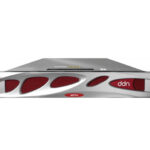
DDN EXAScaler represents a fundamentally different approach to AI storage, built upon the Lustre parallel file system—the same technology powering many of the world’s fastest supercomputers. Unlike traditional storage arrays, EXAScaler implements a scale-out architecture where storage capacity and performance scale linearly by adding nodes.
The EXAScaler architecture separates metadata operations from data operations, enabling massive parallelism. This design proves particularly advantageous for AI workloads where thousands of compute nodes may simultaneously access shared datasets. The system eliminates the metadata bottlenecks that plague traditional NAS solutions when scaling to hundreds of clients.
Performance at Scale
| Performance Metric | DDN EXAScaler Specification |
|---|---|
| Sequential Read Performance | Up to 1 TB/s per file system |
| Concurrent Client Support | Thousands of simultaneous connections |
| File System Scalability | Exabyte-scale capacity |
| Metadata Operations | Up to 1 million ops/second |
| Network Interfaces | InfiniBand HDR (200Gb/s) or 100GbE |
EXAScaler’s performance advantages become pronounced in distributed AI training scenarios. When training large language models across clusters of GPU servers, the ability to stream training data simultaneously to hundreds of nodes without performance degradation becomes essential. The Lustre file system’s object storage architecture distributes data across multiple Object Storage Servers (OSS), each backed by NVMe SSDs, ensuring that aggregate bandwidth scales with cluster size.
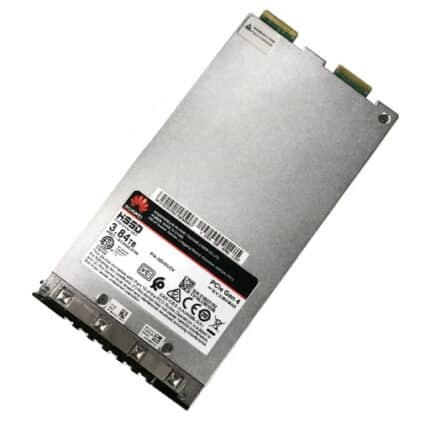
3.84TB NVMe SSD Deployment Strategy
DDN EXAScaler deployments typically utilize 3.84TB NVMe SSDs as the foundational storage media. This capacity point offers several strategic advantages for scale-out architectures:
Cost-Performance Optimization: The 3.84TB capacity provides an excellent balance between performance consistency and cost per terabyte, allowing organizations to deploy larger numbers of drives that increase parallelism.
Failure Domain Management: Smaller capacity drives create more granular failure domains. In a scale-out architecture, distributing data across many 3.84TB drives rather than fewer 15.36TB drives improves resilience and reduces rebuild times.
Consistent Performance Scaling: With more physical drives in the storage pool, EXAScaler achieves higher aggregate IOPS and bandwidth by parallelizing operations across the expanded drive count.
AI-Optimized Data Pipeline Integration
EXAScaler includes purpose-built features for AI and machine learning workflows:
Burst Buffer Integration: High-speed NVMe-based burst buffers absorb checkpoint writes from AI training jobs, preventing I/O storms from impacting other users while asynchronously destaging data to capacity storage.
Data Lifecycle Management: Automated policies move aging datasets between performance and capacity tiers based on access patterns, optimizing the cost-performance ratio across the data lifecycle.
Multi-Tenancy and QoS: Granular quality-of-service controls ensure fair resource allocation among multiple AI teams and projects sharing the infrastructure, preventing any single workload from monopolizing storage bandwidth.
Native Kubernetes Integration: Container Storage Interface (CSI) drivers enable seamless integration with Kubernetes-orchestrated AI training pipelines, providing persistent volumes that match the performance expectations of GPU-accelerated workloads.
Comparative Analysis: Architecture and Use Case Alignment
Performance Comparison for Different AI Workload Types
The performance characteristics of Huawei Dorado and DDN EXAScaler manifest differently across various AI workload profiles:
| Workload Type | Huawei Dorado 6000 V6 Advantage | DDN EXAScaler Advantage |
|---|---|---|
| Single-node inference | Ultra-low latency (0.05ms) | Standard latency acceptable |
| Distributed training (large scale) | Good performance up to 64 nodes | Excellent linear scaling to 1000+ nodes |
| Random I/O (database operations) | Superior with 20M IOPS capacity | Good with sufficient OSS nodes |
| Sequential streaming (video analytics) | Excellent 200GB/s per array | Superior aggregated bandwidth at scale |
| Small file operations | Very good | Excellent with metadata optimization |
| Mixed workload consolidation | Strong QoS and isolation | Good with policy-based management |
Cost Structure and Total Cost of Ownership
Huawei Dorado 6000 V6 Cost Considerations:
The Dorado follows a traditional storage array pricing model with costs concentrated in the initial hardware acquisition. The use of 15.36TB NVMe SSDs reduces the number of drive slots required, potentially lowering licensing costs for software features priced per-drive or per-terabyte. Data reduction technologies (deduplication and compression) can significantly reduce the effective cost per usable terabyte, particularly for organizations with redundant datasets common in AI development environments.
Management simplicity represents an often-overlooked cost advantage. The unified management interface and automated optimization features reduce the specialized expertise required to maintain peak performance, lowering operational expenses.
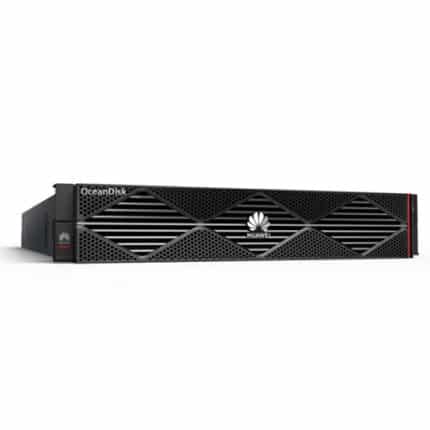
15.36TB SSD NVMe Palm Disk Unit (7″)
DDN EXAScaler Cost Considerations:
EXAScaler’s scale-out architecture enables incremental investment aligned with growth. Organizations can start with a smaller configuration and expand capacity and performance by adding nodes as AI initiatives mature. This “pay-as-you-grow” model reduces upfront capital requirements but may result in higher total cost when reaching equivalent scale to an all-flash array.
The 3.84TB NVMe SSD strategy requires more physical drives to reach equivalent raw capacity compared to 15.36TB drives, potentially increasing hardware costs but improving performance parallelism. Operational costs may be higher due to the specialized expertise required to manage Lustre file systems, though DDN provides management tools that abstract much of this complexity.
Scalability and Future-Proofing
Vertical vs. Horizontal Scaling:
Huawei Dorado 6000 V6 emphasizes vertical scaling within the array, maximizing utilization of each storage controller before requiring additional arrays. This approach simplifies management but creates discrete scaling points. When an array reaches capacity, organizations face the decision of adding another independent array or migrating to a higher-capacity model.
DDN EXAScaler’s horizontal scaling architecture adds capacity and performance incrementally without architectural limitations. This approach aligns naturally with the scaling patterns of AI infrastructure, where compute clusters frequently expand as new projects emerge and models grow in complexity.
Integration with AI Frameworks and Tools
Both platforms support standard protocols ensuring compatibility with major AI frameworks:
Huawei Dorado Integration Points:
- NFS and SMB for general-purpose file access
- iSCSI and FC for block storage requirements
- NVMe-oF for lowest-latency direct access
- S3-compatible object storage interface
- Native integration with VMware for virtualized AI workloads
DDN EXAScaler Integration Points:
- Native POSIX file system interface supporting standard libraries
- Direct integration with TensorFlow, PyTorch, and MXNet data loaders
- S3 gateway for object storage compatibility
- Container Storage Interface (CSI) for Kubernetes
- Integration with MLflow, Kubeflow, and other MLOps platforms
AI Storage Solutions: Making the Strategic Choice
Decision Framework for Enterprise AI Storage
Selecting between Huawei Dorado 6000 V6 and DDN EXAScaler requires careful analysis of your organization’s specific requirements:
Choose Huawei Dorado 6000 V6 when:
-
Workload Consolidation is Priority: Your infrastructure supports multiple application types beyond AI, and you need a versatile platform that delivers excellent performance across diverse workloads while maintaining strong QoS isolation.
-
Extreme Low Latency is Critical: Applications require consistent sub-100 microsecond latency, such as real-time inference services or high-frequency trading systems enhanced with AI.
-
Operational Simplicity Matters: IT teams prefer unified management interfaces and automated optimization over specialized file system expertise, reducing operational complexity.
-
Moderate Scale Deployments: AI training clusters comprise tens rather than hundreds of nodes, where a centralized storage architecture provides sufficient performance without the complexity of distributed systems.
-
Data Protection is Paramount: Built-in enterprise features like synchronous replication, snapshots, and disaster recovery integration are essential requirements that must be included in the base platform.
Choose DDN EXAScaler when:
-
Massive Scale is Anticipated: Your AI roadmap includes training extremely large models across hundreds or thousands of GPU nodes, requiring storage bandwidth that scales linearly with compute.
-
Performance Scaling is Non-Negotiable: Applications demand the ability to add performance incrementally without architectural changes or migration events that disrupt production workloads.
-
Parallel File System Benefits: Workloads inherently benefit from Lustre’s architecture, such as massively parallel data processing, large-scale simulations, or scientific computing applications.
-
Kubernetes-Native Operations: Your AI infrastructure is container-native, and tight integration with orchestration platforms is more valuable than traditional storage management paradigms.
-
Specialized AI Workload Focus: The storage infrastructure serves primarily AI/ML workloads rather than general-purpose applications, justifying specialized optimization and expertise.
Hybrid Architecture Considerations
Many organizations find optimal results by deploying both technologies in complementary roles:
- DDN EXAScaler serving as the primary training data lake, providing massive bandwidth for distributed training jobs
- Huawei Dorado 6000 V6 hosting inference workloads, databases, and operational applications requiring ultra-low latency
This hybrid approach leverages each platform’s strengths while avoiding compromises inherent in selecting a single solution for all use cases.
Performance Optimization Best Practices
Maximizing Huawei Dorado 6000 V6 for AI Workloads
Network Configuration: Implement redundant high-speed network paths using NVMe-oF protocols. For GPU servers with RoCE-capable network adapters, configure NVMe/RoCE to reduce CPU overhead and achieve lower latency compared to traditional NFS. Properly configure flow control and lossless Ethernet to prevent packet loss that degrades performance.
Data Layout Optimization: Organize datasets to leverage the Dorado’s intelligent caching. Frequently accessed metadata and small files benefit from SSD caching, while large sequential files can stream directly from NVMe storage. Use file system features like pre-allocation to reduce fragmentation and improve sequential read performance.
Capacity Planning: Leave sufficient free space (minimum 20%) to maintain optimal write performance and allow deduplication and compression algorithms to operate efficiently. Monitor data reduction ratios and adjust capacity projections accordingly.
Maximizing DDN EXAScaler for AI Workloads
Stripe Configuration: Tune Lustre stripe sizes and counts based on file sizes in your datasets. Large training datasets benefit from wide striping (high stripe count) that distributes data across many Object Storage Targets (OSTs), maximizing parallel bandwidth. Smaller files should use fewer stripes to reduce metadata overhead.
Client Configuration: Optimize Lustre client parameters on GPU servers to match AI framework I/O patterns. Increase read-ahead and write-behind buffer sizes for sequential workloads, and tune RPC (Remote Procedure Call) sizes to match network MTU settings.
Network Fabric Optimization: Configure network topology to minimize oversubscription between compute nodes and storage servers. For InfiniBand deployments, ensure proper subnet manager configuration and use adaptive routing to balance traffic across available paths.
Metadata Performance: Deploy dedicated Metadata Targets (MDTs) on high-IOPS NVMe devices separate from data storage. This separation prevents metadata operations (file opens, directory listings) from competing with data transfers, critical for workloads with millions of small files.
Real-World Deployment Scenarios
Scenario 1: Autonomous Vehicle Development
A global automotive manufacturer training perception models on petabytes of sensor data selected DDN EXAScaler for their AI infrastructure. The decision factors included:
- Data Volume: 5PB of initial training data growing at 2TB daily
- Parallel Access: 512 GPU nodes simultaneously accessing shared datasets
- Performance Requirement: Sustained 800GB/s aggregate bandwidth to prevent GPU starvation
- Deployment: 48 storage servers with 3.84TB NVMe SSDs providing 2.3PB usable capacity
The EXAScaler architecture enabled linear performance scaling as the cluster expanded from initial 128 GPUs to 512 GPUs over 18 months, without storage performance becoming a bottleneck.
Scenario 2: Healthcare AI and Medical Imaging
A leading healthcare organization processing medical images for diagnostic AI models implemented Huawei Dorado 6000 V6 because:
- Latency Sensitivity: Real-time inference for radiology workflows requiring less than 10ms response times
- Data Protection: HIPAA compliance demanding encryption, audit trails, and disaster recovery
- Workload Mix: AI inference, PACS (Picture Archiving and Communication System), and EHR databases sharing infrastructure
- Deployment: Dual Dorado 6000 V6 arrays in active-active configuration with 15.36TB NVMe SSDs
The unified platform consolidated previously siloed storage infrastructure while delivering the low latency required for clinical applications and the high throughput needed for AI training jobs.
Scenario 3: Financial Services Fraud Detection
An international bank deploying real-time fraud detection using deep learning models chose Huawei Dorado 6000 V6 for production inference and DDN EXAScaler for model development:
- Production Inference: Dorado delivering sub-millisecond latency for transaction scoring
- Model Training: EXAScaler providing bandwidth for training on historical transaction databases
- Data Pipeline: Automated workflows moving trained models from EXAScaler development environment to Dorado production infrastructure
This hybrid architecture optimized for both latency-critical inference and throughput-intensive training workloads.
Technical Specifications Comparison Table
| Specification Category | Huawei Dorado 6000 V6 | DDN EXAScaler |
|---|---|---|
| Architecture | Active-active dual controller | Scale-out parallel file system |
| File System | Vendor file system / NFS/SMB | Lustre parallel file system |
| Maximum Capacity | 32 PB effective | Exabyte-scale |
| Performance (Read) | 200 GB/s per array | 1+ TB/s per file system |
| Performance (Write) | 140 GB/s per array | 500+ GB/s per file system |
| Latency | 0.05ms (50 microseconds) | Sub-millisecond |
| Maximum IOPS | 20 million | Scales with node count |
| Supported Drive Capacities | 1.92TB – 30.72TB NVMe | 1.92TB – 15.36TB NVMe |
| Data Reduction | Inline dedup/compression | Optional compression |
| Replication | Synchronous/Asynchronous | Native and erasure coding |
| Protocols | NFS, SMB, iSCSI, FC, NVMe-oF, S3 | POSIX, NFS, S3 gateway |
| Management | Unified GUI, CLI, REST API | CLI, GUI, REST API |
| Scalability Model | Vertical (scale-up) | Horizontal (scale-out) |
| Typical Deployment | 2-4 controllers | 10-1000+ servers |
| Data Protection | RAID 2.0+, snapshots, replication | Erasure coding, replication |
| Kubernetes Integration | CSI driver | Native CSI driver |
Future-Proofing Your AI Storage Investment
Emerging Storage Technologies
Both Huawei and DDN continue advancing their platforms with emerging technologies:
Computational Storage: Next-generation implementations will push data processing closer to storage, reducing data movement. Expect future versions to include AI inference acceleration directly within storage devices, enabling preprocessing of training data at the storage layer.
PCIe Gen5 and Beyond: Current NVMe SSDs utilize PCIe Gen4 interfaces delivering approximately 7GB/s per drive. PCIe Gen5 doubles this bandwidth to approximately 14GB/s, and Gen6 (expected in coming years) will double it again. Both platforms are architected to adopt these faster interfaces as they become commercially available.
Storage Class Memory Integration: Technologies like Intel Optane and emerging alternatives blur the line between memory and storage. Future AI storage architectures will likely incorporate these ultra-low-latency media for hot data and metadata operations.
Software-Defined Storage Evolution
The industry trend toward software-defined infrastructure affects AI storage strategies:
Huawei continues evolving storage virtualization capabilities, enabling unified management across multiple Dorado arrays and integration with software-defined data center frameworks. This evolution allows organizations to present a single storage namespace across geographically distributed arrays.
DDN’s Lustre foundation positions EXAScaler well for cloud-native evolution. Expect enhanced integration with Kubernetes operators, service mesh technologies, and automated MLOps pipelines that treat storage as code-defined infrastructure.
Frequently Asked Questions
What is the primary difference between NVMe and traditional SSD storage for AI workloads?
NVMe storage communicates directly with the CPU through PCIe lanes, bypassing legacy SATA and SAS protocols designed for mechanical hard drives. This architectural change reduces latency from milliseconds to microseconds and increases queue depth from 32 commands to 64,000 commands. For AI workloads that require streaming large datasets to GPU memory, NVMe eliminates storage bottlenecks that would otherwise cause expensive GPU resources to idle waiting for data.
How do I determine whether 15.36TB or 3.84TB NVMe SSDs are appropriate for my AI infrastructure?
The optimal capacity depends on your architecture philosophy. Larger 15.36TB drives reduce the number of physical devices required, simplifying management and reducing power consumption in centralized storage arrays like Huawei Dorado 6000 V6. Smaller 3.84TB drives provide more parallelism in scale-out architectures like DDN EXAScaler, where distributing data across more physical drives increases aggregate bandwidth. Consider total capacity requirements, performance scaling needs, and failure domain management when making this decision.
Can these storage solutions integrate with existing on-premises and cloud infrastructure?
Yes, both platforms support hybrid cloud architectures. Huawei Dorado 6000 V6 includes cloud gateway functionality enabling tiering of cold data to public cloud object storage while maintaining hot data on-premises for low-latency access. DDN EXAScaler can be deployed on-premises, in cloud environments (AWS, Azure, GCP), or in hybrid configurations where multiple file systems synchronize data across locations. Standard protocols like NFS, S3, and POSIX ensure compatibility with both on-premises applications and cloud-native services.
What are the power and cooling requirements for these high-performance NVMe storage systems?
NVMe storage is significantly more power-efficient than equivalent performance from spinning disk arrays, but high-performance configurations still demand substantial power. A fully configured Huawei Dorado 6000 V6 typically requires 10-20 kW per array depending on drive count and configuration. DDN EXAScaler power requirements scale with node count, with each storage server consuming 2-4 kW. Both solutions require appropriate cooling infrastructure, with hot aisle containment and in-row cooling recommended for large deployments to maintain optimal operating temperatures for NVMe devices.
How does data protection work in NVMe storage systems, and what happens if a drive fails?
Huawei Dorado 6000 V6 implements RAID 2.0+ technology that distributes data protection across all drives in the array rather than traditional RAID groups. When a drive fails, reconstruction occurs in parallel across hundreds of drives, typically completing in hours rather than days required for traditional RAID. DDN EXAScaler uses erasure coding that mathematically protects data with configurable redundancy levels (typically 8+2 or 8+3 encoding). Drive failures are transparent to applications, with automatic rebuild processes restoring protection levels without administrator intervention.
What network infrastructure is required to fully utilize these storage platforms?
Maximum performance requires high-speed, low-latency networking. Huawei Dorado 6000 V6 supports 32Gb Fibre Channel, 25/100GbE iSCSI, and NVMe-oF protocols including FC-NVMe and RoCE. For optimal performance, deploy redundant 100GbE or 200GbE connections using RDMA-capable NICs. DDN EXAScaler typically deploys with InfiniBand HDR (200Gb/s) or 100/200GbE networking. Both platforms benefit from lossless Ethernet configurations or InfiniBand fabrics that eliminate packet loss and reduce latency variability critical for consistent AI training performance.
How do licensing models differ between these platforms?
Huawei Dorado 6000 V6 typically includes core functionality in the base license with optional features like replication, advanced snapshots, and cloud integration available as add-on licenses. Pricing is usually structured around capacity or drive count. DDN EXAScaler licensing is based on capacity managed by the file system, with support and software updates included in maintenance agreements. Organizations should carefully evaluate which features are included versus optional add-ons to accurately compare total costs.
Can these storage systems support multiple AI frameworks and training approaches simultaneously?
Yes, both platforms excel at supporting heterogeneous AI environments. Multiple teams can simultaneously run TensorFlow, PyTorch, MXNet, JAX, and other frameworks accessing shared datasets. Quality of Service (QoS) features prevent any single workload from monopolizing storage resources. Huawei Dorado 6000 V6 provides granular QoS controls at the LUN or file system level, while DDN EXAScaler implements QoS through Lustre’s network request scheduler and I/O admission controls. Both support multi-tenancy with isolation between different projects and teams.
What monitoring and management tools are provided for ongoing operations?
Huawei Dorado 6000 V6 includes DeviceManager software providing comprehensive monitoring, alerting, and management capabilities through GUI, CLI, and REST API interfaces. Built-in analytics track performance trends, capacity utilization, and predictive failure warnings. DDN EXAScaler includes Insight monitoring software that provides real-time visibility into file system performance, client activity, and storage health. Both platforms integrate with enterprise monitoring systems through SNMP, REST APIs, and syslog, enabling integration with existing IT operations workflows.
What is the typical implementation timeline for these storage solutions?
Physical installation and basic configuration typically complete within 1-2 days for Huawei Dorado 6000 V6, with additional time required for data migration if replacing existing storage. DDN EXAScaler implementation timelines vary with scale, ranging from 3-5 days for small configurations to several weeks for large-scale deployments requiring custom networking and integration. Both vendors recommend planning 2-4 weeks for comprehensive testing, performance optimization, and AI framework integration before production deployment. Organizations should allocate additional time for staff training on platform-specific management and optimization techniques.
“In scenarios requiring real-time inference, the sub-millisecond latency provided by the active-active controller architecture is non-negotiable. For financial scoring or medical diagnostics, the 0.05ms response time is the defining metric for success.” — Lead AI Systems Engineer
“When scaling to hundreds of GPU nodes, metadata performance often becomes the bottleneck before raw bandwidth does. A parallel file system architecture that separates metadata from data operations is essential to keep compute resources fully utilized during massive training jobs.” — High-Performance Computing Director
“The choice between drive capacities is strategic. We typically deploy 15.36TB drives in centralized arrays to reduce rack footprint and power cooling costs, whereas 3.84TB drives are preferred in scale-out clusters to maximize the number of distinct failure domains and I/O parallelism.” — Data Center Operations Lead
“For many mature AI organizations, the debate isn’t ‘either/or’ but ‘where.’ A hybrid pipeline utilizing scale-out storage for the heavy lifting of model training and all-flash arrays for the precision of inference delivery offers the best total cost of ownership.” — Enterprise Storage Architect
Last update at December 2025