


Author: HPC Infrastructure Team
Reviewed By: Senior HPC Architect
Last Updated: January 6, 2026
Reading Time: 6 Minutes
References:
- NVIDIA Blackwell Architecture Technical Whitepapers.
- MLPerf Inference Benchmark Results (v4.0/v5.0 projections).
- ITCT Shop Market Intelligence & Supply Chain Data (2025-2026).
Quick Answer
For enterprise decision-makers comparing the NVIDIA B200 vs H200, the verdict depends on infrastructure readiness and model scale. The NVIDIA B200 is the superior choice for hyperscale environments training or running inference on massive LLMs (500B+ parameters), utilizing FP4 precision to deliver up to 15x faster inference performance. However, the NVIDIA H200 remains the pragmatic standard for most corporate data centers, offering 141GB HBM3e memory that handles models like Llama 3 (70B) efficiently without requiring a complete infrastructure overhaul.
The deciding factor is often thermal management. The B200’s 1000W TDP creates a high barrier to entry, effectively mandating liquid cooling solutions for dense clusters. Conversely, the H200’s 700W TDP fits within high-performance air-cooled environments. For deployment in the UAE region specifically, the H200 offers immediate availability, whereas the B200 is currently subject to allocation with lead times stretching 20-30 weeks. Choose B200 for future-proof density; choose H200 for immediate, lower-risk deployment.
The artificial intelligence landscape is undergoing a seismic shift. As generative AI models grow from billions to trillions of parameters, the underlying hardware infrastructure must evolve to meet exponential computational demands. For enterprise decision-makers and CTOs, the release of NVIDIA’s Blackwell architecture represents more than just a generational upgrade; it signals a fundamental change in how AI data centers are architected, cooled, and scaled.

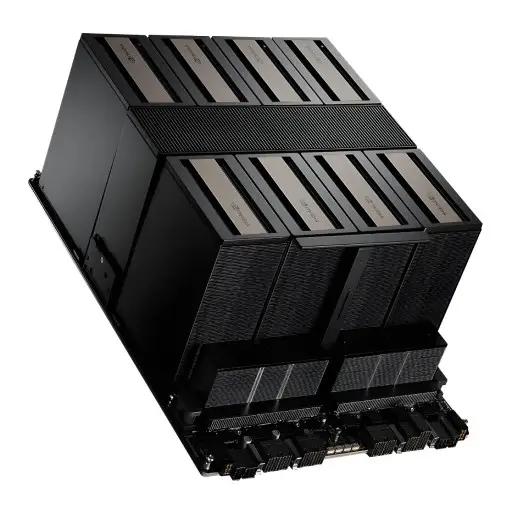
NVIDIA B200 vs H200
In 2024, the NVIDIA Hopper H100 and NVIDIA H200 Tensor Core GPUs established themselves as the industry standard for training Large Language Models (LLMs). However, looking toward 2025, the conversation in high-performance computing (HPC) circles is dominated by the strategic migration to the Blackwell B200. This guide provides a comprehensive technical analysis of the NVIDIA B200 vs H200, focusing on the architectural breakthroughs, performance implications, and the critical infrastructure upgrades required for deployment, with specific insights into the UAE market.
Key Architectural Differences NVIDIA B200 vs H200 : FP4 Precision and the Second-Generation Transformer Engine
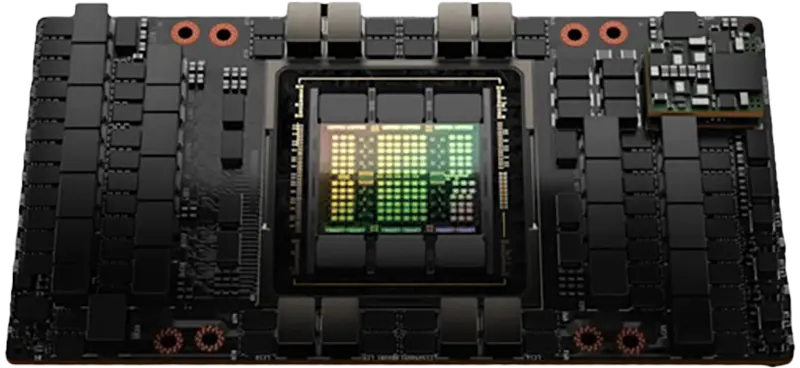
The transition from Hopper to Blackwell is defined not merely by transistor count, but by how the architecture handles precision and scaling. While the H200 was a significant memory upgrade over the H100 (introducing HBM3e), the B200 introduces entirely new compute paradigms.

The Power of FP4 Precision
The most transformative feature of the Blackwell GPU architecture is the introduction of 4-bit floating-point (FP4) precision capabilities. Historically, AI models relied heavily on FP16, BF16, or FP8 precisions. By enabling FP4, NVIDIA effectively doubles the throughput of tensor operations compared to FP8, without significant degradation in model accuracy for inference tasks. This allows the B200 to process twice the amount of data per clock cycle for specific workloads compared to the Hopper generation, which bottoms out at FP8 precision.
Second-Generation Transformer Engine
Blackwell integrates a Second-Generation Transformer Engine that automatically adapts to the optimal precision (down to FP4) for each layer of a neural network during processing. This dynamic scaling is critical for Mixture-of-Experts (MoE) models, which are becoming the standard for frontier LLMs like GPT-4 and Gemini. The engine allows for larger models to reside in memory while computing faster, directly addressing the bottleneck of memory bandwidth versus compute capacity.
Technical Specifications Comparison NVIDIA B200 vs H200
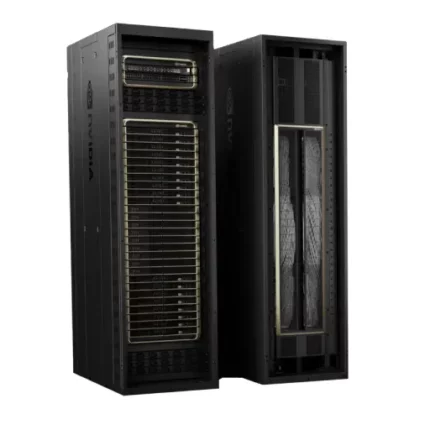
The following table outlines the core technical differences between the flagship Hopper and Blackwell GPUs.
| Specification | NVIDIA H200 (Hopper) | NVIDIA B200 (Blackwell) |
|---|---|---|
| Architecture | Hopper | Blackwell |
| GPU Memory | 141GB HBM3e | 180GB HBM3e |
| Memory Bandwidth | 4.8 TB/s | 8.0 TB/s |
| Precision Support | FP64, FP32, FP16, FP8 | FP64, FP32, FP16, FP8, FP4 |
| Max Thermal Design Power (TDP) | 700W | 1000W |
| Transistor Count | 80 Billion | 208 Billion (Dual-Die) |
| Interconnect (NVLink) | 900 GB/s | 1.8 TB/s |
The increase in memory bandwidth to 8.0 TB/s in the B200 is particularly vital for GPU cluster design, as it reduces the latency penalty when GPUs need to exchange data across large clusters.
Performance Benchmarks: Why B200 is 15x Faster for LLM Inference
Marketing claims often highlight theoretical peak performance, but real-world benchmarks reveal the true value of an AI infrastructure upgrade. NVIDIA claims the B200 offers up to 30x the inference performance of the H100 in specific scenarios, but a more conservative and widely accepted metric for general LLM inference sits around 15x compared to the Hopper generation, particularly for MoE models.
Understanding the 15x Leap
The 15x performance gain is not linear across all tasks. It is specifically realized in massive parameter models (e.g., 1.8 Trillion parameters) where the combination of:
- FP4 Tensor Cores: Processing data at double the density.
- NVLink Switch Chip: Enabling 576 GPUs to communicate as a single unified GPU.
- High-Bandwidth Memory: The 180GB HBM3e memory allows larger batches and reduces the need to swap data in and out of GPU memory.
For training workloads, the gain is typically around 3x-4x compared to H200, which is still a massive generational leap, reducing training time for a GPT-MoE-1.8T model from months to weeks.
MLPerf and Industry Data
Early industry benchmarks and projected MLPerf results suggest that while H200 remains a powerhouse for models in the 70B-175B parameter range, the B200 becomes economically essential for models exceeding 500B parameters. The total cost of ownership (TCO) shifts dramatically; running a trillion-parameter model inference on H200 requires significantly more racks and power than achieving the same throughput on B200.
Power and Cooling Requirements: Is Your Data Center Ready for Blackwell?
With great power comes great power consumption. One of the most critical considerations for CTOs planning a migration is the power envelope. The NVIDIA H200 has a TDP of 700W, which is already pushing the limits of traditional air-cooled racks. The NVIDIA B200, however, steps up to a massive 1000W TDP per GPU.
The Liquid Cooling Imperative
While air-cooled versions of the B200 exist, the density required to realize the full potential of Blackwell makes liquid cooling widely regarded as a necessity rather than an option. Traditional raised-floor air cooling cannot efficiently dissipate the heat generated by a dense B200 cluster without running fans at varying speeds that cause vibration issues affecting drive performance and increasing failure rates.
For data centers in the UAE, where ambient temperatures are higher, efficiency is paramount. Infrastructure managers must evaluate:
- Direct-to-Chip Liquid Cooling: Moving coolant directly to the GPU cold plates.
- Rear-Door Heat Exchangers: Assisting air-cooled racks with high-density heat removal.
- Rack Density: Moving from 20-30kW racks to 60kW-100kW rack designs.
Planning this physical infrastructure is as complex as the computational architecture itself. For a deep dive into networking and storage alignment, refer to our guide on AI Infrastructure: Networking, Storage & Data Center Solutions.
Availability and Lead Times in the UAE Market for 2025
The UAE, particularly Dubai, has positioned itself as a global hub for AI innovation. However, acquiring cutting-edge hardware involves navigating global supply chain allocations. The NVIDIA B200 Dubai Price and availability are heavily influenced by these global constraints.
Pricing Insights (Estimated 2025)
While official pricing fluctuates based on OEM configurations and support contracts, current market intelligence suggests the following price bands for the UAE market in 2025:
| Product | Estimated Unit Price (USD) | Availability Status |
|---|---|---|
| NVIDIA H200 SXM/PCIe | $30,000 – $35,000 | High Availability / Short Lead Times |
| NVIDIA B200 | $45,000 – $50,000 | Allocation Only (Q1-Q2 2025 Lead Times) |
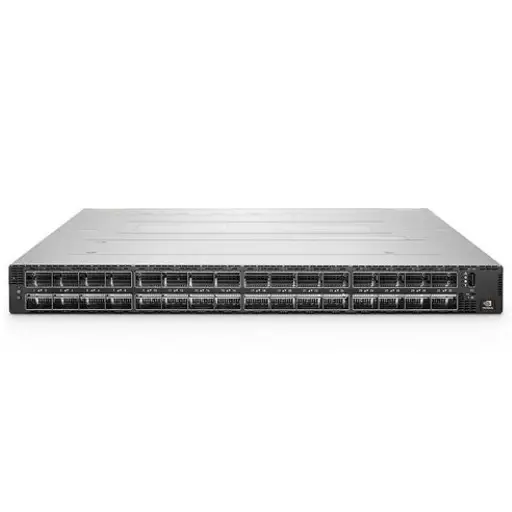
Organizations wishing to deploy B200 in early 2025 are likely already in queue. For those without pre-orders, the H200 remains a highly viable, available alternative that offers massive performance improvements over the H100 and A100 generations. It is also important to consider the networking costs; B200 clusters generally require Quantum-2 or Quantum-X800 InfiniBand networking to prevent bottlenecks. You can check current networking components such as the NVIDIA Quantum-2 QM9790 to estimate total cluster costs.
Strategic Migration Recommendation
For most enterprises in the Middle East, a hybrid approach is recommended for 2025:
- Stick with H200 if: Your primary workload is fine-tuning existing models (70B parameters or less) or if your data center is strictly air-cooled. The H200’s HBM3e memory provides ample headroom for these tasks.
- Migrate to B200 if: You are training foundation models from scratch, running massive-scale inference services where tokens-per-second is a key revenue metric, and you have liquid-ready infrastructure.
FAQ Section
Conclusion
The choice between upgrading to NVIDIA H200 or waiting for B200 depends on your infrastructure readiness and specific AI workload requirements. The B200 offers a generational leap in inference efficiency and power density, but requires significant facility upgrades. The H200 offers a more immediate, accessible path to high-performance memory bandwidth. For detailed consultation on designing your next GPU cluster, visit our GPU Cluster Design Guide.
References:
1. NVIDIA Blackwell Architecture Technical Whitepapers.
2. MLPerf Inference Benchmark Results (v4.0/v5.0 projections).
3. ITCT Shop Market Intelligence 2026.
“While the theoretical performance of the Blackwell architecture is enticing, the 1000W per GPU power draw is a hard reality check. We advise clients to only move to B200 if they have already validated their facility for direct-to-chip liquid cooling or high-density rear-door heat exchangers.” — Data Center Facility Lead
“For models exceeding the trillion-parameter mark, the FP4 precision in the B200 isn’t just a feature; it is an economic necessity. It allows us to double throughput density, which drastically lowers the total cost of ownership per token generated, despite the higher upfront hardware cost.” — Principal AI Architect
“In the local market, we are seeing a clear bifurcation. Hyperscalers are queuing for B200 allocations, but 80% of enterprise clients are opting for H200 clusters. The H200 provides the necessary memory bandwidth for current generation models without the logistical delay of global supply shortages.” — Senior Procurement Specialist
Last update at December 2025