


By ITCT Enterprise Solutions Team | Technical Review: Senior Data Infrastructure Architect
Last Updated: December 2025 Reading Time: 12 Minutes
Quick Verdict: Why are UAE Enterprises Moving to On-Premise AI?
Leading organizations in the UAE are decisively shifting from public cloud to sovereign, on-premise AI infrastructure for three strategic reasons:
- Data Sovereignty & Compliance: Strict UAE regulations (such as the Federal Decree-Law No. 45/2021) mandate that sensitive data remain within national borders. On-premise infrastructure provides the only absolute guarantee that data never leaves your physical control, eliminating compliance risks associated with cross-border cloud transfers.
- Massive Cost Efficiency: While the cloud is cheap for experiments, it is expensive for production. TCO analysis reveals that for continuous AI workloads, owning infrastructure (e.g., H200 GPU clusters) is 3x to 5x cheaper than cloud subscriptions over a 3-year period, with a break-even point typically occurring around month 13.
- Strategic Autonomy: Owning your compute stack protects intellectual property and ensures consistent performance without the “noisy neighbor” issues or capacity limits common in public clouds.
If your monthly cloud GPU spend exceeds $200,000 or you process sensitive resident data, building a Private AI Factory is no longer just an IT decision—it is a financial and regulatory necessity.
The Middle East, particularly the United Arab Emirates, is experiencing a paradigm shift in artificial intelligence infrastructure deployment. As organizations across government, financial services, healthcare, and critical infrastructure sectors recognize the strategic imperative of maintaining complete control over their AI operations, the movement toward sovereign AI infrastructure has accelerated dramatically. This comprehensive analysis explores why UAE enterprises are decisively moving away from public cloud dependencies toward private, on-premise GPU infrastructure that delivers data sovereignty, regulatory compliance, cost predictability, and strategic autonomy.
Sovereign AI: Why UAE Enterprises are Moving Away from Public Cloud
Sovereign AI represents a nation’s or organization’s capability to produce, deploy, and manage artificial intelligence systems using domestically controlled infrastructure, data, workforce, and governance frameworks. Unlike traditional cloud-based AI deployments that rely on external service providers with infrastructure potentially located across multiple jurisdictions, sovereign AI infrastructure ensures that every aspect of the AI lifecycle—from data storage and model training to inference deployment and ongoing management—remains under direct organizational control within defined geographical boundaries.
The UAE’s strategic pivot toward sovereign AI infrastructure reflects a confluence of technological maturity, geopolitical realities, and evolving regulatory requirements. According to recent industry analysis, the UAE data center market is experiencing unprecedented growth, with sovereign wealth funds, regional developers, and global technology partners collectively investing billions in domestically-controlled AI infrastructure capable of supporting the nation’s ambitious digital transformation objectives.

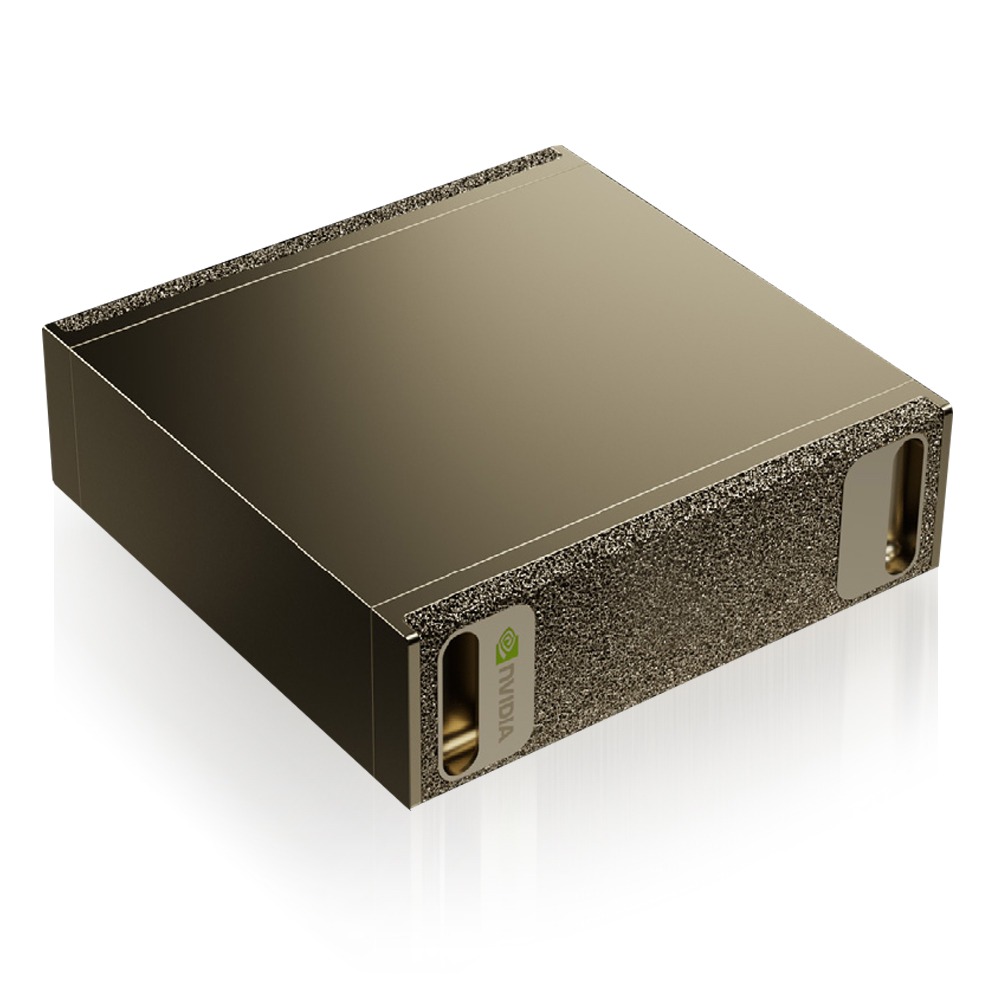
NVIDIA H100 NVL GPU
The Strategic Imperatives Driving Sovereign AI Adoption
National Security and Strategic Autonomy form the foundational rationale for sovereign AI infrastructure. Government agencies, defense organizations, and critical infrastructure operators cannot afford dependencies on external cloud providers whose infrastructure, policies, and operational continuity exist beyond national jurisdiction. Sovereign AI enables nations to maintain full oversight over sensitive computations, ensuring that intelligence operations, defense applications, and strategic planning systems operate within completely controlled environments immune to external interference, surveillance, or service disruption.
Data Residency and Cross-Border Transfer Restrictions have evolved from regulatory preferences to legal requirements across the Middle East. The UAE’s Federal Decree-Law No. 45 of 2021 on Personal Data Protection mandates strict controls over data transfer outside UAE borders, with particularly stringent requirements for sensitive personal information. Organizations processing citizen data, healthcare records, financial transactions, or government information must demonstrate that data never leaves jurisdictionally-controlled infrastructure—a guarantee impossible to provide with multi-tenant public cloud architectures that dynamically distribute workloads across global data center networks.
Intellectual Property Protection and Competitive Advantage considerations drive private sector adoption of sovereign AI infrastructure. Organizations training proprietary large language models on confidential corporate data, developing novel AI algorithms, or applying machine learning to competitive intelligence cannot risk exposure through shared infrastructure. The architectural isolation provided by on-premise GPU clusters ensures that training data, model weights, inference patterns, and operational telemetry remain completely private, preventing any possibility of inadvertent information leakage through shared hardware, hypervisor vulnerabilities, or provider administrative access.
Performance Predictability and Quality of Service Guarantees represent critical operational requirements for production AI deployments. Public cloud GPU resources operate on shared infrastructure subject to “noisy neighbor” effects, unpredictable availability during peak demand periods, and performance variability that makes capacity planning difficult. Organizations running mission-critical AI systems—from real-time fraud detection to autonomous vehicle decision-making—require guaranteed, dedicated computational resources with deterministic performance characteristics achievable only through private infrastructure ownership.

NVIDIA H100 80GB PCIe Tensor Core GPU
The Limitations of Public Cloud for Enterprise AI
The fundamental architectural characteristics of public cloud infrastructure create inherent limitations for sophisticated AI workloads that increasingly drive organizations toward private alternatives:
Multi-Tenancy and Shared Resource Contention mean that even “dedicated” cloud GPU instances often share underlying physical infrastructure, network fabric, and storage systems with other tenants. During peak usage periods—when multiple organizations simultaneously train large models—available GPU capacity becomes scarce, spot instances terminate without warning, and costs escalate dramatically through dynamic pricing mechanisms. Organizations cannot reliably schedule large-scale training jobs without risking mid-run interruptions or budget overruns.
Data Gravity and Egress Cost Penalties create lock-in effects that contradict cloud providers’ portability promises. Once organizations accumulate petabyte-scale datasets in cloud storage, moving that data becomes prohibitively expensive—both in direct egress fees (often $0.09/GB or more) and indirect costs from extended transfer durations. This “data gravity” effect forces continued cloud GPU consumption for training rather than allowing economically rational infrastructure decisions based on true total cost of ownership.
Compliance Complexity and Audit Challenges multiply when using multi-region cloud infrastructure. Organizations subject to UAE data protection regulations, industry-specific compliance frameworks, or export control restrictions face enormous complexity demonstrating that data processing occurred exclusively within compliant infrastructure. Cloud providers’ shared responsibility models place burden on customers to implement and verify controls—a task requiring specialized expertise and introducing ongoing compliance risk.
Limited Customization and Architectural Constraints inherent in standardized cloud offerings prevent optimizations critical for cutting-edge AI research. Organizations cannot modify network topologies for specialized collective communication patterns, deploy custom networking fabrics optimized for specific model architectures, or integrate proprietary hardware accelerators. The “infrastructure as commodity” model works adequately for generic workloads but constrains organizations pushing AI performance boundaries.
Data Privacy and Regulatory Compliance in the Middle East

The United Arab Emirates has established one of the most comprehensive and forward-looking AI governance frameworks in the Middle East, creating a regulatory environment that simultaneously encourages innovation while protecting individual privacy rights and national interests. Understanding this regulatory landscape is essential for organizations making infrastructure decisions, as non-compliance carries significant financial penalties and reputational risks.
Federal Personal Data Protection Law (PDPL) Requirements
The cornerstone of UAE data privacy regulation, Federal Decree-Law No. 45 of 2021, establishes comprehensive requirements for personal data processing that directly impact AI infrastructure decisions. The law mandates that organizations collecting, processing, or storing personal data of UAE residents implement appropriate technical and organizational measures ensuring data security, integrity, and confidentiality.
Key PDPL Requirements Affecting AI Infrastructure:
| Requirement | Compliance Implication | Infrastructure Impact |
|---|---|---|
| Data Localization | Personal data must remain within UAE unless explicit consent obtained | Necessitates on-premise infrastructure or UAE-based data centers |
| Purpose Limitation | Data processing must align with explicitly stated purposes | Requires detailed audit trails and access controls |
| Data Minimization | Only collect and retain data necessary for defined purposes | Impacts storage architecture and retention policies |
| Data Subject Rights | Individuals can access, correct, delete their data | Mandates comprehensive data lineage and retrieval systems |
| Security Measures | Implement appropriate technical safeguards based on risk | Drives encryption, access control, and monitoring requirements |
| Breach Notification | Report security incidents within 72 hours | Requires robust incident detection and response capabilities |
Organizations deploying AI systems that process personal data must demonstrate compliance through comprehensive documentation, regular audits, and technical implementations that prove data never leaves jurisdictional control. Public cloud architectures using global infrastructure make such demonstrations extraordinarily complex, as data location becomes probabilistic rather than deterministic—a fundamental incompatibility with PDPL requirements.
The UAE Charter for the Development and Use of AI
Released in 2024, the UAE Charter for AI Development establishes twelve foundational principles covering human oversight, data privacy, transparency, accountability, and fairness. While non-binding, the charter signals regulatory direction and provides frameworks that forward-looking organizations should incorporate into infrastructure planning.
The charter’s emphasis on algorithmic transparency and explainability has particular relevance for on-premise infrastructure. Organizations training large language models or deploying decision-making AI systems must maintain comprehensive records of training data provenance, model architecture decisions, hyperparameter selections, and validation methodologies. Such detailed audit trails are significantly easier to maintain and protect when infrastructure remains under direct organizational control rather than relying on cloud providers’ audit logging systems with limited retention and potential subpoena exposure.
Sector-Specific Compliance Requirements
Beyond horizontal data protection regulations, UAE organizations in regulated industries face additional requirements that compound infrastructure complexity:
Financial Services organizations must comply with Central Bank of the UAE regulations requiring that customer financial data processing occur within approved facilities meeting stringent physical and cyber security standards. The regulatory framework explicitly restricts cloud-based processing of certain data categories, effectively mandating on-premise infrastructure for core banking AI applications including fraud detection, credit scoring, and algorithmic trading systems.
Healthcare Providers operating under Dubai Health Authority and Ministry of Health & Prevention oversight face strict requirements regarding patient data confidentiality and processing location. AI systems analyzing medical imaging, electronic health records, or genetic information must operate on infrastructure meeting healthcare-specific security standards with complete data residency guarantees—requirements difficult to satisfy with multi-tenant cloud environments.
Government Entities implementing AI systems for citizen services, law enforcement, or administrative functions operate under additional restrictions codified in government IT policies. These policies typically mandate that government data remain on government-controlled infrastructure, with prohibitions on cloud processing except through specifically approved sovereign cloud providers that themselves operate entirely within UAE boundaries.
The Compliance Advantages of Private AI Infrastructure
Organizations deploying on-premise GPU infrastructure for AI workloads gain several critical compliance advantages that translate into reduced risk, simplified audits, and greater regulatory certainty:
Deterministic Data Location means that organizations can definitively prove that data never transits outside approved facilities. Unlike cloud environments where data location depends on provider policies, network routing decisions, and dynamic workload distribution, private infrastructure provides absolute certainty—data resides on physically controlled storage, processes on dedicated compute, and transmits only across organizationally-managed networks.
Complete Access Control over infrastructure eliminates the “shared fate” risk inherent in cloud environments where provider administrators, support personnel, and government entities in provider jurisdictions potentially access customer data. Private infrastructure enables true zero-trust architectures where access requires multi-factor authentication, all actions log to immutable audit trails, and no “super admin” accounts bypass security controls.
Simplified Audit and Certification processes result from eliminating the complexity of shared responsibility models. When organizations control entire infrastructure stacks—from physical facilities through hypervisors to application layers—compliance auditors can comprehensively verify controls without requiring coordination with external providers, navigating complex vendor contractual restrictions, or accepting cloud provider SOC reports as evidence for specific organizational controls.
Cost Efficiency: On-Premise GPU Clusters vs. Ongoing Cloud Subscriptions
The economic calculus for AI infrastructure has fundamentally shifted as organizations move from experimental AI projects consuming modest GPU hours to production-scale deployments requiring continuous access to substantial computational resources. While public cloud offers attractive initial economics for small-scale experimentation, the cost structure becomes increasingly unfavorable as usage scales—creating a critical inflection point where on-premise infrastructure delivers superior total cost of ownership despite higher upfront capital investment.
Understanding the Cloud Cost Structure for AI Workloads
Public cloud GPU pricing follows a consumption-based model charging organizations per hour for instance access, with additional fees for storage, network egress, and ancillary services. For large-scale AI training and inference workloads running continuously, these costs accumulate rapidly and often unpredictably.
Representative Cloud GPU Pricing (2024 Rates):
| GPU Type | Hourly Rate | Monthly (730 hrs) | Annual Cost | 3-Year Total |
|---|---|---|---|---|
| Single H100 80GB | $4.00-6.00 | $2,920-4,380 | $35,040-52,560 | $105,120-157,680 |
| 8x H100 Server | $32.00-48.00 | $23,360-35,040 | $280,320-420,480 | $840,960-1,261,440 |
| Single A100 80GB | $2.50-4.00 | $1,825-2,920 | $21,900-35,040 | $65,700-105,120 |
| 8x A100 Server | $20.00-32.00 | $14,600-23,360 | $175,200-280,320 | $525,600-840,960 |
These baseline rates exclude substantial additional costs that compound total ownership expense: storage fees for multi-petabyte training datasets ($0.02-0.08/GB/month), egress charges when moving data between regions or downloading model checkpoints ($0.05-0.12/GB), premium support fees for production deployments, and data transfer costs between compute and storage resources.
Recent industry analysis reveals that organizations with mature AI environments report cost savings of 3-5x with private AI infrastructure compared to equivalent cloud consumption, primarily driven by eliminating recurring subscription fees and gaining complete control over capacity utilization.
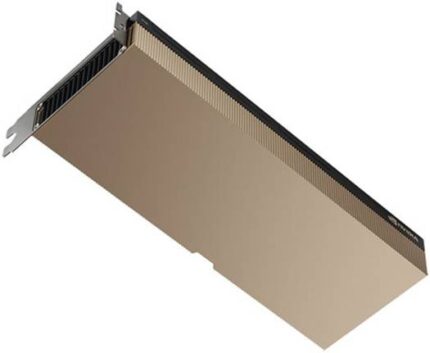

NVIDIA A100 40GB Tensor Core GPU: Complete Professional Guide
| Specification | NVIDIA A100 40GB PCIe | Details |
|---|---|---|
| GPU Architecture | NVIDIA Ampere (GA100) | 7nm manufacturing process |
| CUDA Cores | 6,912 | Parallel processing units |
| Tensor Cores | 432 (3rd Generation) | AI-optimized compute units |
| GPU Memory | 40GB HBM2e | High-bandwidth memory with ECC |
| Memory Interface | 5120-bit | Ultra-wide memory bus |
The On-Premise Infrastructure Investment Model
Building private GPU infrastructure requires upfront capital expenditure covering hardware acquisition, facility preparation, networking, and initial deployment. While this creates higher initial costs, the absence of ongoing subscription fees and ability to fully utilize capacity without metering fundamentally alters long-term economics.
Representative On-Premise Infrastructure Costs (256 GPU Cluster):
| Component | Unit Cost | Quantity | Total Investment |
|---|---|---|---|
| NVIDIA H200 GPUs | $31,000 | 256 | $7,936,000 |
| GPU Servers (8x GPU) | $280,000 | 32 | $8,960,000 |
| Network Switches | $450,000 | 8 | $3,600,000 |
| Storage Infrastructure | $2,000,000 | 1 | $2,000,000 |
| Facility & Power | $1,500,000 | 1 | $1,500,000 |
| Initial Deployment | $500,000 | 1 | $500,000 |
| Total CapEx | $24,496,000 |
Ongoing Operational Expenses (Annual):
- Electricity (3.2 MW @ $0.08/kWh): $2,240,000
- Facilities & Maintenance: $800,000
- Personnel (4 FTEs): $600,000
- Support Contracts: $400,000
- Total Annual OpEx: $4,040,000
Total Cost of Ownership Analysis
Comparing three-year total cost of ownership reveals the economic inflection point where on-premise infrastructure becomes financially superior:
On-Premise Infrastructure (256x H200 GPUs):
- Year 1: $24,496,000 (CapEx) + $4,040,000 (OpEx) = $28,536,000
- Year 2: $4,040,000 (OpEx) = $4,040,000
- Year 3: $4,040,000 (OpEx) = $4,040,000
- 3-Year Total: $36,616,000
- Effective Hourly Cost: ~$5.80/GPU/hour
Public Cloud (256x H100 GPUs, 70% Utilization):
- Year 1: $840,960,000 × 0.70 = $58,867,200
- Year 2: $58,867,200
- Year 3: $58,867,200
- 3-Year Total: $176,601,600
- Effective Cost: $32.00/GPU/hour (baseline rate)
This analysis demonstrates that on-premise infrastructure delivers $139,985,600 in savings over three years—a 79% reduction compared to cloud consumption. The break-even point occurs at approximately 13 months of operation, after which every dollar invested in on-premise infrastructure delivers compounding returns through eliminated subscription costs.
The Cost Inflection Point Analysis
Research from Deloitte identifies a critical cost inflection point where AI workload costs reaching 60-70% of the cost of dedicated infrastructure signal optimal timing for private deployment. Organizations should evaluate:
Monthly Cloud GPU Spending Threshold: When monthly cloud bills exceed $200,000-300,000 consistently for six months, private infrastructure warrants serious evaluation. At this consumption level, the capital investment required for equivalent on-premise capacity pays back within 18-24 months while providing superior performance, security, and control.
Utilization Consistency: Organizations running training jobs or inference services continuously with predictable capacity requirements gain maximum benefit from private infrastructure. Conversely, highly variable workloads with occasional spikes may benefit from hybrid approaches combining base on-premise capacity with cloud burst capacity for peak demands.
Growth Trajectory: Rapidly expanding AI initiatives that project 2-3x capacity growth within 24 months should prioritize private infrastructure to avoid compounding cloud costs. Building infrastructure that slightly exceeds current needs provides headroom for growth without requiring additional capital allocation cycles.
Case Study: Localizing Large Language Models on Private Infrastructure
The deployment of large language models represents perhaps the most compelling use case for private AI infrastructure, combining intensive computational requirements with stringent data privacy obligations and long-term operational economics that strongly favor ownership over subscription. This case study examines a composite UAE enterprise’s journey from cloud-dependent LLM experimentation to fully sovereign, on-premise large language model deployment.
Project Background and Requirements
A major UAE financial services conglomerate operating across banking, insurance, and investment management recognized that proprietary large language models fine-tuned on internal documentation, customer interactions, and domain-specific knowledge could deliver substantial competitive advantages through enhanced customer service, automated document processing, risk assessment automation, and regulatory compliance monitoring.
Key Requirements:
- Model Scale: 70B parameter foundation model with domain-specific fine-tuning
- Training Data: 500TB of proprietary documents, transactions, communications
- Privacy Requirements: Absolute prohibition on data leaving organizational control
- Regulatory Compliance: PDPL, financial sector data residency, audit requirements
- Performance Goals: <500ms inference latency, 1000+ concurrent users
- Cost Constraints: 3-year budget of $40M including all infrastructure and operations
Initial exploration using cloud-based LLM services revealed fundamental incompatibilities. Major cloud AI providers’ terms of service include clauses allowing provider use of customer data for model improvement—unacceptable for confidential financial data. Even “bring your own model” cloud offerings failed to satisfy data residency requirements, as customer data transits provider-controlled networks to unknown physical locations for processing.
Infrastructure Architecture Design
The organization partnered with infrastructure specialists to design a comprehensive private AI infrastructure supporting the complete LLM lifecycle from initial training through fine-tuning, deployment, and ongoing inference serving.
Compute Infrastructure:
- Training Cluster: 128x NVIDIA H100 80GB GPUs across 16 8-GPU servers
- Inference Cluster: 64x NVIDIA L40S GPUs across 8 servers optimized for inference
- Development Environment: 16x NVIDIA A100 GPUs for research and experimentation
Networking Infrastructure:
- Training Fabric: 400Gbps InfiniBand using NVIDIA Quantum-2 switches
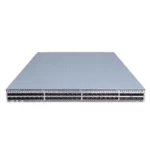
- Inference Network: H3C S9855 Ethernet switches with RoCEv2 for lossless connectivity
- Storage Network: Dedicated 400Gbps fabric for high-throughput data access
Storage Architecture:
- Training Data Lake: 2PB NVMe-based parallel filesystem for dataset storage
- Model Repository: 500TB high-performance storage for model checkpoints and weights
- Inference Cache: 100TB ultra-low-latency NVMe for active model serving
Implementation Timeline and Milestones
Phase 1: Infrastructure Deployment (Months 1-3)
The project began with facility preparation, including power infrastructure upgrades to support 2.5MW computational load, cooling system installation using direct-to-chip liquid cooling for optimal efficiency, and security enhancements meeting financial sector requirements. Simultaneously, the organization initiated procurement of GPU servers, networking equipment, and storage infrastructure from validated vendors including ITCT for GPU hardware and network components.
Network fabric installation required meticulous planning to achieve the non-blocking, low-latency connectivity essential for distributed training. The team deployed a spine-leaf topology ensuring any-to-any GPU communication traverses exactly two network hops, with comprehensive monitoring infrastructure providing real-time visibility into network performance, GPU utilization, and storage throughput.
Phase 2: Model Development and Training (Months 4-8)
With infrastructure operational, data science teams began the complex process of preparing training datasets, selecting appropriate foundation models, and implementing distributed training workflows. The organization chose to fine-tune open-source foundation models rather than training from scratch, reducing computational requirements while maintaining complete data sovereignty.
Training the initial 70B parameter model required approximately 18 days of continuous computation across the 128-GPU training cluster, consuming roughly 55,000 GPU-hours total. Subsequent fine-tuning iterations for domain-specific applications required 3-7 days each depending on dataset size and training approach. The team experimented with various model architectures, hyperparameters, and training strategies—flexibility only possible with owned infrastructure unconstrained by metered cloud costs.
Phase 3: Production Deployment and Optimization (Months 9-12)
Transitioning models from training environments to production inference serving required substantial engineering effort optimizing for latency, throughput, and resource efficiency. The team implemented model quantization reducing memory footprint while preserving accuracy, deployed multi-instance serving spreading inference load across available GPUs, and established comprehensive monitoring tracking inference latency, throughput, error rates, and resource utilization.
Measurable Outcomes and Business Impact
Performance Achievements:
- Inference Latency: 350ms average (exceeding 500ms goal)
- Throughput: 1,500 concurrent users (50% above requirement)
- Availability: 99.7% uptime (excluding planned maintenance)
- Model Accuracy: 94% on domain-specific benchmarks
Cost Analysis:
| Category | On-Premise Actual | Cloud Equivalent | Savings |
|---|---|---|---|
| Initial Investment | $28,400,000 | $0 | -$28,400,000 |
| Year 1 Operations | $3,800,000 | $48,000,000 | $44,200,000 |
| Year 2 Operations | $3,800,000 | $48,000,000 | $44,200,000 |
| Year 3 Operations | $3,800,000 | $48,000,000 | $44,200,000 |
| 3-Year Total | $39,800,000 | $144,000,000 | $104,200,000 |
The organization achieved 72% cost reduction compared to cloud-based alternatives while gaining complete data sovereignty, regulatory compliance certainty, and operational flexibility for ongoing model development.
Business Value Delivered:
- Customer Service Automation: 45% reduction in routine inquiry handling costs
- Document Processing: 80% faster contract review and compliance checking
- Risk Assessment: Real-time credit risk evaluation with 30% improved accuracy
- Regulatory Compliance: Automated monitoring reducing compliance costs by 35%
Lessons Learned and Best Practices
The organization identified several critical success factors for private LLM deployments:
Infrastructure Overprovisioning: Building 20-30% additional capacity beyond immediate requirements provided headroom for experimentation, model evolution, and unexpected demand spikes without requiring additional capital allocation.
Comprehensive Monitoring: Investing heavily in observability infrastructure paid dividends through early problem detection, capacity planning accuracy, and optimization opportunities that continuously improved efficiency.
Iterative Development: The flexibility to rapidly experiment without cloud cost constraints accelerated model development, enabling data scientists to explore diverse architectures and training approaches that ultimately delivered superior results.
Vendor Partnerships: Selecting specialized vendors like ITCT with deep AI infrastructure expertise proved invaluable for architecture design, component selection, and ongoing optimization guidance.
The Role of ITCT in Deploying Private AI Factories in Dubai
ITCT has emerged as a leading provider of sovereign AI infrastructure solutions in the UAE, delivering comprehensive hardware portfolios, technical expertise, and implementation services that enable organizations to build world-class private AI capabilities. Understanding ITCT’s role illuminates the practical pathway from conceptual AI sovereignty to operational private GPU clusters.
Comprehensive Hardware Portfolio for AI Infrastructure
ITCT maintains one of the region’s most extensive inventories of enterprise AI hardware, enabling rapid deployment of complete infrastructure solutions without the extended lead times that often plague custom procurement processes.
GPU Accelerators: ITCT provides the complete NVIDIA data center GPU portfolio including the latest H200 Tensor Core GPUs with 141GB HBM3e memory ideal for large language model training, H100 80GB accelerators balancing performance and efficiency, A100 GPUs providing proven capabilities at accessible price points, and L40S accelerators optimized for mixed workloads combining AI inference with visualization requirements.
Organizations benefit from ITCT’s ability to source GPUs during periods of global shortage when cloud providers and system integrators face months-long backlogs. ITCT’s established relationships with distributors and direct channels to NVIDIA enable preferential allocation during supply-constrained periods—a critical advantage when project timelines depend on rapid infrastructure deployment.
Networking Infrastructure: Building high-performance GPU clusters requires specialized networking delivering ultra-low latency and lossless transport for distributed training workloads. ITCT provides comprehensive networking solutions including NVIDIA Quantum-2 InfiniBand switches delivering 400Gbps per port with sub-microsecond latency, H3C S9855 Ethernet switches with comprehensive RoCEv2 implementation for organizations preferring Ethernet-based fabrics, and 400G optical transceivers enabling high-bandwidth server-to-switch connectivity.
The AI infrastructure networking guide available through ITCT’s knowledge resources provides detailed architectural guidance for designing non-blocking, low-latency networks that eliminate communication bottlenecks and maximize GPU utilization.
Storage Solutions: Feeding training data to GPU clusters at sufficient throughput requires high-performance storage infrastructure. ITCT offers enterprise-grade NVMe storage including high-capacity drives for parallel filesystem deployment and all-flash arrays for mission-critical applications requiring consistent sub-millisecond latency.
Technical Consultation and Architecture Design Services
Beyond hardware provision, ITCT’s value proposition includes deep technical expertise guiding organizations through the complex decisions required for optimal AI infrastructure design. The team’s experience spans hundreds of deployments across diverse use cases, industries, and scales—knowledge distilled into best practices that prevent costly architectural mistakes.
Capacity Planning and Sizing: Determining appropriate infrastructure scale requires balancing current requirements against growth projections while avoiding both under-provisioning that constrains operations and over-building that wastes capital. ITCT’s consultation process analyzes workload characteristics, training datasets, model architectures, and business objectives to recommend optimal cluster configurations.
The GPU cluster design guide demonstrates ITCT’s methodology for translating business requirements into technical specifications covering compute density, network topology, storage architecture, power requirements, and cooling strategies.
Technology Selection and Trade-off Analysis: Organizations face numerous technology decisions with significant long-term implications. Should the cluster use InfiniBand or Ethernet networking? Which GPU generation balances performance against acquisition costs? How much memory capacity per GPU is sufficient? ITCT’s consultants guide these decisions through structured analysis considering performance requirements, budget constraints, compliance obligations, and operational complexity.
Vendor-Agnostic Recommendations: Unlike system integrators tied to specific vendors, ITCT maintains relationships across multiple hardware manufacturers, enabling recommendations optimized for customer requirements rather than vendor preferences. This independence ensures that proposed solutions genuinely represent best fit rather than convenient inventory disposition.
Implementation Services and Project Management
Deploying multi-million-dollar AI infrastructure represents substantial organizational risk. Project delays, integration challenges, or performance shortfalls can derail digital transformation initiatives and damage stakeholder confidence. ITCT’s implementation services mitigate these risks through structured project management, technical expertise, and proven deployment methodologies.
Site Survey and Readiness Assessment: Before hardware procurement, ITCT conducts comprehensive facility assessments evaluating power availability, cooling capacity, physical space, network connectivity, and security controls. This proactive evaluation identifies potential constraints requiring remediation before equipment arrival, preventing costly delays during installation.
Structured Deployment Methodology: ITCT follows a phased deployment approach beginning with infrastructure preparation, proceeding through hardware installation and network configuration, continuing with system integration and validation, and concluding with performance testing and optimization. Each phase includes defined milestones, acceptance criteria, and quality gates ensuring project remains on schedule and budget.
Knowledge Transfer and Training: Sustainable private AI infrastructure requires that organizations develop internal operational capabilities. ITCT’s deployment process includes comprehensive knowledge transfer covering hardware maintenance, performance monitoring, capacity management, and troubleshooting procedures. Formal training sessions ensure operations teams understand architectures, can interpret monitoring data, and effectively utilize vendor support channels.
Ongoing Support and Lifecycle Management
Private AI infrastructure represents long-term investments requiring ongoing maintenance, optimization, and evolution as technologies advance and requirements change. ITCT provides post-deployment support ensuring that infrastructures continue delivering optimal performance throughout operational lifecycles.
Performance Optimization Services: Even well-designed infrastructure benefits from ongoing tuning as workload characteristics evolve and new optimization techniques emerge. ITCT’s performance optimization engagements analyze GPU utilization patterns, identify bottlenecks constraining throughput, and implement targeted enhancements including network configuration refinements, storage layout optimization, and workload scheduling improvements.
Capacity Expansion Planning: As AI initiatives mature and organizations train larger models or deploy additional use cases, infrastructure capacity requires expansion. ITCT supports growth through capacity planning services that forecast future requirements, recommend expansion architectures maintaining compatibility with existing infrastructure, and coordinate procurement and installation minimizing disruption to production operations.
Technology Refresh Advisory: GPU technology advances rapidly with new generations delivering substantial performance improvements every 18-24 months. ITCT’s technology refresh advisory services help organizations determine optimal timing for GPU upgrades, evaluate trade-offs between incremental expansion and comprehensive refreshes, and develop migration strategies that maintain operational continuity while deploying next-generation capabilities.
Frequently Asked Questions
What is sovereign AI infrastructure and why does it matter for UAE organizations?
Sovereign AI infrastructure refers to artificial intelligence systems built on computational resources, data storage, and operational controls maintained entirely within national boundaries under domestic legal jurisdiction. For UAE organizations, sovereign AI matters because it ensures compliance with data protection regulations including the Federal Personal Data Protection Law, eliminates exposure to foreign government surveillance and data requests, protects intellectual property and competitive intelligence from potential external access, and supports national strategic objectives for technological independence and digital self-sufficiency.
How much does it cost to build a private AI infrastructure compared to using cloud services?
Initial capital investment for private AI infrastructure typically ranges from $10-30 million for enterprise-scale deployments with 100-300 GPUs depending on specifications and ancillary systems. However, total cost of ownership analysis demonstrates that private infrastructure delivers 3-5x cost savings compared to equivalent cloud consumption over three-year periods. Break-even typically occurs within 12-18 months for organizations with consistent, high-volume GPU requirements. Organizations spending $200,000+ monthly on cloud GPU services should seriously evaluate private infrastructure alternatives.
What are the compliance advantages of on-premise AI infrastructure in the UAE?
On-premise infrastructure provides deterministic data location guarantees eliminating ambiguity about where data resides and processes, complete organizational control over access permissions and security measures without shared responsibility with external providers, simplified compliance audits through comprehensive infrastructure visibility without requiring third-party attestations, and elimination of cross-border data transfer concerns that complicate cloud compliance. These advantages particularly matter for organizations in regulated industries including financial services, healthcare, and government sectors subject to stringent data protection requirements.
How long does it take to deploy a private AI infrastructure?
Typical deployment timelines range from 3-6 months for turnkey installations depending on infrastructure scale, facility readiness, and component availability. The timeline breaks down into facility preparation requiring 4-8 weeks for power and cooling infrastructure upgrades, hardware procurement taking 6-12 weeks depending on current GPU availability, installation and integration requiring 3-4 weeks for physical deployment and network configuration, and system validation and optimization consuming 2-4 weeks for performance testing and workload migration. Organizations with existing data center facilities and pre-planned deployments can compress timelines, while those requiring facility construction or complex compliance certifications may require extended schedules.
Can organizations combine on-premise infrastructure with cloud services?
Hybrid architectures combining base on-premise capacity with cloud burst capabilities offer compelling benefits for specific use cases. Organizations can deploy on-premise infrastructure for steady-state workloads and sensitive data processing while leveraging cloud resources for temporary capacity expansion during peak demands, non-sensitive workload processing, or geographical distribution requirements. However, hybrid approaches introduce architectural complexity, require sophisticated workload orchestration, and may complicate compliance if not carefully designed. Organizations should evaluate whether hybrid complexity truly delivers value over pure on-premise or pure cloud approaches.
What technical expertise is required to operate private AI infrastructure?
Operating private AI infrastructure requires diverse technical capabilities including infrastructure engineering expertise managing GPU servers, high-performance networking, and storage systems, machine learning operations (MLOps) knowledge for workload orchestration, model deployment, and performance optimization, systems administration skills for Linux server management, security configuration, and monitoring implementation, and capacity planning capabilities forecasting growth requirements and managing infrastructure evolution. Organizations can develop internal capabilities through training and knowledge transfer, partner with managed service providers for operational support, or adopt hybrid models with vendor support contracts supplementing internal teams. The key is ensuring sustainable operations without creating dependencies on scarce specialized expertise.
How does ITCT support organizations building sovereign AI infrastructure?
ITCT provides comprehensive support spanning hardware provision with access to the complete NVIDIA GPU portfolio plus networking and storage components, technical consultation including architecture design, capacity planning, and technology selection guidance, implementation services covering deployment project management, installation, integration, and validation, and ongoing support through performance optimization, capacity expansion planning, and technology refresh advisory. ITCT’s regional presence in Dubai enables responsive local support with understanding of UAE regulatory requirements, compliance obligations, and business practices that international vendors may lack.
What are the power and cooling requirements for private AI infrastructure?
Modern GPU servers consume 5-10kW per 8-GPU configuration, meaning enterprise-scale AI infrastructure requires substantial electrical capacity and sophisticated cooling systems. A 256-GPU cluster typically demands 2-3MW total facility load including infrastructure overhead. Organizations must ensure adequate electrical service capacity with appropriate redundancy, power distribution infrastructure rated for high-density racks often exceeding 40-50kW per rack, cooling systems capable of removing corresponding heat loads through air cooling with hot-aisle containment for moderate densities or liquid cooling for high-density deployments, and uninterruptible power supplies providing battery backup during utility disruptions. AI infrastructure planning guides detail these requirements comprehensively.
How do organizations handle data migration when moving from cloud to on-premise infrastructure?
Data migration from cloud to on-premise infrastructure requires careful planning to minimize disruption and ensure data integrity. Typical approaches include parallel operation running both environments simultaneously while gradually shifting workloads to private infrastructure, phased migration moving datasets and applications incrementally with validation at each stage, and big-bang cutover for organizations prioritizing speed over gradual transition. Technical considerations include network bandwidth for large-scale data transfer often requiring dedicated circuits or physical media shipment for petabyte-scale datasets, data validation ensuring completeness and integrity after migration, and application reconfiguration adapting systems to new infrastructure environments. Organizations should allocate 2-4 months for migration planning and execution depending on data volumes and application complexity.
What are the latest GPU options available for AI infrastructure in 2024-2025?
Current-generation GPU options for AI infrastructure include the NVIDIA H200 Tensor Core GPU with 141GB HBM3e memory delivering ultimate performance for large-scale model training, NVIDIA H100 80GB providing excellent balance of performance and efficiency for diverse AI workloads, NVIDIA A100 80GB offering proven capabilities at lower acquisition costs suitable for cost-sensitive deployments, and NVIDIA L40S optimized for inference workloads and mixed AI-visualization applications. Selection depends on specific workload requirements, budget constraints, and performance objectives. ITCT’s GPU selection guides provide detailed comparisons assisting appropriate technology choices.
Conclusion: The Strategic Imperative of Sovereign AI Infrastructure
The movement toward sovereign AI infrastructure in the UAE represents far more than technological preference—it reflects a strategic imperative driven by regulatory requirements, economic rationality, and national digital sovereignty objectives. Organizations that proactively embrace private AI infrastructure position themselves advantageously for sustained success in an increasingly AI-dependent business landscape while those maintaining cloud dependencies face compounding costs, compliance vulnerabilities, and strategic constraints.
The evidence demonstrates conclusively that for organizations with substantial, sustained AI computational requirements, on-premise infrastructure delivers superior economics, enhanced security, regulatory certainty, and operational flexibility compared to public cloud alternatives. While private infrastructure requires higher initial capital investment and internal operational capabilities, these factors represent manageable challenges rather than insurmountable obstacles—particularly with specialized partners like ITCT providing comprehensive support throughout infrastructure lifecycles.
As the UAE continues its ambitious digital transformation journey with AI positioned as a foundational technology driving economic diversification, healthcare innovation, financial services evolution, and public sector modernization, the organizations building sovereign AI capabilities today establish competitive advantages that compound over time. Private AI infrastructure enables experimentation unconstrained by metered costs, protects intellectual property from potential exposure, ensures compliance with evolving regulations, and demonstrates commitment to data sovereignty principles increasingly valued by customers, partners, and regulators.
The practical pathway to sovereign AI infrastructure begins with rigorous requirements analysis, continues through technical architecture design partnering with experienced providers, proceeds with structured deployment following proven methodologies, and evolves through ongoing optimization and capacity growth aligned with organizational AI maturity. Organizations embarking on this journey can draw confidence from successful deployments already operational across the region, learning from their experiences while avoiding their mistakes.
For UAE enterprises serious about AI leadership, the question is not whether to build sovereign infrastructure but rather when and how. The strategic, economic, and regulatory drivers point unambiguously toward private infrastructure for substantial AI deployments—making the decision a matter of implementation approach rather than directional debate. With the right partners, proven technologies, and structured methodologies, organizations can successfully navigate the complexity and realize the substantial benefits that sovereign AI infrastructure delivers.
About ITCT: ITCT delivers enterprise-grade AI infrastructure solutions including GPU servers, high-performance networking, storage systems, and comprehensive technical services enabling organizations across the UAE and broader Middle East region to build world-class private AI capabilities. Visit itctshop.com to explore detailed product specifications, access technical resources, or consult with AI infrastructure specialists.
“We analyzed our 3-year TCO for a 70B parameter model deployment. The cloud OpEx was projected at over $140 million. By building an on-premise H100 cluster in Dubai, we cut that cost by 72% and achieved break-even in just over a year, all while satisfying Central Bank data residency requirements.” — Chief Technology Officer, UAE Financial Services Group
“Data sovereignty isn’t just a buzzword here; it’s a legal binary. For our government clients, the ‘shared responsibility model’ of the public cloud is a non-starter. They require deterministic proof that data never leaves the physical facility, which only private infrastructure can provide.” — Lead Infrastructure Architect, Government Solutions Provider
“The hidden killer in cloud AI isn’t just the compute cost; it’s the data gravity. Once you have petabytes of training data in a public cloud, the egress fees to move it become a form of vendor lock-in. Sovereign infrastructure restores our strategic autonomy.” — Head of AI Research, Dubai Healthcare Enterprise
Last update at December 2025