
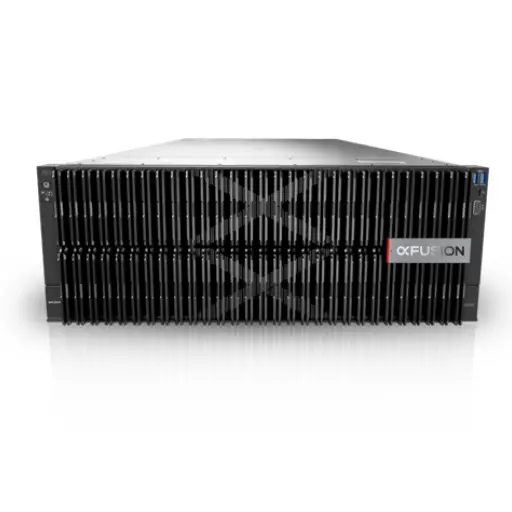
Products Mentioned in This Article

Author: ITCT Tech Editorial Unit
Reviewed By: ITCT Security & Surveillance Solutions Team
Last Updated: January 12, 2026
Reading Time: 35 minutes
References:
- ONVIF Profile S/T Standards Documentation
- NVIDIA Jetson Edge Computing Guides
- Enterprise Video Management Systems (Milestone, Genetec) Integration Manuals
- Mobile Network Operator (LTE) Bandwidth Guidelines
Quick Answer: Summary
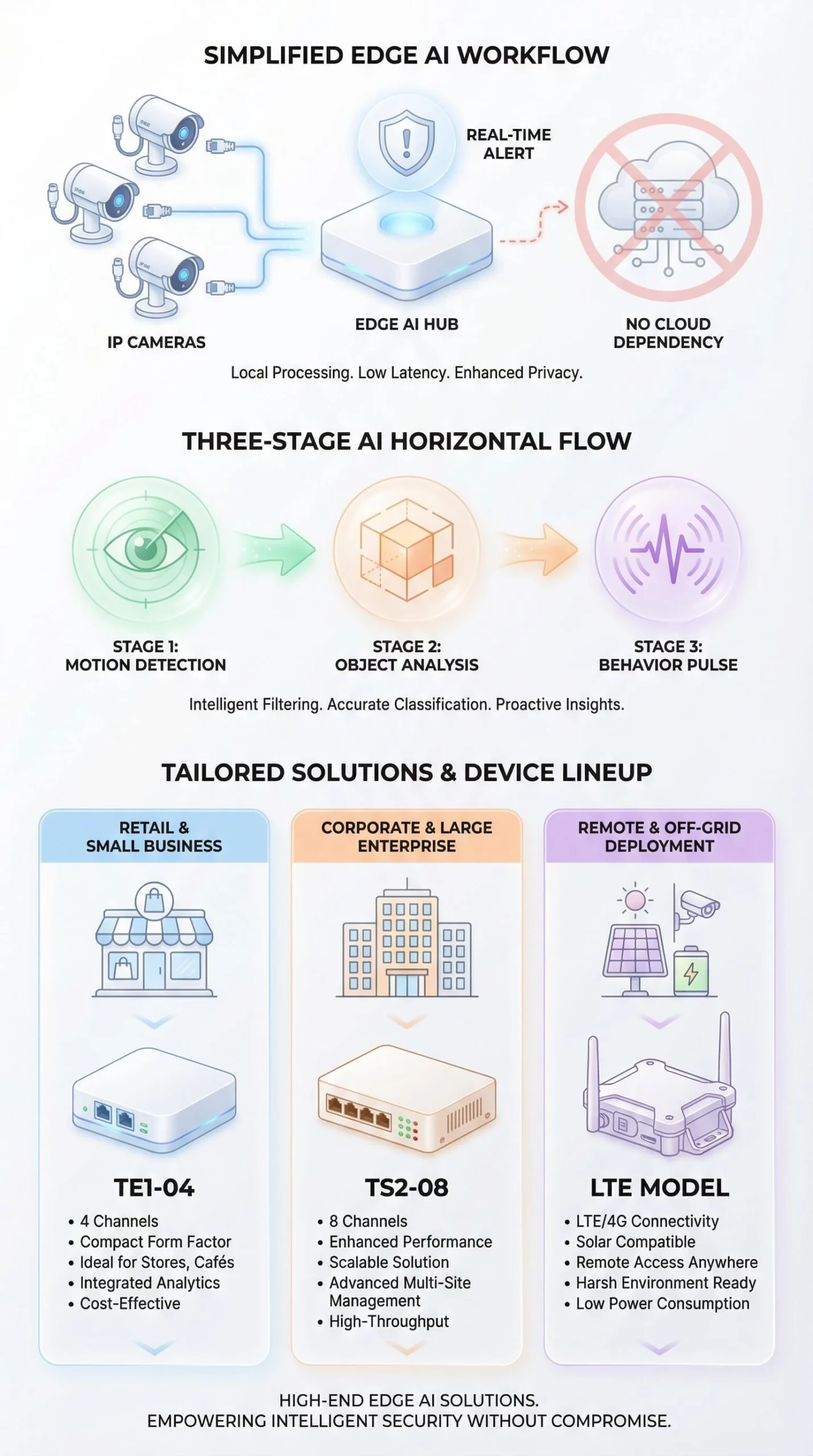
AI Bridge video analytics platforms represent a fundamental shift from cloud-based surveillance to edge computing, processing video data locally to deliver millisecond latency and eliminate recurring cloud fees. By sitting between existing IP cameras and Video Management Systems (VMS), devices like the compact TE1-04 (4-channel) and the robust TS2-08 (8-channel) perform real-time, multi-level AI analysis to detect threats, monitor behavior, and classify objects. This edge-first architecture drastically reduces bandwidth consumption by over 95%, as only relevant alerts and metadata are transmitted, ensuring data privacy and operational continuity even during internet outages.
Key Takeaways & Decision Guide
For small businesses or retail spots with standard internet, the TE1-04 provides a cost-effective 4-channel solution consuming just 6W of power. For larger facilities requiring comprehensive coverage, the TS2-08 scales to 8 channels with VMS integration. However, for remote infrastructure like construction sites or solar farms lacking wired internet, the AI Bridge LTE TS2-08 is the critical choice; its integrated cellular modem and GPS enable autonomous monitoring with minimal data usage ($30-$50/month). Ensure your deployment matches the channel count and network availability of the chosen model to maximize ROI.
Introduction: The Revolution of Edge AI Bridge video analytics
The surveillance industry is undergoing a fundamental transformation. Traditional video management systems that relied on cloud processing or human monitoring are rapidly being replaced by intelligent edge AI video analytics platforms that process data locally, deliver instant alerts, and dramatically reduce false alarms. The AI Bridge series represents the cutting edge of this transformation, offering enterprise-grade video analytics capabilities in compact, power-efficient form factors designed for deployments ranging from small retail stores to large-scale industrial facilities and remote infrastructure sites.
AI Bridge video analytics
Edge AI video analytics fundamentally changes the surveillance paradigm by performing all computational processing directly on the device itself, eliminating the need to stream high-resolution video feeds to remote servers. This architecture delivers multiple critical advantages: near-zero latency for real-time threat detection, complete data privacy with no cloud transmission of sensitive footage, dramatic reduction in network bandwidth requirements, and elimination of recurring cloud processing fees. For organizations managing multiple locations, remote sites, or bandwidth-constrained environments, these benefits translate into both enhanced security posture and significant operational cost savings.

The AI Bridge product lineup offers three distinct models, each optimized for specific deployment scenarios. The compact AI Bridge TE1-04 delivers professional-grade analytics for small installations with up to 4 channels, the powerful AI Bridge TS2-08 scales to 8 channels for larger facilities, and the innovative AI Bridge LTE TS2-08 adds cellular connectivity and GPS positioning for remote sites without traditional network infrastructure. This guide provides comprehensive technical analysis, deployment considerations, and buyer recommendations to help you select the optimal platform for your specific security and operational intelligence requirements.
Understanding AI Bridge video analytics: Architecture and Benefits
What Makes Edge AI Different from Traditional Video Analytics
The fundamental architectural distinction between edge AI and traditional cloud-based or server-based video analytics lies in where the computational processing occurs. In traditional surveillance systems, IP cameras stream raw video footage over the network to a central recording server or cloud platform, where video management software performs basic motion detection. Any advanced analytics requiring artificial intelligence must either be performed by expensive on-premise GPU servers or uploaded to cloud services that charge recurring fees based on the number of cameras and processing hours.
Edge AI video analytics inverts this model entirely. The AI processing happens directly on a dedicated edge device positioned between your cameras and your video management system. This edge device ingests standard RTSP or ONVIF video streams from your existing IP cameras, performs sophisticated deep learning-based object detection, classification, and behavioral analysis in real time, and only transmits lightweight event notifications, metadata, and short video clips when specific conditions are met. The raw video streams can still be recorded to your VMS for compliance and investigation purposes, but the intelligent alerting and automation happen instantly at the edge without any dependency on internet connectivity or cloud services.
This architectural approach delivers transformative operational benefits. Latency is reduced from seconds or minutes to milliseconds, enabling real-time alerts that can prevent security incidents before they escalate. Network bandwidth consumption drops dramatically because only relevant events generate network traffic, not continuous high-resolution video streams. Data privacy is inherently protected because sensitive footage never leaves your physical premises. Capital and operational costs decrease significantly because you eliminate expensive GPU servers and recurring cloud processing fees while leveraging your existing IP camera infrastructure.
Multi-Level AI: The Key to Eliminating False Alarms
The AI Bridge platform’s competitive advantage lies in its proprietary multi-level AI architecture, which dramatically reduces false alarms compared to traditional video motion detection or single-stage AI classifiers. Standard VMD triggers on any pixel change, generating thousands of useless alerts caused by rain, shadows, insects, or tree branches. Single-stage AI classifiers improve accuracy by identifying whether a moving object is a person, vehicle, or animal, but they still lack context and behavioral understanding.
AI Bridge employs a sophisticated three-stage verification process. In the first stage, advanced motion detection algorithms identify areas of interest with pixel-level change. In the second stage, deep learning-based object classification models determine exactly what objects are present in the scene and assign confidence scores. In the third stage, behavioral analysis algorithms evaluate temporal patterns, spatial relationships, and rule-based logic to determine whether the detected activity truly matches your configured alert criteria. Only when all three stages agree that a significant event has occurred does the system generate an alert.
This multi-level approach reduces false alarms by over 95% compared to traditional VMD, transforming your security operations from reactive firefighting to proactive threat prevention. Security personnel can trust that alerts represent genuine security events requiring attention, rather than wasting hours reviewing irrelevant footage of swaying trees or passing clouds.
AI Bridge TE1-04 4-Channel: Compact Intelligence for Small Installations
Product Overview and Target Applications
The AI Bridge TE1-04 represents the entry point into professional edge AI video analytics, delivering enterprise-grade capabilities in an ultra-compact form factor specifically designed for small businesses, retail stores, offices, and budget-conscious projects. Despite its diminutive physical dimensions of just 94 x 153 x 28 mm and lightweight design at only 0.45 kg, the TE1-04 packs sophisticated processing power capable of analyzing up to 4 camera channels simultaneously at 4K resolution and 30 frames per second.
The target deployment scenarios for the TE1-04 span diverse industries and use cases. Small retail stores can deploy the device to monitor customer flow, detect shoplifting behaviors, analyze queue lengths at checkout counters, and track dwell time in specific product zones. Professional offices can use the system for perimeter intrusion detection, unauthorized access alerts, and occupancy monitoring for conference rooms. Healthcare clinics can implement fallen person detection in patient areas and restricted zone monitoring for medication storage. Educational institutions can monitor campus entrances, detect aggressive behaviors, and ensure proper PPE usage in laboratory environments.
The TE1-04 achieves remarkable energy efficiency, consuming only 6 watts of power during full operation. This low power consumption translates into minimal electricity costs, fanless operation for silent deployment, and reduced heat generation that extends hardware longevity. The wide operating temperature range of -30°C to 70°C enables reliable deployment in harsh environmental conditions including outdoor enclosures, warehouses without climate control, and industrial facilities with extreme temperature variations.
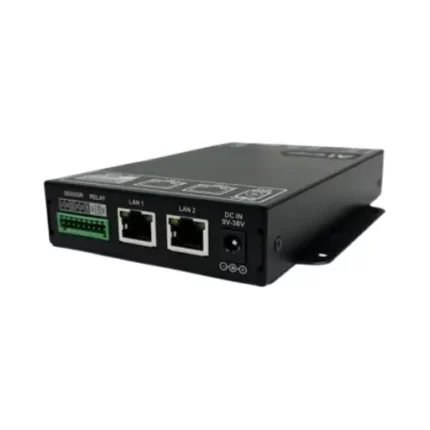
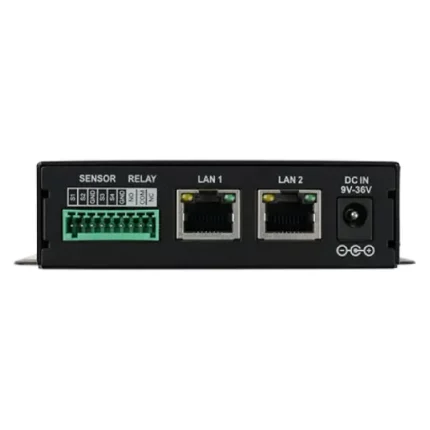
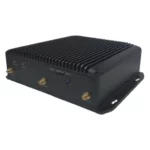
AI Bridge TE1-04 (4 Channel AI Device)
Technical Specifications and Hardware Architecture
The AI Bridge TE1-04’s hardware architecture balances computational performance with power efficiency and thermal management. The device features a dedicated AI accelerator optimized for running deep neural network inference at high throughput, enabling real-time analysis of four simultaneous 4K video streams without frame dropping or processing delays.
| Specification Category | Details |
|---|---|
| Video Processing | |
| Maximum Channels | 4 simultaneous camera connections |
| Input Protocols | RTSP, ONVIF Profile S/T |
| Supported Resolutions | Up to 4K (3840 x 2160) per channel |
| Frame Rate | 30 FPS per channel |
| Video Codecs | H.265+, H.265, H.264 |
| Storage | |
| Storage Type | M.2 2280 NVMe SSD (optional) |
| Recording License | 4-channel recording (optional purchase) |
| Event Clip Storage | Local SSD or cloud upload |
| Connectivity | |
| Network Ports | Dual 10/100 Ethernet |
| USB | USB 2.0 port |
| Alarm I/O | 4-channel alarm inputs, 1 relay output |
| Physical Characteristics | |
| Dimensions | 94 x 153 x 28 mm |
| Weight | 0.45 kg |
| Power Consumption | 6 watts typical |
| Operating Temperature | -30°C to 70°C |
| Cooling | Fanless passive cooling |
| AI Processing | |
| AI Applications | 50+ algorithms available |
| Concurrent Algorithms | Multiple per channel |
| False Alarm Filtering | Multi-stage AI verification |
The connectivity options support flexible deployment architectures. The dual Ethernet ports enable network segmentation with cameras on one network and the management/VMS network on the other, enhancing security and traffic isolation. The 4-channel alarm inputs allow integration with door contacts, motion sensors, or panic buttons, while the relay output can trigger sirens, strobe lights, or automated door locking systems.
AI Capabilities and Software Licensing Structure
The AI Bridge TE1-04 requires software licenses to activate its intelligent detection capabilities. The licensing model allows you to purchase only the features your specific application requires, avoiding unnecessary costs for unused functionality. The platform offers two licensing tiers.
Advanced Analytics License ($1,500) includes 13 core AI-powered features that address the most common security and operational intelligence use cases:
- Crowd Detection: Monitors gathering sizes and density to detect potential safety hazards or unauthorized assemblies
- Advanced Visitor Analysis: Tracks visitor demographics, dwell time, and movement patterns for business intelligence
- Hand and Foot Intrusion: Detects attempts to reach through fences, barriers, or restricted access points
- Intentional Body Gaze Detector: Identifies suspicious behaviors including prolonged staring or surveillance reconnaissance
- Imminent Threat: Uses behavioral cues and posture analysis to detect potential violent incidents before they occur
- Fallen Person Detection: Immediately alerts when individuals fall and remain on the ground, critical for elderly care and industrial safety
- Animal Detection: Distinguishes animals from humans to prevent false alarms in outdoor perimeter monitoring
- Fire and Smoke Detection: Visual detection of flames and smoke using computer vision, complementing traditional smoke detectors
- Vehicle Type Counting: Counts and classifies vehicles by type (car, truck, bus, motorcycle) for traffic analysis
- Vehicle Type Detection: Real-time vehicle classification for parking management and access control
- Thermal Intrusion Detection: Specialized analytics for thermal cameras in complete darkness or adverse weather
- Fisheye Video Analytics: Dewarping and analytics for 180°/360° fisheye cameras
- Advanced Attribute Recognition: Extracts detailed attributes including clothing color, age range, gender, and accessories
Extra Add-On Licenses ($400 each) provide specialized capabilities for industry-specific requirements:
- License Plate Recognition (LPR): Automatic plate detection and OCR for US, European, Japanese, and Korean plates
- Advanced Heatmap: Aggregated movement pattern visualization showing high-traffic zones and bottlenecks
- No PPE Detection: Ensures workers wear required personal protective equipment in industrial environments
- Illegal Dumping Detection: Monitors for unauthorized disposal activities in restricted areas
- Aggressive Detection: Identifies physical altercations, fighting behaviors, and aggressive postures
- PTZ Tracking: Automated pan-tilt-zoom camera control to follow detected objects of interest
- Human Prolonged Stay: Alerts when individuals remain in specific zones beyond configured time thresholds
This flexible licensing model allows you to start with essential features and expand capabilities as your requirements evolve, protecting your initial investment while enabling future growth without hardware replacement.
Deployment Considerations and Integration
The TE1-04 integrates seamlessly with existing surveillance infrastructure through industry-standard protocols. The device accepts video streams from any IP camera supporting RTSP or ONVIF standards, eliminating vendor lock-in and protecting your existing camera investments. Integration with video management systems occurs through ONVIF event notifications, allowing the AI Bridge to send intelligent alerts directly into your VMS timeline for instant event playback and investigation.
Mobile app compatibility provides remote access through iOS and Android applications, enabling security personnel to receive push notifications, view live video, and acknowledge alerts from anywhere. The web-based configuration interface offers intuitive camera setup, rule configuration, and event management without requiring specialized programming skills or IT expertise.
For deployments requiring long-term event storage or forensic investigation capabilities, the optional M.2 NVMe SSD provides high-speed local recording. The 4-channel recording license enables simultaneous recording of all camera feeds with configurable retention policies and event-triggered clip extraction.
The complete AI Bridge TE1-04 solution is available from ITCT Shop with worldwide shipping from Dubai. The package includes the AI Bridge TE1-04 device, 12V DC power adapter, wall mounting bracket with screws, and quick start guide.
AI Bridge TS2-08 8-Channel: Scalable Performance for Enterprise Deployments
Product Overview and Enterprise Applications
The AI Bridge TS2-08 represents the flagship platform in the AI Bridge series, doubling the channel capacity to 8 simultaneous camera connections while maintaining the same 4K resolution and 30 FPS processing capability per channel. This expanded capacity makes the TS2-08 ideal for medium to large facilities including corporate office buildings, warehouses, manufacturing plants, retail chains, educational campuses, and healthcare facilities requiring comprehensive coverage with centralized intelligence.
The TS2-08’s enterprise-grade architecture supports sophisticated deployment scenarios that demand higher throughput and advanced integration capabilities. Large retail environments can monitor multiple departments, entrances, cash registers, and stockrooms from a single device. Manufacturing facilities can implement comprehensive safety monitoring across production lines, loading docks, and hazardous material zones. Corporate campuses can deploy perimeter intrusion detection, parking lot monitoring, and lobby management through unified intelligent analytics.
The device’s ability to run multiple AI algorithms concurrently on each video channel enables sophisticated use cases that would require multiple separate systems with competing platforms. A single camera feed can simultaneously perform people counting, license plate recognition, loitering detection, and crowd formation monitoring, extracting maximum intelligence from each camera investment.
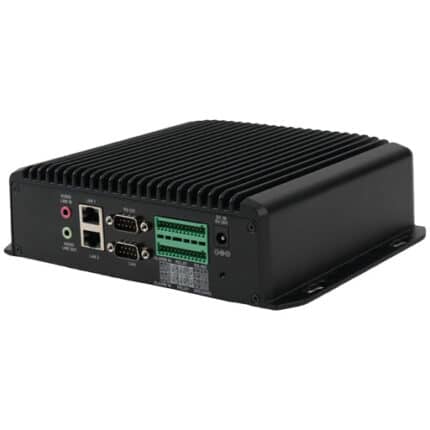
AI Bridge TS2-08 (8 Channel Analytics Device)
Technical Specifications and Advanced Features
The AI Bridge TS2-08 shares the same software licensing structure and AI capabilities as the TE1-04, but scales the hardware architecture to support twice the channel capacity with increased processing performance and enhanced connectivity options.
| Specification Category | AI Bridge TS2-08 (8-Channel) |
|---|---|
| Video Processing | |
| Maximum Channels | 8 simultaneous camera connections |
| Input Protocols | RTSP, ONVIF Profile S/T |
| Supported Resolutions | Up to 4K (3840 x 2160) per channel |
| Frame Rate | 30 FPS per channel |
| Video Codecs | H.265+, H.265, H.264 |
| AI Processing | |
| AI Applications | 50+ algorithms available |
| Algorithms Per Channel | Multiple concurrent detection |
| Multi-Level Filtering | >95% false alarm reduction |
| Storage and Recording | |
| Storage Type | M.2 NVMe SSD (optional) |
| Recording License | 8-channel recording (optional) |
| Cloud Integration | Upload to major cloud platforms |
| Event Clip Storage | Local and remote options |
| Connectivity | |
| Network Ports | Dual 10/100 Ethernet |
| USB | USB 2.0 port |
| Alarm I/O | 8-channel alarm inputs, 1 relay output |
| Integration | |
| VMS Compatibility | Milestone, Genetec, Avigilon, others via ONVIF |
| API Access | RESTful API for custom integration |
| Mobile Apps | iOS and Android native apps |
| Webhook Support | HTTP POST for external systems |
| Physical Characteristics | |
| Power Consumption | Approximately 12 watts |
| Operating Temperature | -30°C to 70°C (varies by model) |
| Cooling | Passive or active depending on configuration |
The expanded alarm I/O capabilities with 8 input channels enable sophisticated integration with building management systems, access control platforms, and legacy security sensors. The comprehensive VMS compatibility ensures seamless integration with enterprise video management platforms from vendors including Milestone, Genetec, and Avigilon through standardized ONVIF event messaging.
Advanced Deployment Architectures
The TS2-08 supports two primary deployment architectures optimized for different infrastructure and security requirements. Understanding these deployment models helps you design an optimal solution that balances performance, security, and operational workflows.
Standard Enterprise Deployment with VMS Integration represents the most common architecture for facilities with existing video management systems. In this configuration, IP cameras send their video streams simultaneously to both the AI Bridge TS2-08 and the organization’s VMS platform. The VMS continues performing its traditional role of recording all camera feeds for compliance and investigation purposes. The AI Bridge analyzes the same video streams in parallel, performing deep learning-based detection and behavioral analysis. When the multi-level AI engine confirms a significant event, it sends a lightweight ONVIF event notification to the VMS with metadata describing the detection (object type, location, confidence score, timestamp).
This architecture provides elegant integration with minimal changes to existing workflows. Security operators use their familiar VMS interface, but the timeline now includes intelligent bookmarks at every significant event. Instead of scrubbing through hours of footage searching for a specific incident, operators can instantly jump to AI-detected events including perimeter intrusions, crowd formations, or fallen persons. The system scales efficiently because the VMS recording infrastructure operates independently from the AI processing, and you can add additional AI Bridge devices to expand analytics coverage without straining the VMS server.
Standalone Deployment for Small Sites eliminates the VMS entirely for locations that don’t require continuous recording of all camera feeds. In this configuration, cameras connect only to the AI Bridge, which performs all analytics and stores short event clips to its optional local NVMe SSD or uploads them to cloud storage. Security personnel receive real-time alerts through mobile applications and web dashboards, with instant access to video clips showing exactly what triggered each alert. This architecture significantly reduces infrastructure costs and complexity for small retail locations, branch offices, or remote facilities where continuous recording provides minimal value compared to intelligent event-based alerting.
The complete AI Bridge TS2-08 solution is available from ITCT Shop with worldwide shipping. The platform delivers enterprise-grade video analytics capabilities with the same flexible software licensing model as the TE1-04, allowing you to activate only the AI features your specific deployment requires.
AI Bridge LTE TS2-08: Cellular-Connected Intelligence for Remote Sites
Revolutionary Remote Monitoring with Integrated LTE and GPS
The AI Bridge LTE TS2-08 (model AIBL-TS2-08) represents a breakthrough in remote site monitoring by integrating the full 8-channel video analytics capabilities of the standard TS2-08 with an embedded LTE cellular modem and GPS positioning system. This combination enables sophisticated AI-powered video surveillance at locations completely lacking traditional network infrastructure including construction sites, agricultural facilities, oil and gas installations, solar farms, cell towers, and temporary event venues.
Traditional video surveillance for remote locations faced insurmountable challenges. Streaming high-resolution video over cellular connections consumed enormous bandwidth, resulting in prohibitive monthly data costs often exceeding $500-$1,000 per site. Even when financially viable, the quality suffered from constant buffering, frame drops, and complete connection loss during periods of poor cellular coverage. Security personnel attempting to monitor remote sites through cellular video streams experienced frustration, unreliable alerts, and effectively blind surveillance during network interruptions.
The AI Bridge LTE architecture solves these challenges through intelligent edge processing combined with bandwidth-optimized cellular communication. All video analytics processing occurs locally on the device using the same sophisticated multi-level AI algorithms as the standard models. The device continuously monitors all camera feeds, performing object detection, classification, and behavioral analysis in real time without any dependency on network connectivity. Only when the AI engine confirms a significant security event does the device activate its LTE connection to transmit a compact alert package.
This alert package contains everything security personnel need to assess and respond: a 10-second video clip showing the event from 5 seconds before to 5 seconds after the detection, a high-resolution snapshot with annotated bounding boxes, structured metadata describing the object types and behaviors detected, precise GPS coordinates identifying the exact asset location, and a timestamp with timezone information. The entire package typically consumes less than 2-3 megabytes, enabling transmission even over marginal 3G connections while keeping monthly data costs under $50 for typical deployment scenarios.
Technical Architecture and Power Efficiency
The AI Bridge LTE TS2-08 integrates seamlessly with global cellular networks through its embedded multi-band LTE modem supporting frequency bands across North America, Europe, Asia, and other regions. The device accepts standard SIM cards from any cellular carrier, allowing you to select local providers with optimal coverage and pricing for your specific deployment locations.
GPS functionality provides critical value beyond simple location identification. The integrated GPS receiver continuously tracks the device’s position with sub-10-meter accuracy, automatically embedding precise coordinates in every alert message. For mobile deployments including security trailers, temporary construction site offices, or portable surveillance units, the GPS tracking ensures central monitoring stations always know exactly where each alert originated. For static installations at remote infrastructure like cell towers or pipeline monitoring points, GPS enables rapid incident response by providing emergency personnel with exact coordinates accessible directly from the alert notification.
Power efficiency becomes critical for remote deployments where electrical infrastructure may be limited or non-existent. The AI Bridge LTE architecture optimizes power consumption through intelligent duty cycling and adaptive processing. The device maintains continuous video analytics on all channels using low-power AI accelerators, but the power-intensive LTE modem remains in standby mode except during alert transmission. For solar-powered deployments with battery backup, this design enables 24/7 operation on modest solar panel and battery configurations, typically requiring only 100-200W solar panels and 100-200Ah deep cycle batteries for reliable continuous operation.
Deployment Scenarios and Industry Applications
The AI Bridge LTE platform enables surveillance and operational intelligence applications that were previously technically infeasible or economically prohibitive. Understanding these use cases helps you identify opportunities to deploy intelligent monitoring at remote locations across your organization.
Construction Site Security and Safety Monitoring: Construction sites represent high-value temporary installations with constantly changing layouts, expensive equipment, and significant theft risk. The AI Bridge LTE enables comprehensive 24/7 monitoring without requiring temporary internet installations. Perimeter intrusion detection alerts security personnel immediately when unauthorized persons enter the site after hours. Equipment monitoring detects removal of high-value tools and machinery. Safety monitoring identifies workers not wearing required PPE, preventing accidents and ensuring OSHA compliance. Fall detection provides immediate alerts when workers suffer accidents in confined spaces or elevated work areas.
Agricultural and Rural Property Protection: Farms, ranches, vineyards, and rural properties span vast acreages with high-value assets including livestock, equipment, stored commodities, and crops. The AI Bridge LTE provides intelligent monitoring for remote barns, equipment storage areas, and field locations. Livestock monitoring detects animals entering or leaving specific pastures. Equipment theft prevention alerts owners when tractors or ATVs are moved during unauthorized hours. Illegal dumping detection protects rural properties from unauthorized waste disposal. Wildlife monitoring helps farmers understand animal activity patterns affecting crop damage.
Oil and Gas Infrastructure Monitoring: Remote wellheads, compressor stations, tank farms, and pipeline installations require continuous monitoring for security, safety, and regulatory compliance. The AI Bridge LTE enables unmanned operations with intelligent alerting. Perimeter monitoring detects unauthorized vehicle or person intrusion. Fire and smoke detection provides early warning of equipment failures or sabotage. Vehicle counting and classification tracks authorized maintenance visits for compliance documentation. GPS positioning enables rapid emergency response to precise infrastructure locations.
Renewable Energy Installations: Solar farms, wind turbines, and remote power generation facilities represent significant capital investments requiring protection from theft, vandalism, and operational disruptions. The AI Bridge LTE delivers intelligent monitoring without dependency on the site’s primary power and communication systems. Perimeter intrusion detection alerts security personnel to potential theft or vandalism. Equipment monitoring detects unauthorized persons approaching inverters, transformers, or control cabinets. Crowd detection identifies organized theft attempts involving multiple perpetrators.
Telecommunications Infrastructure: Cell towers, fiber repeater stations, and microwave relay installations require 24/7 monitoring but typically lack fiber network connectivity. The AI Bridge LTE ironically uses the same cellular network to monitor the physical tower infrastructure. Tower climbing detection alerts network operations when maintenance personnel access tower structures, improving safety and preventing unauthorized access. Vehicle monitoring tracks authorized maintenance visits. Equipment bay monitoring detects unauthorized access to ground-level cabinets containing valuable radio equipment and batteries.
The AI Bridge LTE TS2-08 is available from ITCT Shop with comprehensive documentation, configuration assistance, and worldwide shipping. The package includes external LTE and GPS antennas with SMA connectors, enabling optimal signal reception in challenging RF environments.
Edge AI Devices: Technology Comparison and Selection Criteria
Edge AI vs Cloud AI: Architectural Trade-offs and Decision Factors
Selecting between edge AI and cloud AI architectures represents a fundamental decision affecting system performance, costs, privacy, and operational flexibility. Understanding the technical and business implications of each approach enables informed platform selection aligned with your specific requirements and constraints.
Cloud AI architectures process video analytics on remote servers operated by third-party providers or in your organization’s private cloud infrastructure. IP cameras stream continuous video feeds over the internet to cloud processing platforms, where GPU-accelerated servers perform object detection, classification, and behavioral analysis. The cloud platform generates alerts and stores video footage in cloud storage with configurable retention policies. Security personnel access the system through web browsers or mobile apps that connect to cloud services.
Cloud AI offers compelling advantages for certain deployment scenarios. Computational scalability allows processing of hundreds or thousands of camera channels without upfront infrastructure investments. Software updates and new AI models deploy automatically across all cameras without field service visits. Advanced analytics requiring massive computational resources become accessible to small organizations without capital investments in on-premise GPU servers. Centralized data storage enables sophisticated multi-site correlation and long-term trend analysis.
However, cloud AI introduces significant challenges and constraints that make it unsuitable for many enterprise deployments. Network bandwidth requirements become prohibitive for high-resolution multi-camera installations, with a single 4K camera consuming approximately 8-12 Mbps of continuous upstream bandwidth. A 10-camera site requires 100 Mbps+ dedicated internet connectivity, often unavailable or expensive at remote locations. Even with sufficient bandwidth, internet outages create complete surveillance blindness. Recurring subscription costs based on the number of cameras and processing hours create unpredictable operating expenses that accumulate indefinitely. Data privacy and regulatory compliance become complex when sensitive video footage streams continuously to third-party cloud providers potentially subject to foreign jurisdiction and data breach risks.
Edge AI architectures perform all video analytics processing on local hardware positioned at the physical site near the cameras. The edge device ingests video streams over the local network, runs AI models on dedicated accelerators, and generates alerts without requiring internet connectivity. Only lightweight event notifications, metadata, and short clips transmit over the network when significant events occur. This fundamental architectural difference delivers transformative advantages for enterprise deployments.
Network bandwidth requirements decrease by 95%+ because continuous video streaming to remote processing centers is eliminated. A site with 8 cameras might generate only 10-50 MB of daily network traffic for event notifications instead of hundreds of gigabytes for continuous streaming. Internet outages do not affect security monitoring because all processing occurs locally, with alerts queuing for transmission when connectivity restores. Data privacy is inherently protected because sensitive footage never leaves the physical premises. Total cost of ownership becomes predictable with upfront hardware costs and optional software licenses replacing unpredictable recurring cloud processing fees.
Edge AI does impose certain constraints requiring consideration. Initial capital investment is higher compared to cloud subscription models, though TCO typically favors edge after 12-24 months. Computational scalability requires adding additional edge devices rather than simply increasing cloud subscription tiers. Software updates require managed deployment across distributed edge devices rather than automatic cloud updates. However, for enterprise deployments prioritizing data sovereignty, network efficiency, and cost predictability, edge AI represents the optimal architecture.
AI Bridge Competitive Positioning and Alternative Technologies
The edge AI video analytics market includes multiple competing platforms and technologies, each with distinct architectural approaches, performance characteristics, and target applications. Understanding how AI Bridge compares to alternatives helps you evaluate whether it represents the optimal solution for your specific requirements.
Camera-Embedded AI represents the most distributed approach, placing AI processing capabilities directly within IP cameras through integrated accelerators or AI-capable chipsets. This architecture eliminates the need for separate edge devices, reducing infrastructure complexity and costs. However, camera-embedded AI faces significant limitations. The computational resources available within camera enclosures are severely constrained by power budgets and thermal dissipation, limiting model complexity and detection accuracy. Each camera processes only its own video feed independently, preventing multi-camera correlation and behavioral analysis across camera boundaries. Upgrading AI capabilities requires replacing entire cameras rather than updating edge processing units. Camera-embedded AI works well for simple use cases like people counting or line crossing but cannot support sophisticated behavioral analytics or multi-camera scenarios.
VMS-Integrated AI adds analytics capabilities to centralized video management servers through software modules or GPU expansion cards. This approach provides good integration with existing VMS workflows and enables multi-camera correlation. However, VMS-integrated AI requires substantial computing infrastructure with expensive GPU servers, generates significant heat and power consumption in data center or server room environments, and creates single points of failure where VMS server outages disable both recording and analytics. This architecture suits large facilities with existing robust IT infrastructure but provides poor economics and resilience for distributed multi-site deployments.
NVIDIA Jetson-Based Edge Devices utilize NVIDIA’s embedded computing platform designed for AI at the edge. Many vendors build video analytics appliances using Jetson modules, offering good GPU acceleration and AI framework support. AI Bridge differentiates through its specialized video analytics optimization, multi-level false alarm filtering, turnkey software with 50+ pre-built applications, and flexible licensing model. For a deeper comparison of AI edge computing platforms, see NVIDIA Jetson Complete Guide.
The AI Bridge platform occupies a compelling position in this competitive landscape by balancing computational performance, power efficiency, ease of deployment, and software completeness in a purpose-built video analytics appliance.
Comprehensive Feature Comparison Matrix
| Feature Category | AI Bridge TE1-04 | AI Bridge TS2-08 | AI Bridge LTE TS2-08 |
|---|---|---|---|
| Channel Capacity | |||
| Maximum Cameras | 4 channels | 8 channels | 8 channels |
| Resolution per Channel | Up to 4K @ 30 FPS | Up to 4K @ 30 FPS | Up to 4K @ 30 FPS |
| Total Processing Throughput | ~120 FPS @ 4K | ~240 FPS @ 4K | ~240 FPS @ 4K |
| AI Capabilities | |||
| Available AI Applications | 50+ algorithms | 50+ algorithms | 50+ algorithms |
| Algorithms Per Channel | Multiple concurrent | Multiple concurrent | Multiple concurrent |
| Base License (13 features) | $1,500 | $1,500 | $1,500 |
| Add-On Licenses | $400 each | $400 each | $400 each |
| False Alarm Reduction | >95% | >95% | >95% |
| Connectivity | |||
| Network Ports | Dual 10/100 Ethernet | Dual 10/100 Ethernet | Dual 10/100 Ethernet |
| LTE Cellular Modem | None | None | Integrated multi-band |
| GPS Positioning | None | None | Integrated receiver |
| Alarm I/O | 4 inputs / 1 output | 8 inputs / 1 output | 8 inputs / 1 output |
| Storage and Recording | |||
| Local Storage | M.2 NVMe SSD (optional) | M.2 NVMe SSD (optional) | M.2 NVMe SSD (optional) |
| Recording License | 4-channel (optional) | 8-channel (optional) | 8-channel (optional) |
| Event Clip Storage | Local or cloud | Local or cloud | Local or cloud |
| Cloud Upload Optimization | Standard | Standard | Bandwidth-optimized |
| Integration | |||
| VMS Compatibility | ONVIF event notifications | ONVIF event notifications | ONVIF event notifications |
| Mobile Apps | iOS and Android | iOS and Android | iOS and Android |
| API Access | RESTful API | RESTful API | RESTful API |
| SNS Integration | Supported | Supported | Supported |
| Physical Characteristics | |||
| Dimensions | 94 x 153 x 28 mm | Larger form factor | Larger form factor |
| Weight | 0.45 kg | ~1.5 kg (estimate) | ~1.5 kg (estimate) |
| Power Consumption | 6 watts | ~12 watts | ~15 watts |
| Operating Temperature | -30°C to 70°C | -30°C to 70°C | -30°C to 70°C |
| Cooling | Fanless passive | Passive or active | Passive or active |
| Target Applications | |||
| Ideal Deployment Size | Small retail, offices | Medium-large facilities | Remote sites, mobile |
| Primary Use Cases | Cost-sensitive, space-constrained | Enterprise campus, comprehensive coverage | Construction, agriculture, infrastructure |
| Network Infrastructure Required | Standard Ethernet | Standard Ethernet | Optional (cellular) |
| Pricing | |||
| Base Hardware Price | Lower entry point | Mid-range | Premium for cellular capability |
| Monthly Operating Costs | Minimal (electricity only) | Minimal (electricity only) | Cellular data plan (~$30-50) |
Buyer’s Decision Framework: Selecting the Optimal AI Bridge Platform
Channel Capacity and Site Coverage Requirements
The primary selection criterion involves matching channel capacity to your site’s camera count with appropriate headroom for future expansion. The AI Bridge TE1-04 with 4 channels suits small installations including single retail locations, professional offices, small warehouses, and residential properties. If your current deployment includes 2-4 cameras and you anticipate adding 1-2 additional cameras within 3 years, the TE1-04 provides adequate capacity.
The AI Bridge TS2-08 with 8 channels targets medium to large installations including corporate facilities, manufacturing plants, large retail stores, educational campuses, and multi-building complexes. If your current deployment includes 5-8 cameras or you anticipate growth beyond 4 cameras, select the TS2-08 to avoid premature capacity constraints. For installations requiring more than 8 channels, deploy multiple AI Bridge devices with logical grouping by building section, perimeter zones, or operational areas.
Network Infrastructure and Connectivity Constraints
Assess your site’s network infrastructure capabilities to determine whether standard Ethernet-connected models or the LTE-enabled variant best fits your deployment environment. Sites with reliable Ethernet networking including corporate offices, retail stores, and industrial facilities with structured cabling should deploy the standard TE1-04 or TS2-08. These models provide optimal performance and lowest operational costs.
The AI Bridge LTE TS2-08 becomes essential for locations lacking traditional network infrastructure including construction sites, agricultural properties, oil and gas installations, renewable energy farms, and telecommunications infrastructure. Even for sites with existing internet connectivity, consider the LTE model if internet reliability is questionable or if resilience requires surveillance to continue operating during network outages. The integrated GPS provides additional value for mobile deployments, asset tracking, and rapid emergency response coordination.
Budget Considerations and Total Cost of Ownership
Evaluate both initial capital investment and long-term operational costs when comparing AI Bridge models and alternative video analytics architectures. The TE1-04 represents the most affordable entry point into professional edge AI video analytics, suitable for budget-conscious deployments. The TS2-08 provides better value per channel for larger installations, with the 8-channel capacity reducing the effective cost per camera. The LTE variant carries a premium for cellular capability but delivers substantially lower TCO compared to deploying traditional cellular video systems at remote sites.
Compare edge AI TCO against cloud analytics alternatives over 3-5 year time horizons. A cloud analytics subscription typically costs $10-30 per camera per month, generating $1,440-$4,320 in recurring costs over 3 years for an 8-camera site. The AI Bridge TS2-08 hardware and software licenses represent upfront investments that eliminate these recurring fees, typically achieving TCO parity within 12-24 months and delivering significant savings thereafter.
For comprehensive guidance on enterprise AI infrastructure investments, see AI Workstations and GPU Servers: Enterprise Solutions Guide.
Required AI Capabilities and Application-Specific Features
Identify the specific AI detection and analytics capabilities your deployment requires to ensure you purchase appropriate software licenses. All AI Bridge models support the same 50+ AI applications through the flexible licensing model. Start by selecting the Base Advanced Analytics License ($1,500) which includes the 13 most common features including intrusion detection, crowd monitoring, fallen person detection, and vehicle analytics.
Add specialized licenses ($400 each) only for industry-specific requirements. Retail deployments benefit from advanced heatmap analytics for store layout optimization. Industrial facilities require No PPE detection for safety compliance. Parking facilities and gated communities need license plate recognition. Manufacturing and logistics operations use advanced visitor analysis and dwell time tracking for operational efficiency.
This modular licensing approach protects your investment by allowing capability expansion without hardware replacement as your requirements evolve.
Installation, Configuration, and Integration Best Practices
Physical Installation and Network Configuration
AI Bridge devices install quickly with minimal technical expertise required. Mount the unit in a secure location with adequate ventilation, typically in a network closet, server room, or equipment rack. The fanless TE1-04 operates silently and generates minimal heat, enabling installation in office environments. The TS2-08 models may include active cooling and should be installed with proper airflow.
Connect the device to your network using one of the dual Ethernet ports. Configure the second Ethernet port for camera network segmentation if your infrastructure requires isolation between camera and corporate networks. Power the device using the included 12V DC adapter, or integrate with PoE+ injectors for simplified cable management in rack-mounted deployments.
For AI Bridge LTE deployments, install the included external LTE and GPS antennas with optimal orientation for signal reception. Position GPS antennas with clear sky view, avoiding metal structures that block satellite signals. Mount LTE antennas vertically for optimal gain pattern, and route coaxial cables carefully to prevent signal loss from excessive bending or long cable runs.
Camera Integration and Video Stream Configuration
The AI Bridge supports any IP camera providing RTSP or ONVIF-compliant video streams, ensuring compatibility with your existing surveillance infrastructure regardless of camera manufacturer. Access the web-based configuration interface through your browser, navigate to the camera configuration section, and add each camera by entering its IP address and authentication credentials.
Configure video stream parameters to balance analytics performance with network bandwidth. For optimal AI accuracy, configure cameras to stream at their native resolution (typically 1080p or 4K) with frame rates of 15-30 FPS. The AI Bridge automatically optimizes processing based on available computational resources, potentially reducing frame rate when running multiple concurrent algorithms per channel. Configure secondary low-resolution substreams for applications requiring only basic detection without fine detail analysis.
Draw detection zones for each camera to focus analytics on relevant areas and exclude regions generating false alarms. Configure virtual trip wires for perimeter monitoring, define restricted zones for intrusion detection, and set exclusion masks for areas with unavoidable motion like tree branches or flags.
VMS Integration and Alert Workflow Configuration
Integrate the AI Bridge with your existing video management system through ONVIF event notifications. Configure your VMS to accept ONVIF events from the AI Bridge’s IP address, then map each AI detection type to appropriate VMS actions including timeline bookmarks, pop-up notifications, recording triggers, or automated PTZ preset movements.
For installations without existing VMS infrastructure, configure the AI Bridge’s built-in cloud management dashboard as your primary monitoring interface. Create user accounts with appropriate permission levels, configure alert recipients for each detection type, and customize notification preferences including email, SMS, push notifications, or webhook integrations with third-party platforms.
Test the complete workflow by triggering test events for each configured detection rule, verifying that alerts generate correctly, notifications reach appropriate personnel, and video clips capture sufficient pre-event and post-event footage for investigation purposes.
Frequently Asked Questions
Q: Can I use the AI Bridge with cameras from different manufacturers?
A: Yes, the AI Bridge is designed for universal compatibility with any IP camera supporting standard RTSP or ONVIF protocols. This vendor-agnostic approach protects your existing camera investments and prevents vendor lock-in. The device works seamlessly with cameras from Axis, Hikvision, Dahua, Hanwha, Bosch, and hundreds of other manufacturers. You simply configure each camera’s IP address, RTSP stream URL, and authentication credentials through the web interface.
Q: How does the AI Bridge reduce false alarms compared to traditional motion detection?
A: Traditional video motion detection (VMD) triggers on any pixel change, generating thousands of useless alerts from rain, shadows, insects, swaying trees, or passing clouds. The AI Bridge employs a sophisticated three-stage verification process. First, advanced motion detection identifies areas of interest. Second, deep learning models classify exactly what objects are present (person, vehicle, animal) with confidence scores. Third, behavioral analysis algorithms evaluate temporal patterns and spatial relationships to confirm the detected activity truly matches your configured alert criteria. This multi-level approach reduces false alarms by over 95%, ensuring security personnel receive alerts only for genuine security events requiring attention.
Q: What monthly cellular data costs should I expect for the AI Bridge LTE model?
A: The AI Bridge LTE architecture is specifically optimized for low-bandwidth operation. All video analytics processing occurs locally on the device without requiring continuous video streaming over the cellular connection. The LTE modem only activates to transmit compact alert packages when significant events occur. Each alert typically consumes 2-3 MB including a 10-second video clip, snapshot, metadata, GPS coordinates, and timestamp. In typical deployment scenarios, you can expect monthly cellular data consumption of 500 MB to 2 GB, resulting in monthly costs of approximately $30-50 with standard business cellular plans. This represents 95%+ savings compared to continuous video streaming approaches.
Q: Can I run multiple AI analytics on a single camera feed simultaneously?
A: Yes, this represents one of the AI Bridge platform’s most powerful capabilities. Depending on the complexity of the algorithms and the resolution of the video feed, you can typically run 2-4 different AI applications on a single camera simultaneously. For example, a parking lot camera could perform vehicle counting, license plate recognition, and loitering detection concurrently. A retail entrance camera could run people counting, crowd detection, and visitor demographic analysis simultaneously. This multi-algorithm capability maximizes the intelligence extracted from each camera investment without requiring additional hardware.
Q: How difficult is it to configure the AI detection rules and zones?
A: The AI Bridge features an intuitive web-based user interface designed for configuration by security personnel without specialized programming expertise. Configuration follows a straightforward workflow: select a camera, choose an AI application from the library, draw detection zones directly on the live video preview using your mouse, set rule parameters using sliders and dropdowns, configure alert actions and recipients, and activate the rule. The interface provides contextual help and validation to prevent configuration errors. Most users complete initial configuration for an 8-camera deployment within 2-3 hours.
Q: Do I need to purchase all AI features upfront or can I add capabilities later?
A: The AI Bridge’s modular licensing model allows you to start with essential features and expand capabilities as your requirements evolve without hardware replacement. Purchase the Base Advanced Analytics License ($1,500) at installation to activate the 13 most common detection features. As your needs develop, you can purchase additional specialty licenses ($400 each) at any time and activate them through simple license key entry. This approach protects your initial investment while enabling future growth aligned with your budget cycles and operational maturity.
Q: What happens to video analytics during internet outages?
A: The AI Bridge performs all video analytics processing locally on the device itself without any dependency on internet connectivity or cloud services. During internet outages, the device continues monitoring all camera feeds, performing object detection and behavioral analysis, generating alerts, and storing event clips to its local SSD exactly as it does during normal operation. When internet connectivity restores, any queued alerts and clips automatically upload to your cloud dashboard or VMS. This edge processing architecture ensures uninterrupted security monitoring even during complete network failures, a critical advantage over cloud-based analytics platforms that become blind during outages.
Q: How does the AI Bridge integrate with my existing VMS platform?
A: Integration occurs through standardized ONVIF event notifications supported by all major VMS platforms including Milestone, Genetec, Avigilon, and others. Configure your VMS to accept ONVIF events from the AI Bridge’s IP address, then map detection types to VMS actions. When the AI Bridge detects a significant event, it sends an ONVIF event message to your VMS, which creates a bookmark in the timeline, triggers recording, or performs other configured actions. This lightweight integration allows your VMS to continue its traditional recording role while benefiting from intelligent analytics-driven bookmarks that eliminate manual footage review.
Q: Can the system detect specific objects like guns, weapons, or prohibited items?
A: Yes, the AI Bridge platform includes specialized detection capabilities for threat objects through its Imminent Threat and Aggressive Detection algorithms included in the Advanced Analytics License and available as add-on modules. These algorithms can detect weapons, aggressive behaviors, and suspicious activities. For highly specialized applications requiring custom object detection (detecting specific product SKUs, proprietary equipment, or unique threat objects), contact ITCT’s technical team to discuss custom model training and deployment.
Q: What kind of technical support and warranties are included?
A: All AI Bridge products purchased from ITCT Shop include comprehensive manufacturer warranties covering hardware defects and failures. Technical support is available through multiple channels including email support for configuration questions, remote assistance for installation guidance, and documentation including quick start guides and detailed user manuals. Software updates providing new features and AI model improvements are provided periodically as free downloads. For mission-critical deployments requiring guaranteed response times and priority support, contact ITCT about professional services and extended support agreements.
Conclusion: Empowering Intelligent Security through Edge AI
The AI Bridge video analytics platform represents the convergence of sophisticated artificial intelligence, efficient edge computing, and practical security operations. By processing video analytics locally at the edge, the platform delivers transformative benefits including real-time alert generation with millisecond latency, dramatic bandwidth reduction through local processing, complete data privacy with no cloud transmission of sensitive footage, and predictable total cost of ownership without recurring cloud fees.
The three AI Bridge models address diverse deployment requirements across the enterprise. The compact AI Bridge TE1-04 delivers professional-grade analytics for small installations with 4 channels in an ultra-efficient form factor consuming only 6 watts. The powerful AI Bridge TS2-08 scales to 8 channels for comprehensive coverage of medium to large facilities with sophisticated VMS integration. The innovative AI Bridge LTE TS2-08 adds cellular connectivity and GPS positioning, enabling intelligent surveillance at remote sites completely lacking traditional network infrastructure.
All models share the same comprehensive AI capabilities through a flexible software licensing model that allows organizations to activate only the features their specific applications require. With over 50 AI algorithms spanning security, safety, and operational intelligence applications, the platform addresses use cases from retail analytics to industrial safety, from perimeter intrusion detection to business intelligence extraction.
Organizations evaluating video analytics platforms should prioritize edge AI architectures like AI Bridge over cloud alternatives for deployments requiring low latency, data sovereignty, bandwidth efficiency, and cost predictability. For comprehensive guidance on AI infrastructure planning and deployment best practices, explore these related resources:
- AI Workstations and GPU Servers: Enterprise Solutions Guide
- NVIDIA Jetson Complete Guide: Orin, Xavier & Nano Comparison
- Multi-GPU Training Server Configuration
The AI Bridge complete solutions are available from ITCT Shop with worldwide shipping from Dubai. Contact ITCT’s technical team for deployment planning assistance, custom configuration requirements, and volume pricing for multi-site deployments.
«The biggest hidden cost in modern surveillance isn’t the hardware; it’s the cloud storage and bandwidth fees. By moving analytics to the edge with the AI Bridge, we typically see a return on investment within 14 months just from saved data ingress charges alone.» — Lead Security Systems Architect
«For remote industrial sites, the ‘store-and-forward’ capability during network outages is non-negotiable. An LTE-enabled edge device that continues to analyze and record locally when the cell tower goes down ensures you don’t have blind spots during critical failure windows.» — Senior Field Operations Manager
«False alarms are the enemy of vigilance. A standard motion sensor triggers on a swaying tree branch, but a multi-stage AI verification process requires object classification and behavioral logic to agree before sending an alert. This reduces operator fatigue by over 90%.» — Director of Security Operations Center (SOC)
Last update at December 2025