


If you are buying AI accelerators in the Middle East in 2026, the spec sheet is only half the decision. The other half is availability: which chips can actually ship to your country, how long they take, and what software ecosystem you are locking into. NVIDIA, AMD and Huawei Ascend are the three names that come up in almost every GCC procurement conversation. This guide compares them the way a buyer in Dubai, Riyadh or Doha actually has to: performance, memory, software, supply and the practical export picture.
The short answer
| If your priority is… | Usually the best fit | Why |
|---|---|---|
| Broadest software support, fastest time to production | NVIDIA (H200, B200, B300) | CUDA, TensorRT-LLM, NIM and almost every open-source framework target NVIDIA first |
| Most HBM per GPU for large-model inference | AMD Instinct (MI325X, MI355X) | 192 to 288 GB HBM per GPU lets big models fit on fewer cards |
| A non-US supply chain | Huawei Ascend (910B, 910C) | Not dependent on US export licences, but carries its own US-sanctions risk for many buyers |
For most enterprises in the UAE and Saudi Arabia, NVIDIA remains the default, AMD is a serious second option for memory-heavy inference, and Huawei is a niche choice that needs careful legal review before anyone signs a purchase order.
Hardware comparison: the flagship accelerators
| Accelerator | Memory | Memory bandwidth | Typical board power | Scale-up interconnect |
|---|---|---|---|---|
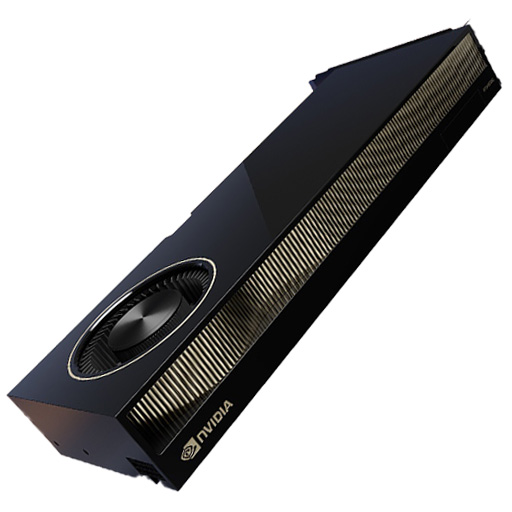
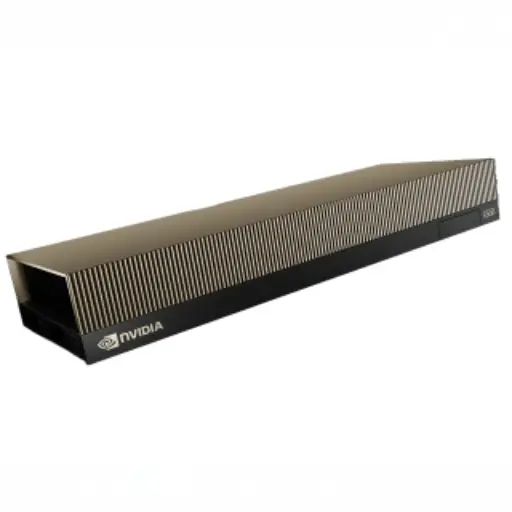
| NVIDIA H200 SXM | 141 GB HBM3e | 4.8 TB/s | up to 700 W | NVLink 4, 900 GB/s |
| NVIDIA B200 | 180 to 192 GB HBM3e | about 8 TB/s | about 1,000 W | NVLink 5, 1.8 TB/s |
| AMD Instinct MI325X | 256 GB HBM3e | 6 TB/s | about 1,000 W | Infinity Fabric |
| AMD Instinct MI355X | 288 GB HBM3e | 8 TB/s | about 1,400 W | Infinity Fabric |
| Huawei Ascend 910C | about 128 GB HBM | about 3.2 TB/s (reported) | not officially published | HCCS, CloudMatrix supernode |
Treat the Huawei figures as indicative: Huawei publishes far less detail than NVIDIA or AMD, and most numbers come from third-party analysis. For deeper NVIDIA comparisons, see our B200 vs H200 breakdown and the B300 vs B200 guide.
Software: where the real lock-in lives
Raw TFLOPS rarely decide these projects. The software stack does.
NVIDIA CUDA
Nearly two decades of tooling. vLLM, SGLang, TensorRT-LLM, PyTorch, JAX, Triton kernels, FlashAttention and most research code run on NVIDIA first and best. If your team downloads a new model on Monday, it will almost certainly run on H100 or H200 by Monday afternoon. That speed matters more than a 20 percent benchmark gap.
AMD ROCm
ROCm has improved fast. PyTorch, vLLM and SGLang now support Instinct GPUs officially, and large operators run production inference on MI300-class hardware. The gap shows up at the edges: custom CUDA kernels, some quantisation libraries and niche training frameworks need porting or tuning. If your workload is mainstream LLM serving, AMD is realistic. If your researchers write custom kernels, budget engineering time.
Huawei CANN and MindSpore
Huawei’s stack works with PyTorch through an adapter (torch_npu) and has its own framework, MindSpore. Chinese model developers have proven it can train and serve large models, but tooling, documentation and community support outside China are thin, and much of it is in Chinese. For a Gulf enterprise team, plan on heavy vendor involvement.
The export reality in the Middle East
This is the part spec sheets leave out. Rules have changed several times since 2023, so verify the current position with your legal team and supplier at the time of purchase. The broad picture in 2026:
- US export controls still apply to advanced NVIDIA and AMD accelerators. Shipments of top-end data-centre GPUs to many Middle East countries require US licences. The broad “AI Diffusion” framework announced in January 2025 was withdrawn in May 2025, but licensing for high-end chips did not disappear; it moved to case-by-case and government-to-government arrangements.
- The UAE and Saudi Arabia have large approved programmes. Government-backed projects such as the UAE-US AI campus and Saudi Arabia’s HUMAIN have secured access to large volumes of NVIDIA and AMD hardware. That does not automatically mean any buyer in the country can import any quantity; licences are tied to end users and use cases.
- Huawei Ascend carries a different risk. In May 2025 the US Commerce Department warned that using Huawei Ascend chips anywhere in the world could breach US export controls, because of how those chips are produced. For companies that also use US technology, bank with US-linked institutions or sell to US customers, this is a serious consideration, not a footnote.
- Re-export is the red line. Every serious supplier in the region will ask where hardware ends up. Hardware delivered to the Gulf and then moved to a restricted destination exposes everyone in the chain.
Practical effect: lead times on new flagship NVIDIA systems in the region are often measured in weeks to months, while previous-generation and refurbished hardware moves faster. Our article on the AI hardware supply chain covers lead times in more detail.

Total cost: it is not just the card price
Comparing list prices between vendors is misleading. What matters is the cost to serve your workload:
- Cards needed per model. A 405B-parameter model in FP8 needs roughly 400 to 500 GB of GPU memory with KV cache. That is four MI325X or MI355X cards, versus four B200s or about four H200s with tighter headroom. For memory-bound inference, AMD’s extra HBM can reduce node count.
- Engineering time. A week of an ML engineer’s time porting and tuning can cost more than the price difference between two GPUs.
- Power and cooling. At 1,000 to 1,400 W per accelerator, many Gulf server rooms need liquid cooling. Air-cooled H200 systems are easier to place in existing facilities.
- Cost per token. For inference, measure dollars per million tokens at your target latency, not peak TFLOPS. Our cost-per-token guide shows how to calculate it.
Which one should you choose?
Choose NVIDIA if
- You need to deploy quickly with standard frameworks.
- Your team trains or fine-tunes models, not only serves them.
- You want the widest pool of engineers who already know the stack.
Choose AMD Instinct if
- Your main workload is large-model inference where memory per GPU drives cost.
- You use mainstream serving stacks such as vLLM or SGLang.
- You want a second vendor to reduce dependence on one supplier.
Consider Huawei Ascend only if
- Your organisation has no exposure to US export rules through partners, banks or customers, confirmed by legal review.
- You have direct vendor engineering support in country.
- Your models are already validated on the Ascend stack.
If you are still deciding between buying and renting, read cloud vs on-premise GPU, and for alternatives to a full HGX system, see HGX H100 alternatives.
Planning an AI cluster in the UAE or GCC? ITCT supplies NVIDIA systems such as the DGX H200, HGX B200 platform and DGX B200, with delivery across the region. Send us your model sizes and expected traffic, and our engineers will size a configuration and give you a realistic lead time.
Frequently asked questions
Can I buy NVIDIA H200 or B200 GPUs in the UAE?
Yes, but high-end data-centre GPUs remain subject to US export licensing, so availability depends on the end user, the use case and current licence conditions. Lead times for new flagship systems are often several weeks or longer, while previous-generation hardware usually ships faster.
Is AMD MI300X or MI325X a good alternative to NVIDIA H200?
For large-model inference on mainstream stacks like vLLM and SGLang, yes. AMD offers more HBM per GPU, which can mean fewer cards per model. For training, custom kernels or niche frameworks, NVIDIA still has a clear software advantage.
Is Huawei Ascend 910C as fast as NVIDIA H100?
Third-party estimates put the Ascend 910C in the same broad range as the H100 for some inference workloads, below it for others. The bigger differences are software maturity outside China and the US export-control risk of using Ascend chips.
Is it legal to use Huawei Ascend chips in the Middle East?
Local law may allow it, but US authorities have warned that using Ascend chips anywhere could violate US export controls. Companies with US partners, customers, banks or technology dependencies should get legal advice before purchasing.
Which AI accelerator has the most memory in 2026?
Among widely available accelerators, the AMD Instinct MI355X leads with 288 GB of HBM3e per GPU. NVIDIA’s B300 also offers 288 GB, while the B200 offers 180 to 192 GB depending on configuration.
Conclusion
In the Middle East, the best accelerator is the one you can actually receive, run and support. NVIDIA wins on software and ecosystem, AMD wins on memory per dollar for inference, and Huawei offers an alternative supply chain with real legal strings attached. Start from your workload and your compliance exposure, then compare cost per token, not headline specs.
Last update at December 2025