-
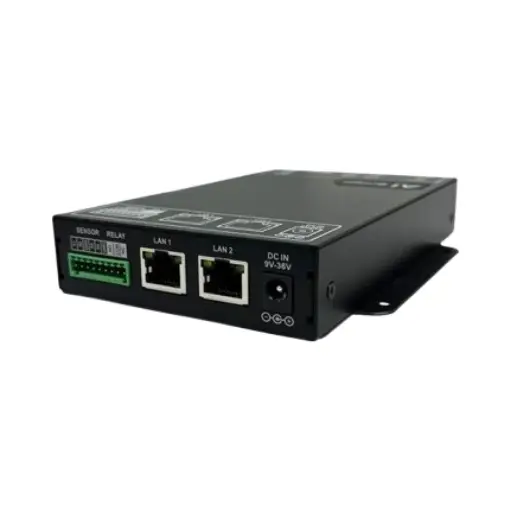 AI Bridge TE1-04 (4 Channel AI Device)
USD2,720
AI Bridge TE1-04 (4 Channel AI Device)
USD2,720
-
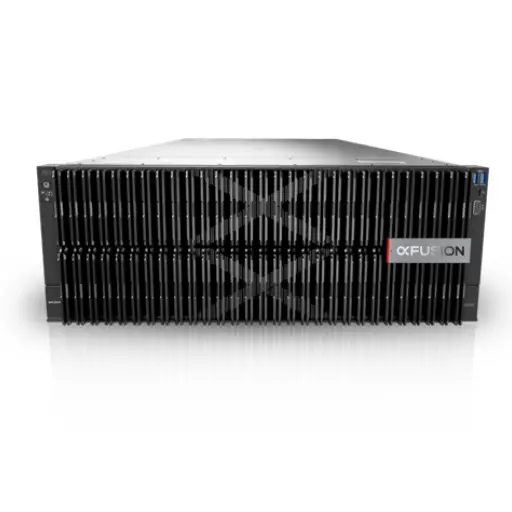 Xfusion MGX Server G5500 V7
USD56,000
Xfusion MGX Server G5500 V7
USD56,000
-
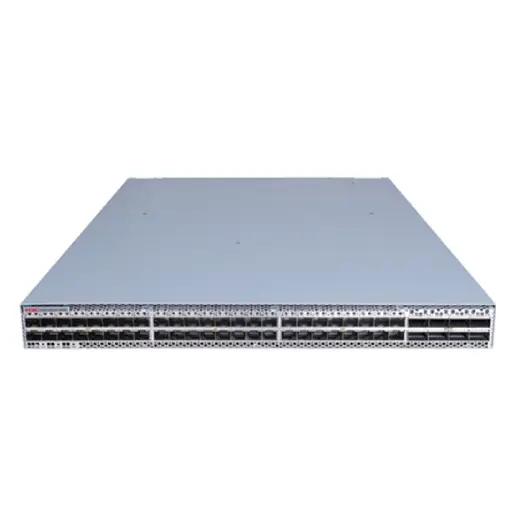 H3C S9855 Series High-Density RoCEv2 Ethernet Switch
USD25,600
H3C S9855 Series High-Density RoCEv2 Ethernet Switch
USD25,600
-
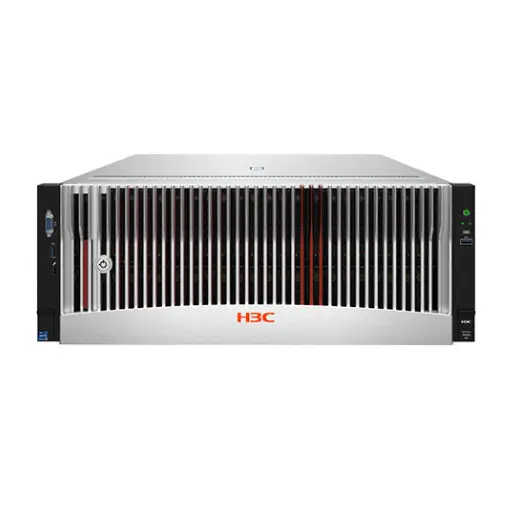 H3C UniServer R5300 G6: The Definitive 4U AI Server for Enterprise Workloads
USD56,000
H3C UniServer R5300 G6: The Definitive 4U AI Server for Enterprise Workloads
USD56,000
-
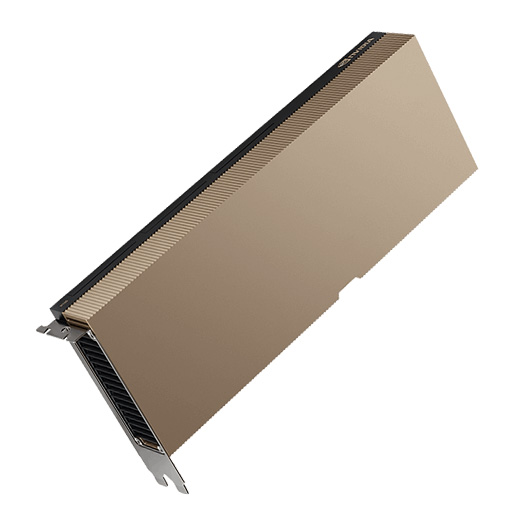 NVIDIA A30 Tensor Core GPU: Versatile AI Inference and Mainstream Enterprise Computing
Rated 4.67 out of 5USD10,450
NVIDIA A30 Tensor Core GPU: Versatile AI Inference and Mainstream Enterprise Computing
Rated 4.67 out of 5USD10,450 -
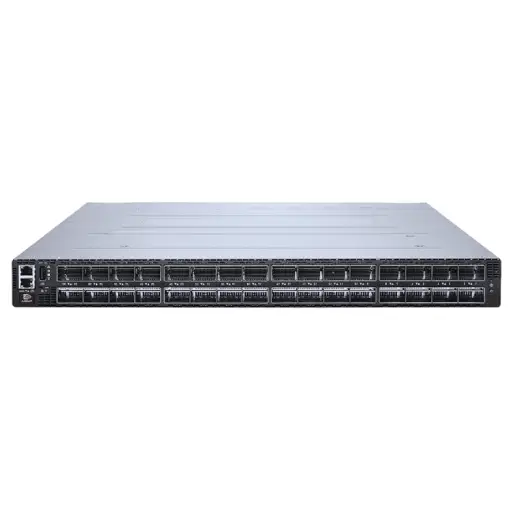 NVIDIA Quantum-2 QM9700
Rated 4.50 out of 5USD33,600
NVIDIA Quantum-2 QM9700
Rated 4.50 out of 5USD33,600
Products Mentioned in This Article


AI Infrastructure for FinTech: High-Performance Computing in Dubai’s Financial Sector
Author: ITCT Enterprise Infrastructure Team
Reviewer: Senior Network Architect
Date Published: January 13, 2026
Reading Time: 12 Minutes
References:
- NVIDIA Financial Services Solutions & Case Studies
- Dubai International Financial Centre (DIFC) FinTech Reports 2024-2025
- “High-Performance Computing in Finance” – Journal of Computational Finance
- NVIDIA Technical Documentation (H100/A100 Architecture)
- Mellanox Technologies Whitepapers on Low Latency Networking
Quick Answer: What is High-Performance Computing (HPC) for FinTech?
HPC for FinTech AI Infrastructure refers to the use of specialized hardware, primarily NVIDIA GPUs and low-latency networking, to accelerate complex financial tasks. By moving away from traditional CPU-based processing, financial institutions can execute algorithmic trading strategies, perform real-time risk assessment (Monte Carlo simulations), and detect fraudulent transactions with millisecond latency. This infrastructure is essential for firms operating in competitive hubs like Dubai’s DIFC, where speed and data processing capacity directly correlate with profitability.
Key Decision Factors for Infrastructure
When building a financial AI cluster, priority must be placed on latency and throughput. For high-frequency trading, prioritize servers with high clock speeds and RDMA-enabled networking (InfiniBand) to minimize jitter. For risk analysis and fraud detection, focus on GPU density (such as NVIDIA H100 or A100) and massive VRAM to handle large datasets in memory. Always ensure storage is NVMe-based to prevent I/O bottlenecks. Security compliance in the UAE requires hardware that supports Confidential Computing to keep data encrypted during processing.
FinTech AI Infrastructure
The global financial landscape is undergoing a tectonic shift. In Dubai, a city that acts as the commercial bridge between the East and the West, this shift is palpable. As the Dubai International Financial Centre (DIFC) and Abu Dhabi Global Market (ADGM) vie for dominance in the global digital economy, the weapon of choice for financial institutions has evolved. We have moved beyond the era of simple digitization into the age of AI-Native Finance.
For Hedge Funds, Investment Banks, and FinTech startups in the UAE, the margin for error has vanished. Alpha generation is now a function of computational capability. Whether it is training Large Language Models (LLMs) to decipher market sentiment from millions of news articles or executing High-Frequency Trading (HFT) strategies that react to market microstructure changes in nanoseconds, the underlying infrastructure is the critical differentiator.
This comprehensive guide dives deep into the hardware architecture required to sustain next-generation financial services. We will explore why general-purpose computing is obsolete for modern FinTech, dissect the specific roles of NVIDIA’s Hopper and Ampere architectures, and outline the storage and networking blueprints necessary for a compliant, high-performance financial cloud in the UAE.
Accelerating Finance: GPU Applications in Algorithmic Trading and Fraud Detection
The heart of the modern financial datacenter is no longer the Central Processing Unit (CPU); it is the Accelerated Processing Unit, primarily the GPU. While CPUs are optimized for sequential serial processing (ideal for running operating systems and traditional databases), they lack the parallelism required for modern financial mathematics.
The Mathematics of Parallelism
Financial modeling, particularly in derivatives pricing and risk management, relies heavily on stochastic calculus. Monte Carlo simulations, which are used to calculate the Value at Risk (VaR) or price complex options (like Asian or Barrier options), require calculating thousands to millions of possible future market paths.
- CPU Limitation: A dual-socket server with 64 cores can process these paths sequentially or with limited parallelism.
- GPU Advantage: A single NVIDIA H100 Tensor Core GPU possesses over 14,000 CUDA cores. This allows financial institutions to run millions of market scenarios simultaneously.
What used to take an overnight batch process (8-10 hours) to calculate counterparty credit risk (CCR) can now be performed intraday, or even in near real-time. This capability allows risk managers in Dubai to adjust leverage and exposure dynamically, a crucial advantage in volatile markets.
Generative AI: The New Frontier in Finance
Beyond numbers, Finance is about language. “BloombergGPT” and similar internal models are changing how analysts work. These Large Language Models (LLMs) require massive infrastructure for both training and inference.
- Sentiment Analysis: analyzing regulatory filings, earnings call transcripts, and social media feeds in real-time to predict stock movements.
- Automated Compliance: Scanning internal communications (emails, chats) to detect insider trading or non-compliance with DIFC regulations.
Training these models requires the massive throughput of NVIDIA HGX H100 systems, interconnected via NVLink to function as a single giant accelerator.
Deep Dive: Selecting the Right GPU for Financial Workloads
Not all GPUs are created equal. For a CTO or Infrastructure Architect in Dubai, choosing the right card affects both the budget and the performance outcomes.
1. The Heavyweight: NVIDIA H100 & A100
For Model Training and Heavy Simulations. The NVIDIA H100 features the “Transformer Engine,” specifically designed to speed up AI models based on the transformer architecture (like GPT).
- Use Case: Training a proprietary trading model on decades of tick data.
- Key Feature: DPX instructions. These accelerate dynamic programming algorithms, which are frequently used in optimization problems for portfolio rebalancing.
The NVIDIA A100 80GB remains a staple in the industry. Its high memory bandwidth (2 TB/s) is essential for applications that are “memory-bound” rather than “compute-bound,” which is common in large-scale graph analytics used for anti-money laundering (AML).
2. The Inference Specialist: NVIDIA L40S & A30
For Inference and Virtual Workstations. Once a model is trained, it needs to be run (inference). Using an H100 for simple inference can be overkill and cost-prohibitive.
- The L40S: The NVIDIA L40S GPU is optimized for generative AI inference and graphics. It is ideal for visualization desks where traders need to visualize complex high-dimensional data in real-time.
- Multi-Instance GPU (MIG): Both A100 and H100 support MIG, allowing a single physical GPU to be partitioned into up to 7 isolated instances. This is perfect for banking environments where different teams (Quant research, Risk, Compliance) share the same hardware resources securely.
FinTech AI Infrastructure: Low-Latency Requirements for DIFC and ADGM Financial Institutions
In High-Frequency Trading (HFT), the speed of light is a formidable constraint. Firms pay premiums to co-locate their servers meters away from the exchange matching engine. However, network latency inside the server rack is often the silent killer of profitability.
The Problem with TCP/IP
The standard TCP/IP stack in an operating system (OS) is inefficient for HFT. When a packet arrives, the CPU must interrupt what it is doing, copy the data from the network card to the OS kernel space, and then copy it again to the application (User space). This “context switching” introduces Jitter (latency variance). In trading, consistent latency is often more important than average latency.
The Solution: Kernel Bypass and RDMA
To solve this, FinTech infrastructure must bypass the CPU entirely for data movement.
- RDMA (Remote Direct Memory Access): Allows one computer to access the memory of another without involving either one’s Operating System.
- InfiniBand vs. RoCE: While NVIDIA Networking (Mellanox) InfiniBand offers the absolute lowest latency (sub-600 nanoseconds), many Dubai financial institutions prefer RoCE v2 (RDMA over Converged Ethernet) because it runs on standard Ethernet switches while providing near-InfiniBand performance.
SmartNICs and DPUs: The BlueField Revolution
Modern Enterprise AI Servers are equipped with Data Processing Units (DPUs) like the NVIDIA BlueField-3.
- Offloading: The DPU handles packet parsing, encryption/decryption, and firewall rules.
- Impact: The main CPU is freed up to run the trading strategy exclusively, ensuring that when a market signal arrives, the CPU is ready to execute the order immediately.
For institutions in the DIFC, upgrading to 400Gb/s networking isn’t just about bandwidth; it’s about reducing the “serialization delay” (the time it takes to put a packet on the wire).
High-Performance Storage (NVMe) for Real-time Financial Analytics
Data in Finance comes in two flavors: Time-Series Data (Tick history, market depth) and Unstructured Data (News, PDFs, Satellite images).
The KDB+/q Challenge
Many top-tier banks use KDB+ (a time-series database) for high-speed analytics. KDB+ relies heavily on the speed of the underlying storage system and memory mapped files.
- Legacy Storage: Spinning disks (HDD) or SATA SSDs create an I/O bottleneck. The GPU might process data in microseconds, but if it takes milliseconds to fetch that data from the disk, the GPU sits idle.
- The NVMe Era: High-Performance NVMe Storage connects directly to the PCIe bus. With PCIe Gen5 NVMe drives, read speeds can exceed 14 GB/s per drive.
Architecting for Big Data in Dubai
For a Dubai-based hedge fund analyzing global markets, a storage cluster must support:
- High IOPS (Input/Output Operations Per Second): For random reads when back-testing strategies against non-sequential historical data.
- Throughput: For streaming massive datasets into the GPU memory for training.
Using Supermicro Petascale Storage Servers, firms can pack dozens of NVMe drives into a single 1U or 2U chassis. Combining this with a parallel file system (like GPFS or Lustre) ensures that all GPU nodes can access the shared data pool simultaneously without choking the bandwidth.
FinTech AI Infrastructure: Security, Encryption, and Data Sovereignty in the UAE
The regulatory landscape in the UAE is evolving. The UAE Data Protection Law and specific DIFC/ADGM regulations mandate strict controls over how financial data is handled, stored, and processed.
The “Cloud vs. On-Prem” Debate
While public clouds (AWS, Azure) have opened regions in the Middle East, many financial institutions prefer On-Premise Private Clouds or Hybrid Clouds due to:
- Data Sovereignty: Ensuring sensitive customer financial data never leaves the physical jurisdiction of the UAE.
- Predictable Performance: Public clouds suffer from “noisy neighbor” issues where performance fluctuates. In algorithmic trading, performance variance is unacceptable.
- Cost at Scale: For 24/7 heavy GPU workloads, renting instances is significantly more expensive than owning the infrastructure (TCO).
Confidential Computing on GPUs
Security is no longer just about firewalls. It’s about protecting data while it is being processed. The NVIDIA H100 introduces hardware-based Confidential Computing.
- How it works: It creates a Trusted Execution Environment (TEE) within the GPU itself. The data and the model are encrypted in memory and only decrypted inside the GPU core for processing.
- Application: A Dubai bank can use a shared AI model to detect fraud without ever exposing the raw customer transaction data to the model developers or the infrastructure admins.
Physical Infrastructure: Power and Cooling in the Desert
Deploying High-Performance Computing (HPC) in the Middle East presents unique physical challenges.
The Thermal Density Challenge
A standard server rack might consume 5-10 kW of power. An AI-ready rack populated with NVIDIA HGX H100 systems can consume upwards of 40 kW to 60 kW.
- Traditional air cooling (CRAC units) struggles to cool these densities efficiently, especially when ambient temperatures in the region can be high.
Liquid Cooling Solutions
To maintain peak performance (and avoid thermal throttling where the GPU slows down to protect itself), FinTech firms are moving towards:
- Direct-to-Chip Liquid Cooling (DLC): Cold plates sit directly on the GPUs and CPUs, removing 70-80% of the heat via water loops.
- Immersion Cooling: Submerging the entire server in non-conductive dielectric fluid.
At ITCT Shop, we work with partners to provide Supermicro GPU Servers that are “Liquid Cooling Ready,” ensuring that your investment is protected and operates at maximum turbo frequencies 24/7.
Building Your Cluster: A Roadmap for CTOs
If you are a technology leader in Dubai’s financial sector, how do you approach building this infrastructure?
-
Assessment of Workload:
- Are you training LLMs? (Go for H100/HGX systems).
- Are you running Monte Carlo simulations? (Go for high-density H100 PCIe or A100).
- Is it pure HFT execution? (Focus on high-frequency CPUs and BlueField DPUs).
-
Network Topology Design:
- Implement a “Spine-Leaf” architecture using NVIDIA Networking switches (Spectrum-4) to ensure non-blocking bandwidth between all nodes.
-
Storage Tiering:
- Hot Tier: NVMe Gen5 for active datasets (Training data, recent logs).
- Warm Tier: All-Flash SATA/SAS for historical data.
- Cold Tier: Object storage for regulatory archiving.
-
Procurement & Support:
- Work with a local specialized vendor. Sourcing high-end GPUs can be difficult due to global shortages. A local partner like ITCT Shop ensures supply chain reliability and local support.
Conclusion
The convergence of AI and Finance is rewriting the rules of the industry. In Dubai, a city synonymous with innovation and speed, the financial sector is uniquely positioned to lead this transformation. However, algorithms are only as good as the hardware they run on.
A legacy infrastructure is a liability. It introduces latency, limits the complexity of risk models, and leaves gaps in security. Conversely, a purpose-built AI infrastructure—powered by NVIDIA H100/A100 GPUs, interconnected with InfiniBand, and supported by NVMe storage—turns technology into a competitive moat.
Whether you are detecting fraud in real-time, pricing complex derivatives, or pioneering the use of Generative AI for financial advising, the hardware foundation must be solid.
Ready to upgrade your FinTech AI Infrastructure? Explore our range of AI Workstations and Enterprise Servers tailored for the UAE market. Visit us at ITCT Shop Dubai to discuss your specific HPC requirements with our engineering team.
“In the context of HFT within the MENA region, the bottleneck has shifted from the algorithm to the physical network layer. We typically see that upgrading to RDMA-enabled networking yields a higher ROI than simply adding more CPU cores.” — Lead Systems Architect
“While the NVIDIA H100 is the gold standard for training financial models, for many inference-heavy tasks like real-time credit scoring, the L40S often provides a better performance-per-watt ratio in most on-premise deployments.” — Senior AI Hardware Consultant
“Data sovereignty laws in the UAE are strict. It is better to implement Confidential Computing at the hardware level using Trusted Execution Environments (TEE) on the GPU, ensuring compliance without sacrificing the speed of analysis.” — Head of Data Security Infrastructure
✅ Reviewed and updated by the ITCT technical team in 2026. Prices and specifications reflect the latest available data.
Last update at December 2025